
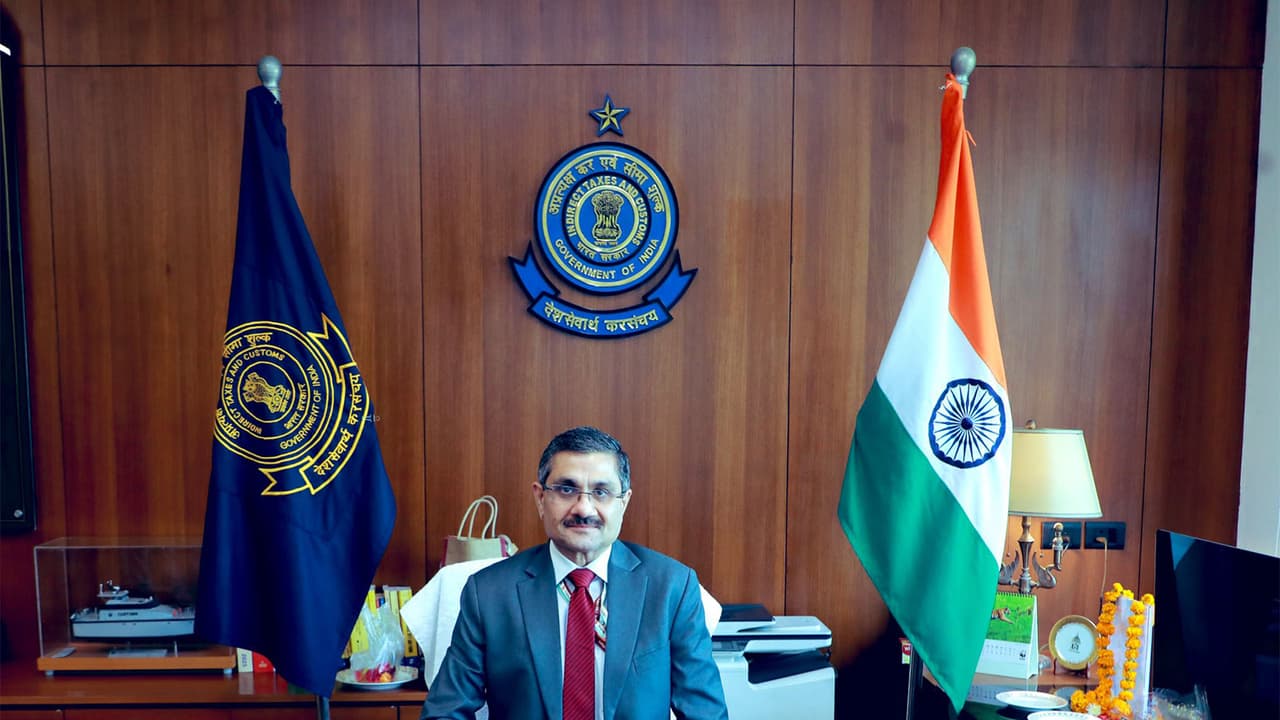
CBIC Chairman Vivek Chaturvedi said customs is shifting from an enforcement body to a facilitator of business, supporting India's economic goals by enabling semiconductor imports, pharma exports, and integrating into global supply chains.
Central Board of Indirect Taxes and Customs (CBIC) Chairman Vivek Chaturvedi on Wednesday said customs plays a key role in supporting India's economic objectives by facilitating semiconductor imports, pharmaceutical exports and energy supply chains amid changing global trade dynamics.
Addressing the BCBA Logistics Conclave 2026 in Mumbai, Chaturvedi said the evolving global trade environment requires customs authorities to move beyond traditional enforcement functions and act as facilitators of business, supporting India's integration into global supply chains. He said the Union Budget recognises customs as an enabler of economic growth rather than merely a revenue-collection mechanism, reflecting the government's broader approach towards trade facilitation.
A Shift Towards a Trust-Based System
Highlighting the transformation underway in the department, Chaturvedi said Indian Customs has shifted its focus from strict enforcement to a system built on trust, efficiency and technology-driven processes. "A customs that is feared is a customs that is faced. A customs that is trusted, efficient and predictable is what India ultimately needs," he said.
According to the CBIC Chairman, Indian Customs is now guided by the principles of faceless assessment, risk-based selection and trusted trade. He noted that digitisation initiatives and collaboration with the Brihanmumbai Custom Brokers Association (BCBA) have contributed to faster cargo clearances. Citing findings from time-release studies, Chaturvedi said a large share of import consignments are now being cleared in less than 22 hours, helping reduce delays and transaction costs for businesses.
Future of Customs Reforms
Speaking on the future direction of customs reforms, he said the next phase would focus on the adoption of advanced technologies and sustainability-orientated measures. "The future holds AI-driven risk management, blockchain-based trade documentation and green customs aligned with India's climate goals," Chaturvedi said.
Adapting to Changing Requirements
He also called on customs brokers to adapt to changing trade requirements, stating that their role increasingly extends beyond regulatory compliance to include trade strategy and technology adoption.
(ANI)
(Except for the headline, this story has not been edited by Asianet Newsable English staff and is published from a syndicated feed.)