
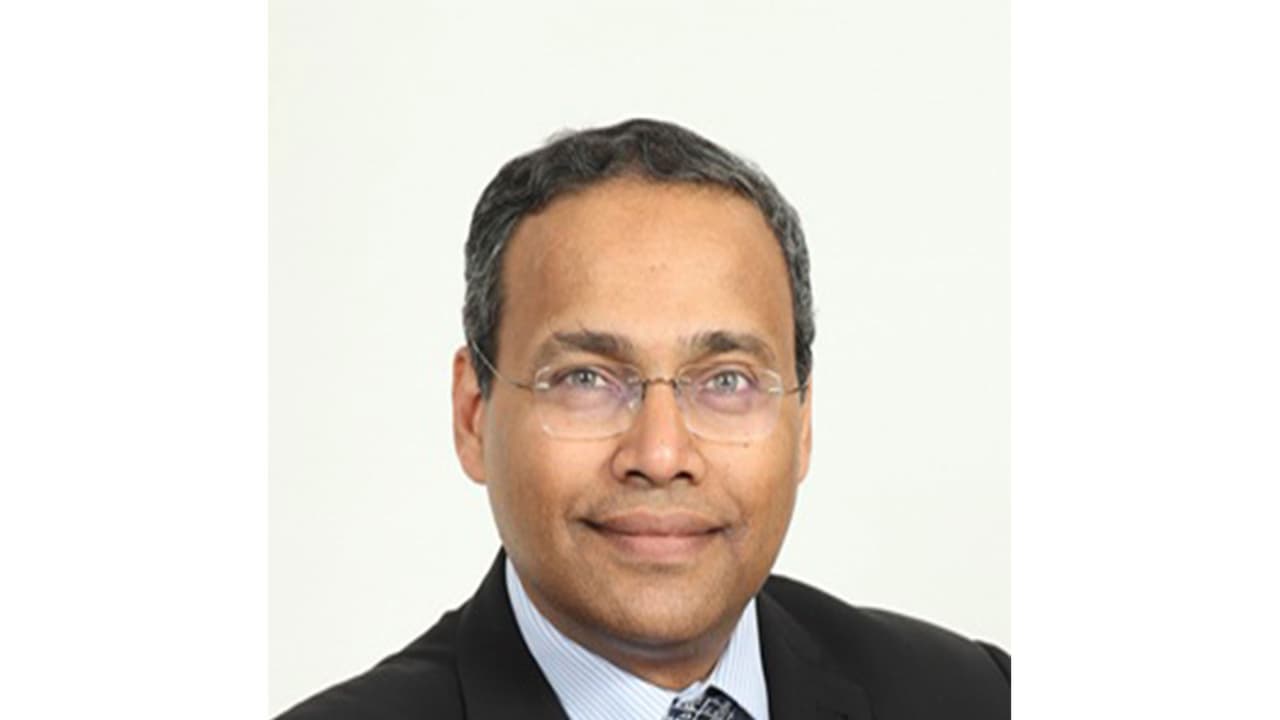
CII President R Mukundan stated that deep structural reforms in power, land, logistics, and infrastructure are essential for India's Viksit Bharat 2047 vision. He called for a 'GST-type Council' for key sectors to accelerate reforms.
In a push toward India's ambitious economic transformation, Confederation of Indian Industry (CII) President R Mukundan stated that sharpening global competitiveness through deep structural reforms is essential for the nation to achieve its Viksit Bharat vision by 2047.

In an interview with ANI in Mumbai on Tuesday, Mukundan broke down the multi-layered roadmap required to safely elevate India's economy over the next two decades, with a sharp emphasis on implementing comprehensive factor reforms.
Focus on Factor Reforms
Addressing the key drivers needed to build a mature industrial base, Mukundan placed heavy emphasis on transforming the core variables of production - power, land, logistics, and infrastructure. He asserted that India's growth momentum hinges entirely on these domestic upgrades. "Factor reforms require deep interventions in power, logistics, infrastructure, and land availability to support rapid industrial expansion," Mukundan noted, emphasizing that reducing friction in these areas directly lowers production costs.
'GST-Type Council' Proposed for Key Sectors
To bypass federal bottlenecks and synchronize changes across states, the CII chief proposed a radical governance framework, calling for the establishment of a "GST-type Council" for cross-cutting subjects like agriculture and power. This would allow both the Centre and the States to collaboratively make quick decisions, modernizing the factors of production under a unified structural umbrella.
Beyond FTAs: The Importance of Free Trade Utilization
Shifting focus to international trade, Mukundan highlighted that signing Free Trade Agreements (FTAs) is merely half the battle. The true differentiator for Indian corporate growth lies in what he termed Free Trade Utilization (FTU). Using India's current trade realities as a primary example, he noted that domestic businesses must actively optimize existing trade channels, such as the one with South Korea. "How do we promote Brand India? How do we reach out to South Korean customers? How do we get South Korean technology and investment back into India to ensure we have got the full utilization of these FTAs?" he asked.
Supporting the MSME Backbone
Mukundan also flagged market access, technology adaptation, and access to credit as major hurdles facing Micro, Small, and Medium Enterprises (MSMEs) - the undisputed backbone of the Indian market. Delayed payments also continue to choke smaller businesses. The CII is working directly with financial institutions to optimize credit delivery. Simultaneously, through its dedicated Centres of Excellence, the industry body is handholding smaller enterprises into smarter operational setups. "We want MSMEs to benefit from smart manufacturing... helping them transition into smart, energy-efficient, and water-efficient factories," he explained.
Workforce Training and the Role of AI
As automation and digital tools rewrite industry playbooks, Mukundan pushed for a drastic overhaul in how India views workforce training, praising the New Education Policy's emphasis on vocational skilling. He explained that training must prepare the youth to be "industry-ready." Rather than viewing Artificial Intelligence as a threat to employment, the CII President framed it as a core asset. "As far as AI is concerned, I think AI will be a force multiplier. We have 1.4 billion people who need access to good healthcare, good education, and good services. AI can democratize access to high-quality solutions for every citizen."
Capturing Global Opportunities and US Trade
Amidst shifting global dynamics, Mukundan identified massive emerging manufacturing windows for India in defense reconstruction, aerospace, and advanced electronics. To capture this capital, securing a trade bridge with the world's largest economy remains paramount. Commenting on the ongoing progress of the highly anticipated US-India trade alignments, he kept the domestic industry's baseline expectation explicitly clear: "Whatever trade terms are finalized, India's exports to the US must receive terms and conditions that are better than, or at least equal to, our closest peer competitors. Nothing more."
Defining the relationship between the private sector and public policymakers, Mukundan underscored that a developed India cannot be built in isolation. "The citizens, the industry, and the government are all equal partners in progress. We must collaboratively focus on making India the most competitive place in the world to do business. By maintaining a steady, unrelenting path of economic reforms, we will confidently achieve the vision of a Viksit Bharat by 2047." (ANI)
(Except for the headline, this story has not been edited by Asianet Newsable English staff and is published from a syndicated feed.)