
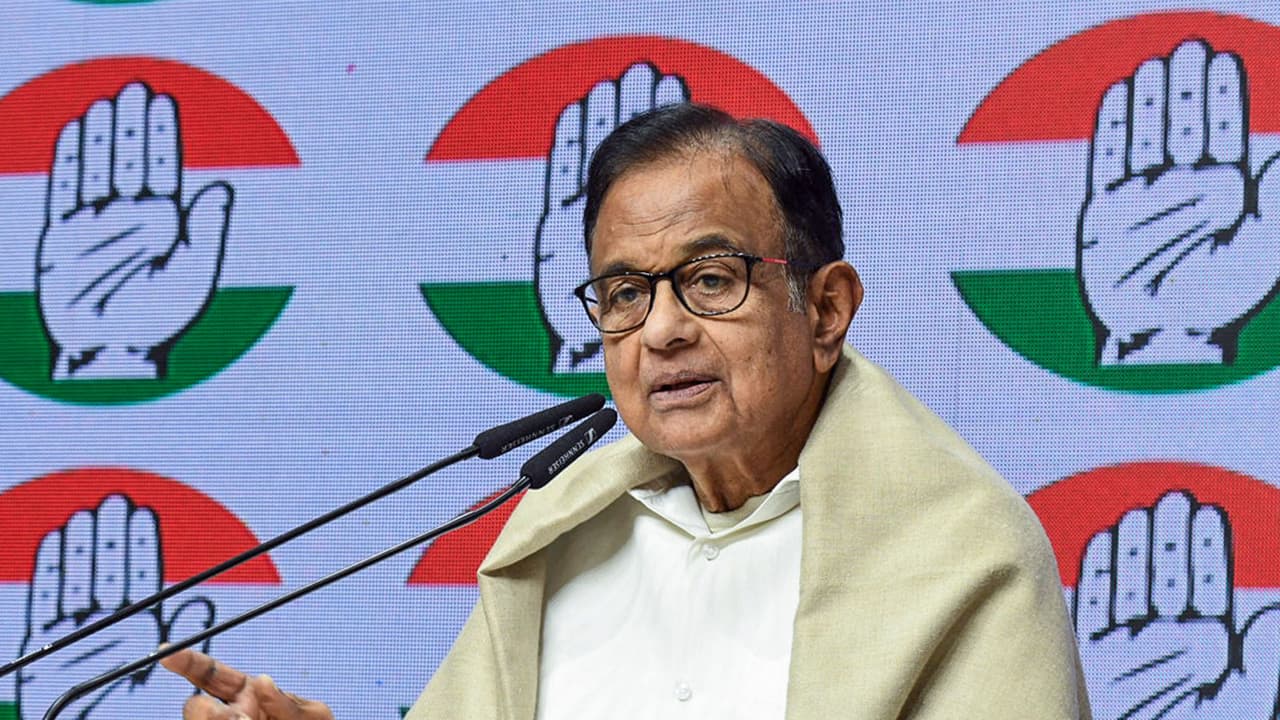
Congress' P Chidambaram questions the India-US trade deal framework after a US Supreme Court ruling struck down Trump's tariffs. He has asked the government to explain the impact on India's concessions and the future of the agreement.
Chidambaram Questions India's Concessions
Chidambaram recently argued in a column that the US and India will revert to the status quo ante (before April 2, 2025) if the Supreme Court struck down President Trump's imposition of tariffs, which now happened to be a reality. Referring to what he said several concessions from India by the US under the recent trade deal framework without having to concede. "What will happen to those concessions?" Chidambaram wrote on X. The India-US joint statement for a trade deal framework announced zero tariff on many goods that the US will export to India; India intends to import USD 500 billion worth of goods from the US, that includes energy, among others. India also agreed to address the non-tariff barriers for some of the US goods. "What will happen to those promises?" the Congress veteran asked.
Referring to the expected visit of Indian trade delegation to the US next week, perhaps to finalise the text of the Framework Agreement, the Congress leader asked what will the team do now after the US apex court move. "An Indian team is now in the U.S. to finalise the text of the Framework Agreement. What will the team do now? The government must explain the impact of the judgement on the 'deal' that was announced on February 6 between the U.S. and India," Chidambaram wrote on X.
Trump's Potential Next Move
Faced with Supreme Court action, President Trump signalled he would invoke Section 122 of the Trade Act of 1974 - a rarely discussed provision that allows temporary tariffs in response to balance-of-payments concerns Section 122 authorises the US President to impose temporary tariffs of up to 15% for a maximum of 150 days to address what the law describes as "large and serious" US balance-of-payments deficits.
Details of Section 122
Tariffs imposed under Section 122 automatically expire after 150 days unless Congress votes to extend them. However, according to trade experts, the President could let these measures to lapse and reintroduce them by declaring a fresh balance-of-payments crisis. (ANI)
(Except for the headline, this story has not been edited by Asianet Newsable English staff and is published from a syndicated feed.)