
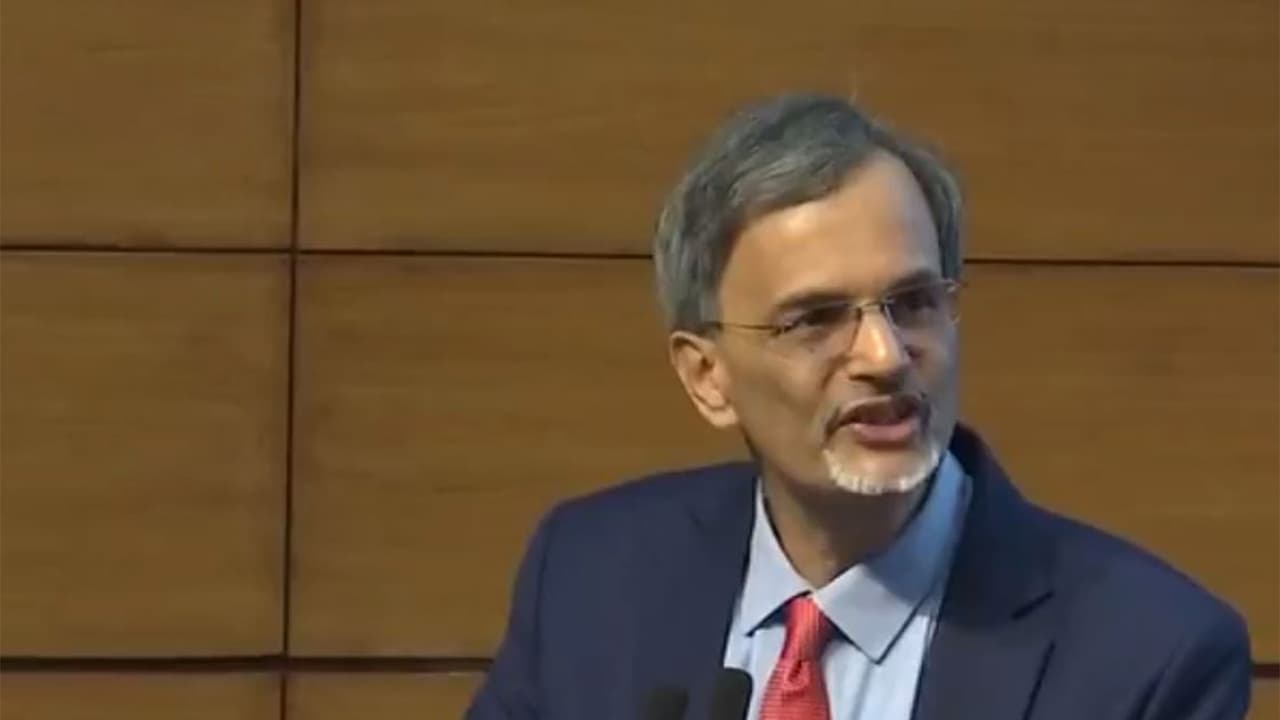
CEA V Anantha Nageswaran warns against aggressively introducing complex financial products in India. He says financial innovation must align with the economy's readiness and regulatory preparedness, citing lessons from the 2008 global financial crisis.
Chief Economic Advisor (CEA) V Anantha Nageswaran on Thursday cautioned against introducing complex financial products into India too aggressively before the broader economy and investors are ready to handle them.
Speaking virtually at the 14th Securitisation Summit 2026 in Mumbai, Nageswaran said financial innovation should grow in line with the needs of the real economy and not move ahead faster than the country's financial understanding and regulatory preparedness.
The Role and Risks of Securitisation
CEA said Securitisation can help distribute risk and free up bank funds for fresh lending. Securitisation is a process where banks convert loans, such as home or vehicle loans, into investment products and sell them to investors.
"Securitisation should be viewed as a natural part of India's economic evolution rather than something policymakers must aggressively force," Nageswaran said. He noted that while such financial tools help banks manage their balance sheets better, they do not completely remove risks from the financial system.
Lessons from the 2008 Financial Crisis
Referring to the 2008 Global Financial Crisis, Nageswaran warned that poorly regulated financial products and excessive risk-taking by institutions can create major economic problems.
The CEA said that in societies where financial awareness is still developing, simply giving disclosures and warnings to investors may not be enough to prevent risky behaviour in markets.
Regulatory Measures for Investor Protection
He praised recent measures taken by regulators such as the Reserve Bank of India (RBI) and the Securities and Exchange Board of India (SEBI) to reduce excessive retail speculation in derivatives trading. These steps include stricter trading rules, higher margin requirements, and investor awareness campaigns.
Speaking about Priority Sector Lending (PSL)-linked securitisation, Nageswaran said such mechanisms are useful because they allow banks to transfer some risks and free up capital for more lending to key sectors of the economy.
Caution on Complex Financial Instruments
He also urged caution in expanding bond markets and introducing complex instruments such as Credit Default Swaps (CDS), which are financial contracts used as insurance against loan defaults.
"Market-completing instruments like credit default swaps must evolve cautiously given the painful lessons of the global financial crisis," Nageswaran said.
Adapting Microfinance Regulations
On microfinance regulations, the CEA suggested that regulatory limits should be linked to changing economic conditions such as GDP growth or median income levels, instead of relying on fixed numerical limits.
"We should look at linking thresholds to evolving economic indicators such as GDP or median income, instead of relying on fixed nominal values," he said.
A Call for Proactive Collaboration
Nageswaran stressed that financial institutions and regulators need to work more closely to ensure investor protection, especially for lower-income groups who are often the worst affected during market losses.
He said financial institutions should proactively address regulatory concerns instead of reacting only after tighter rules are imposed, adding that such an approach would help build trust and support long-term growth in the financial sector. (ANI)
(Except for the headline, this story has not been edited by Asianet Newsable English staff and is published from a syndicated feed.)