
CBIC's top priority is reducing India's high cargo dwell times. AI will be used to analyse scanned containers, streamlining customs. Key reforms for the express courier industry, like removing the Rs 10 lakh value limit, have also been introduced.
The Central Board of Indirect Taxes and Customs (CBIC) has declared that removing trade roadblocks and reducing cargo dwell times is its top operational priority for the current fiscal year.
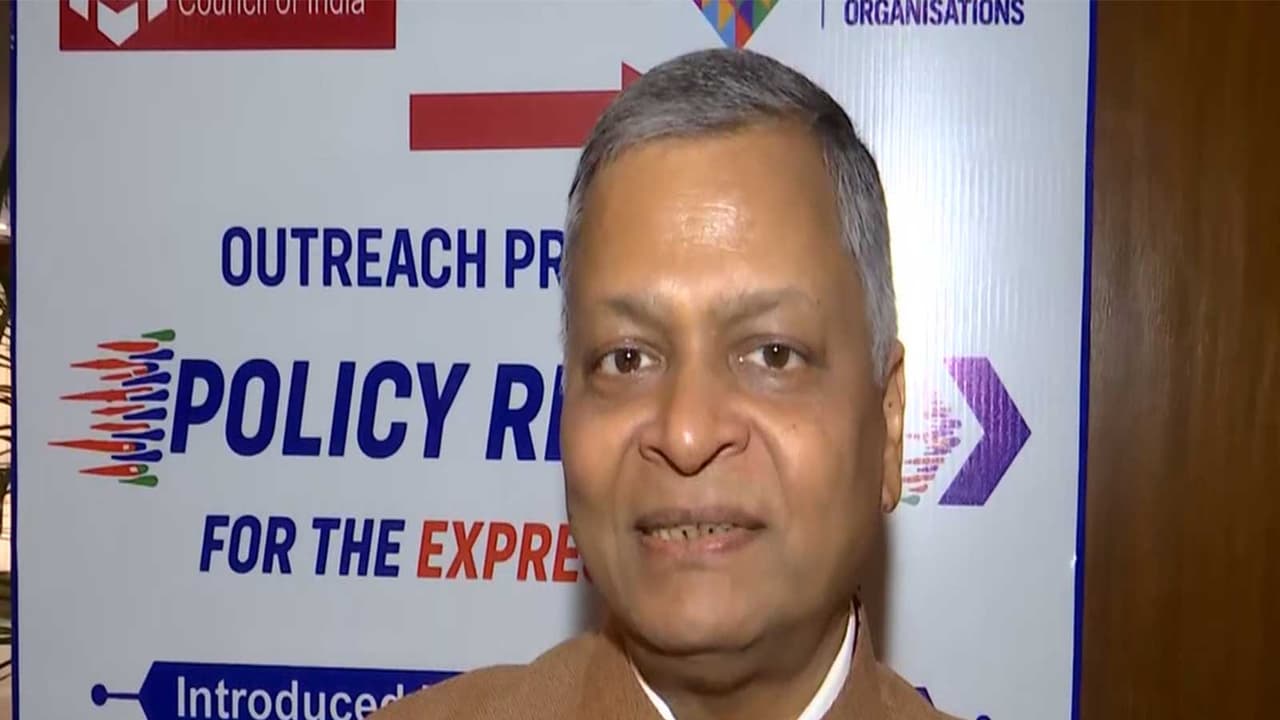
Speaking to ANI, Yogendra Garg, Member (Customs), CBIC, on Thursday, affirmed that India will focus on removing trade-related bottlenecks during the current financial year as cargo dwell times remain above global standards despite annual improvements. Speaking on the sidelines of an outreach programme on policy reforms for the express sector, Garg said reducing dwell times remains a key focus area for customs authorities.
"This financial year, we would like to remove roadblocks because compared to the rest of the world, our dwell times are still high, though we have been reducing year on year, we are nowhere near the best in the world," Garg told ANI.
He said customs authorities are working to improve trade facilitation and make cross-border trade faster and more competitive.
AI to Streamline Customs Procedures
Highlighting the role of technology, Garg said Artificial Intelligence (AI) will play a major role in customs examinations and cargo processing.
"You would have read in the Budget that we have also made an announcement saying that all the containers will be scanned and scanned images analysed through AI," he said.
According to Garg, AI-based analysis of scanned container images will reduce manual intervention, improve risk assessment and streamline customs procedures.
"That will remove the friction points, so we expect that substantial dwell time will get reduced when it is put in place," he said.
Reforms for Express Courier Industry
His remarks came during an outreach programme organised to raise awareness about policy reforms introduced for the express courier sector in the Union Budget 2026-27 and to gather industry feedback.
Garg said the government addressed some long-pending demands of the express courier industry in the latest Budget.
"Express courier industry has some long-standing demands which we considered in this Budget," he said.
Value Limit on Parcels Removed
Among the key reforms is the removal of the Rs 10 lakh value limit per parcel for exports through the courier mode. Garg said the move was particularly important for sectors such as gems and jewellery that ship high-value products overseas.
"Two main things are one is the value limit of rupees 10 lakh per parcel, which was a long-standing demand, especially from the gems and jewellery sector," he said.
Return-to-Origin Facility Introduced
He also highlighted the introduction of a return-to-origin (RTO) facility for courier consignments, aimed at addressing challenges faced by the e-commerce sector.
"In the couriers, the return-to-origin is always a channel which must be available. There were some difficulties in Indian e-commerce, so we have now made provisions for return-to-origin," Garg said.
He said the outreach programme was intended to both inform stakeholders about the reforms and seek feedback on their implementation.
"Today's event is about creating awareness about these changes and also getting industry feedback as to whether we need to fine-tune," he said.
Garg added that customs authorities will continue efforts to reduce bottlenecks, improve efficiency and use technology to facilitate legitimate trade while maintaining regulatory oversight.
Industry Welcomes Systemic Reforms
Speaking to ANI on the sidelines of the same event, Vijay Kumar, CEO of the Express Industry Council of India, said, "Reform is a dynamic and continuous process. These reforms are coming in a very systemic and structured manner so that geopolitical situations do not really impact trade. The partnership model between industry and government is the only way to address prevailing challenges." (ANI)
(Except for the headline, this story has not been edited by Asianet Newsable English staff and is published from a syndicated feed.)