
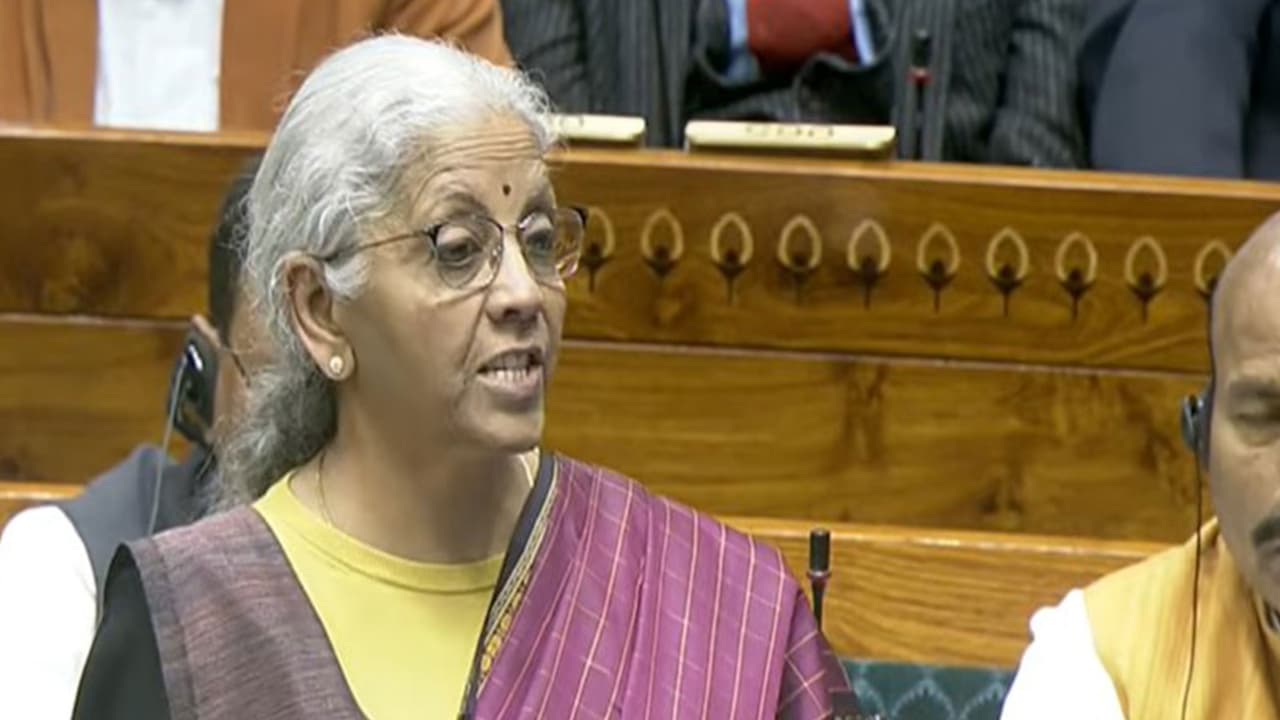
FM Nirmala Sitharaman's Union Budget 2026-27 focuses on indirect tax measures to simplify tariffs and boost manufacturing. Key proposals include customs duty rationalisation and exemptions for sectors like seafood, leather, and Li-ion batteries.
Key Indirect Tax Measures and Customs Duty Rationalisation
Presenting the Budget, Finance Minister Nirmala Sitharaman announced a set of indirect tax measures in the Union Budget 2026-27, aimed at further simplifying the tariff structure, supporting domestic manufacturing, promoting export competitiveness, and correcting inversion in duty.
A key element of the Budget proposals is the continued rationalisation of customs duty exemptions. To continue weeding out long-standing customs duty exemptions, she proposed removing certain exemptions for items manufactured in India or for which imports are negligible.
Boost for Export-Oriented Sectors
She proposed to increase the limit for duty-free imports of specified inputs used for processing seafood products for export, from the current 1 per cent to 3 per cent of the FOB value of the previous year's export turnover.
She also proposed allowing duty-free imports of specified inputs, currently available for exports of leather or synthetic footwear, for exports of Shoe Uppers as well. The finance minister also proposed extending the export period for final products from the existing 6 months to 1 year for exporters of leather or textile garments, leather or synthetic footwear, and other leather products.
Incentives for Manufacturing and Infrastructure
Energy and Power Sector
She extended the basic customs duty exemption given to capital goods used for manufacturing Lithium-Ion Cells for batteries to those used for manufacturing Lithium-Ion Cells for battery energy storage systems, too.
Exemption on basic customs duty on import of sodium antimonate for use in manufacture of solar glass has been announced.
Further, she proposed extending the existing basic customs duty exemption on imports of goods required for Nuclear Power Projects until 2035 and expanding it to all nuclear plants, irrespective of capacity.
Critical Minerals and Aviation
For critical minerals, it is proposed to provide a basic customs duty exemption on imports of capital goods required for their processing in India.
In civil and defence aviation, she proposed exempting basic customs duty on components and parts required for the manufacture of civilian, training, and other aircraft.
"It is proposed to exempt basic customs duty on raw materials imported for the manufacture of parts of aircraft to be used in maintenance, repair, or overhaul requirements by Units in the Defence sector."
Consumer Electronics and Personal Goods
To deepen value addition in the consumer electronics sector, she further proposed to exempt basic customs duty on specified parts used in the manufacture of microwave ovens.
To rationalise the customs duty structure for goods imported for personal use, the finance minister proposed reducing the tariff rate on all dutiable goods from 20 per cent to 10 per cent.
Relief for Healthcare Sector
To provide relief to patients, particularly those with cancer, she proposed exempting basic customs duty on 17 drugs.
"I also propose to add 7 more rare diseases for the purposes of exempting import duties on personal imports of drugs, medicines and Food for Special Medical Purposes (FSMP) used in their treatment."
Finance Minister Sitharaman presented her record ninth consecutive Union budget today in the Parliament.
Economic Survey 2025-26 and GDP Outlook
On Thursday, Union Finance Minister Nirmala Sitharaman tabled the Economic Survey of India in Parliament for the financial year 2025-26.
The tabling of the Economic Survey ahead of the Budget follows the long-standing tradition of outlining the state of the economy before detailing future fiscal plans.
The document provided a comprehensive, data-backed review of the economy's performance over the previous year and offers a broad roadmap for future policy direction. As the government's flagship annual report, it reviews key economic developments over the past 12 months.
India's real GDP growth for 2026-27 is projected in the range of 6.8-7.2 per cent, reflecting sustained medium-term growth capacity amid a challenging global environment. (ANI)
(Except for the headline, this story has not been edited by Asianet Newsable English staff and is published from a syndicated feed.)