
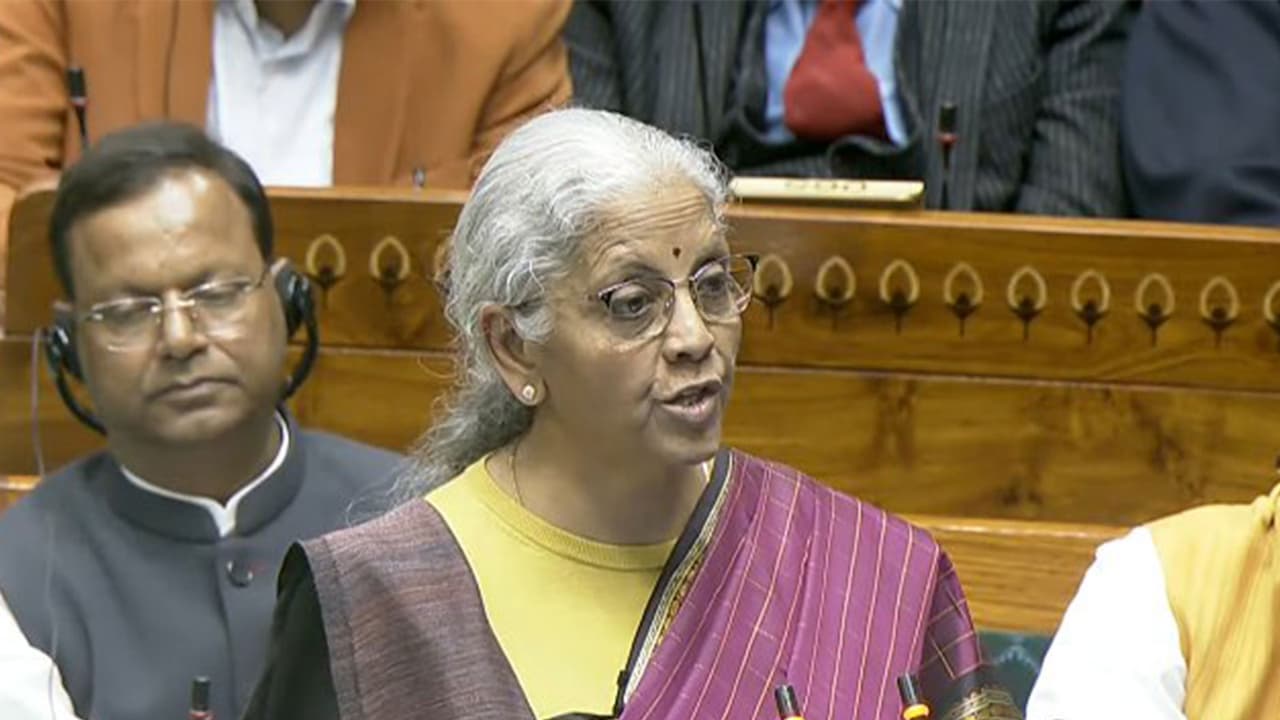
FM Nirmala Sitharaman announced a dedicated initiative for high-quality sports goods manufacturing and a Khelo India Mission. The budget also proposes to revive 200 industrial clusters and launch a multi-pronged integrated programme for the textile sector.
Union Finance Minister Nirmala Sitharaman on Sunday announced a dedicated initiative for high-quality sports goods manufacturing and research, while presenting the Union Budget 2026-27. "I propose a dedicated initiative for high-quality sports goods manufacturing, research and innovation in equipment design as well as material sciences," Sitharaman said.
India, she said, has the potential to emerge as a global hub for high-quality, affordable sports goods. Sitharaman proposed to introduce a scheme to revive 200 legacy industrial clusters "to improve their cost competitiveness and efficiency through infrastructure and technology upgradation."
Khelo India Mission and Job Creation
The Finance Minister said that the sports Sector provides multiple means of employment, skilling and job opportunities. "Taking forward the systematic nurturing of sports talent which is set in motion through the Khelo India programme, I propose to launch a Khelo India Mission to transform the Sports sector over the next decade," she said.
Major Push for Textile Sector
Furhter, for the labour-intensive textile sector, Finance Minister Nirmala Sitharaman proposed an integrated programme with key components. The Minister emphasised that the first pillar of her plan, the National Fibre Scheme, aims to "achieve self-reliance in natural fibres like silk, wool, and jute, as well as man-made and new industrial-age fibres."
Modernisation and Employment
The second is the Textile Expansion and Employment Scheme, which seeks to modernise traditional clusters by providing capital support for machinery, technology upgrades, and common testing and certification centres.
Support for Weavers and Artisans
The third component is the National Handloom and Handicraft Programme (NHHP), designed to integrate and strengthen existing schemes while ensuring targeted support for weavers and artisans.
Skilling the Workforce
With the introduction of Samarth 2.0, the government aims to align the workforce with future demands. To promote globally competent and sustainable textiles and apparel, Sitharaman said, "Samarth 2.0 is to modernise and upgrade the textile skilling ecosystem through collaboration with industry and academic institutions," ensuring that the next generation of workers is as tech-savvy as they are skilled.
Infrastructure and High-Value Manufacturing
Closing her remarks on the sector, the Finance Minister turned to large-scale infrastructure as the ultimate solution to improve efficiency. She envisioned a future in which production and value addition occur under one roof, reducing logistics costs and boosting exports. To achieve this, she told the assembly, "I propose to set up a mega textile park," further clarifying that "they can also focus on bringing value addition to technical textiles." This strategic focus on technical textiles--used in everything from healthcare to automotive industries--suggests a shift toward high-value manufacturing that could redefine India's role in the global market. (ANI)
(Except for the headline, this story has not been edited by Asianet Newsable English staff and is published from a syndicated feed.)