
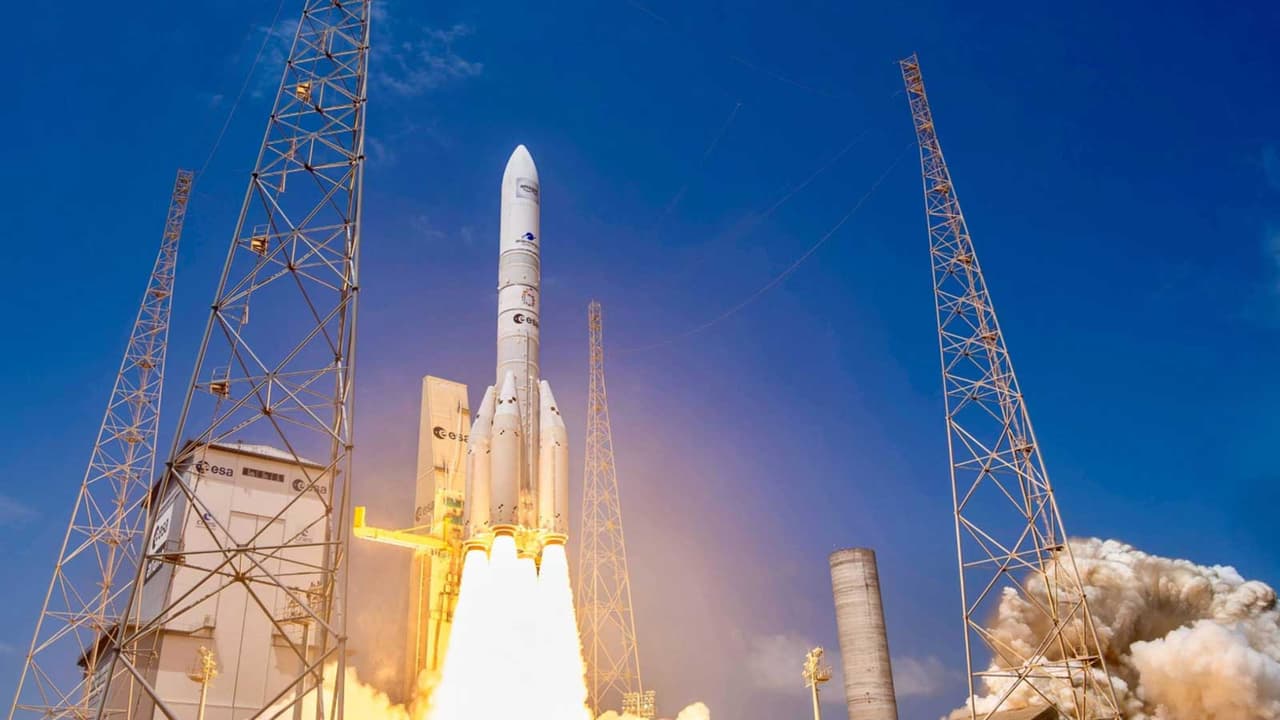
Amazon's Leo satellite internet constellation has grown to 396 satellites after a ULA Atlas V rocket successfully launched 29 new satellites. This was the 8th Leo mission on Atlas V, with future launches planned on ULA's new Vulcan rocket.
Amazon's Leo, formerly Project Kuiper, has expanded its satellite internet constellation after a successful Atlas V launch, bringing the total number of satellites in orbit to more than 375, according to a company statement.
According to the release, United Launch Alliance (ULA) successfully deployed 29 Amazon Leo satellites into low Earth orbit after a liftoff at 12:30:15 a.m. EDT on July 2. The mission, designated LA-08 (Leo Atlas 8), marked the eighth Amazon Leo flight on ULA's Atlas V rocket and the 14th mission overall, taking the total number of satellites deployed to 396 as the Atlas V programme nears its transition to Vulcan.
Transition to Vulcan Rocket
"Our next Leo mission with ULA will be on its new, heavy-lift Vulcan rocket, which will carry even larger Leo payloads and help increase our deployment rate," it said.
Melissa Wuerl, Amazon Leo Director of Launch Systems, said, "Atlas V has played a critical role in the early deployment phase for Amazon Leo, launching 224 satellites with a 100% success rate across all eight missions, and we're excited to build on that foundation with ULA as we transition to Vulcan."
Satellite Deployment and Commissioning
The Atlas V rocket deployed the satellites at an altitude of around 289 miles (465 km) above Earth, after which the Amazon Leo team assumed control from its 24-hour mission operations centre in Redmond, Washington.
Furthermore, initial contact and health checks have been completed, and the satellites will now be raised to their final operational orbit of 392 miles (630 km) before being fully commissioned to begin service for customers, as per the release.
Future Launch Cadence and Service Rollout
Amazon started a full-scale deployment of its satellite constellation in April 2025, and now the company plans to ramp up its launch cadence over time, with more than 100 launches secured to date.
"With hundreds of flight-ready satellites standing by at the Cape and a new, dedicated vertical integration facility ready to support Leo Vulcan 1 and subsequent missions, we have a clear path to increase launch and deployment cadence, helping us quickly expand network coverage following an initial service rollout later this year," Wuerl said. (ANI)
(Except for the headline, this story has not been edited by Asianetnews Editorial staff and is published from a syndicated feed.)