
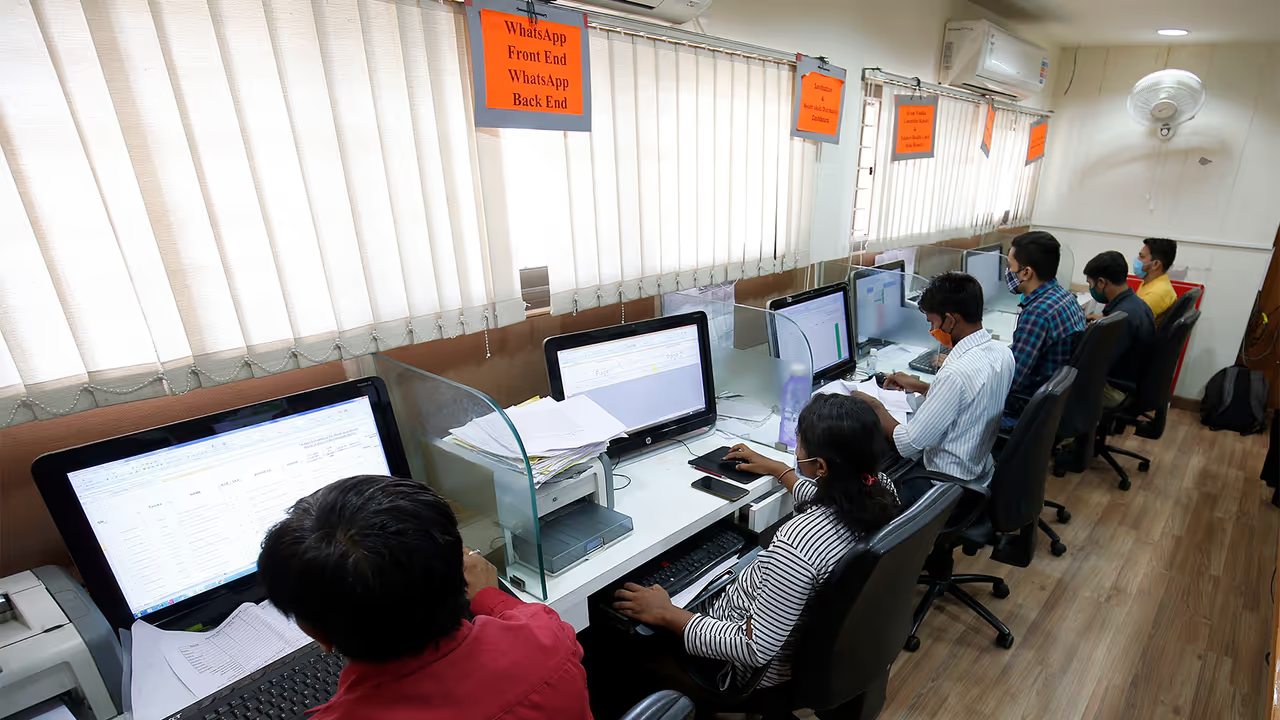
India and Southeast Asia are the leading growth markets in APAC's office sector, says a Colliers report. 82% of firms now use office-centric models, focusing on productivity, talent, and upgrading spaces, with minimal policy changes expected.
India and Southeast Asia stand out as the most growth-orientated cluster across the Asia Pacific region, with occupiers prioritising portfolio resilience, talent acquisition, and future-ready facilities. The shift comes as corporate workplace models broadly stabilise into office-centric structures.
Office-Centric Models Become the Norm
According to the 2027 Colliers Asia Pacific Workplace Insights report, 82 per cent of surveyed organisations across the region now operate office-centric models. Furthermore, 80 per cent of occupiers project no meaningful changes to their established workplace policies over the coming 12 months.
Corporate Strategies Prioritise Performance and Growth
Corporate real estate strategies reflect a sustained demand for physical offices primarily driven by productivity and business performance, followed by collaboration and innovation. Within the regional landscape, occupiers across India and Southeast Asia demonstrate an active commitment to business development despite broader geopolitical risks. Approximately 34 per cent of organisations within this specific cluster actively pursue growth and expand operations, guided primarily by cost efficiency and the availability of skilled personnel.
India: A High-Growth Office Market
"India remains a high-growth office market in the APAC region, underpinned by a resilient economy and sustained occupier expansion," said Arpit Mehrotra, Managing Director, Office Services, Colliers India.
"Beyond strong demand prospects, occupiers increasingly view the office as a strategic enabler of business performance, talent attraction and collaboration," Mehrotra added. "This shift is reflected in the APAC survey, where 21% of occupiers in India and Southeast Asia prioritise upgrading to higher-quality office spaces with the same proportion focused on reconfiguring their offices."
Artificial Intelligence to Reshape Workspaces
The broader survey also counters assumptions that artificial intelligence leads directly to real estate downsizing. All surveyed respondents indicate that artificial intelligence creates specialised roles requiring distinct technical skill sets and modified collaborative models. Additionally, 47 per cent of occupiers expect artificial intelligence to drive direct demand for different space types and workplace formats, particularly technology-enabled environments.
"These trends underscore a growing emphasis on value creation, with businesses investing in workplaces that support evolving workstyles and long-term growth. This flight to quality is expected to play an increasingly important role in occupier decisions across the region," he added.
Cost Pressures Lead to Optimisation, Not Downsizing
Cost pressures remain prominent, with 75 per cent of regional respondents citing occupancy expenses as a critical determinant in operational strategies. However, corporate entities increasingly choose portfolio optimisation over footprint contraction. While 40 per cent of respondents intend to renew existing leases, another 29 per cent plan to maintain their current spatial footprints without reductions.
Workplace Focus Shifts to Measurable Business Outcomes
"The workplace conversation has evolved significantly over the past few years. For most organisations, the question is no longer whether employees should be in the office, but how the workplace contributes to productivity, collaboration, innovation and business performance," said Mike Davis, Managing Director, Occupier Services, Asia Pacific at Colliers.
"Our survey shows that occupiers are becoming increasingly focused on outcomes," Davis added. "The organisations creating the most value are those aligning workplace, technology and talent strategies around measurable business objectives." (ANI)
(Except for the headline, this story has not been edited by Asianet Newsable English staff and is published from a syndicated feed.)