
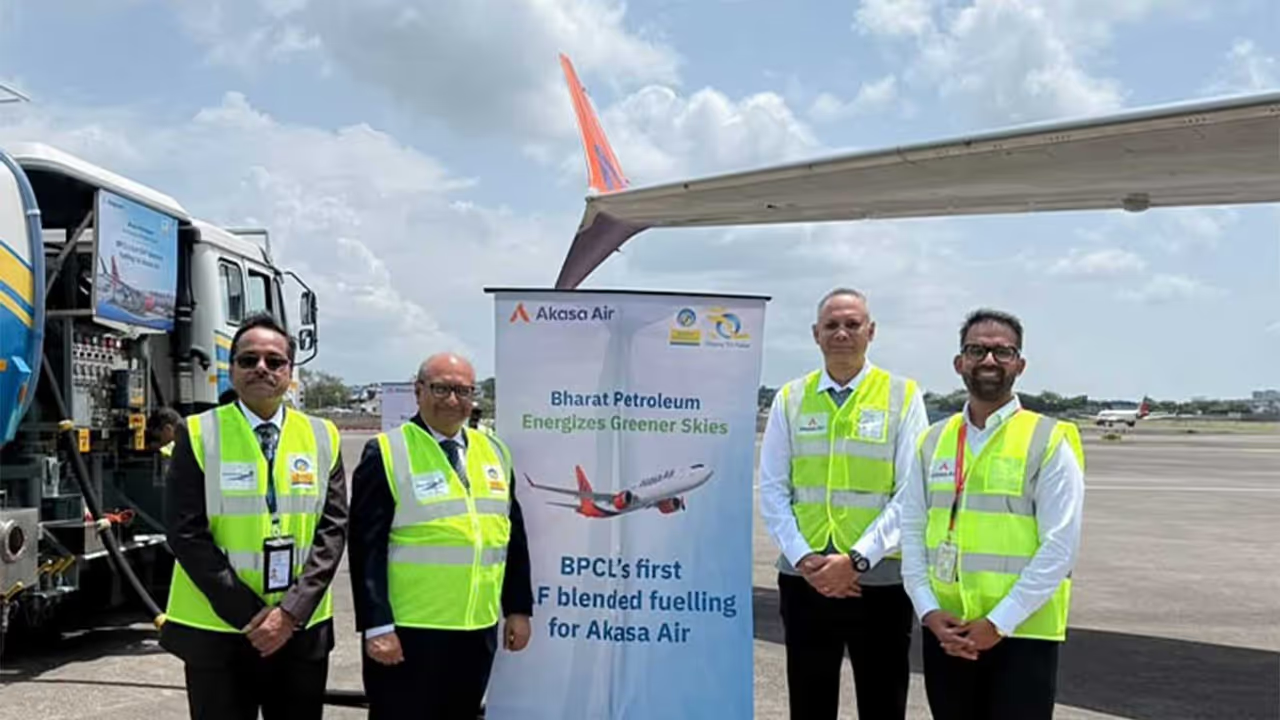
Akasa Air, in partnership with BPCL, successfully operated a commercial flight from Mumbai to Goa using a 1% blend of sustainable aviation fuel (SAF). This initiative is part of their MoU to explore SAF adoption and support aviation decarbonisation.
As per the release, the flight departed Chhatrapati Shivaji Maharaj International Airport, Mumbai, at 13:05hrs IST and arrived at Manohar International Airport (GOX), Goa, at 14:30hrs IST.
Partnership for Decarbonisation
“The initiative builds on the Memorandum of Understanding signed by Akasa Air and BPCL in July 2026 to explore adoption of SAF, along with other opportunities supporting aviation decarbonisation,” Akasa Air noted adding, the flight will offer both the organisations with insights and practical learnings that can help inform future initiatives. Under the MoU, both the companies agreed to establish a framework for the supply and offtake of Sustainable Aviation Fuel (SAF)-blended Aviation Turbine Fuel (ATF) at designated airports across India.
Akasa Air's Commitment to Sustainability
Commenting on the development, Ankur Goel, Chief Financial Officer, Akasa Air, said, “Sustainability is one of Akasa Air’s core values and shapes how we are building the airline for the long term. Since inception, we have invested in next-generation aircraft, technology and responsible practices that enable more conscious and efficient operations, both on the ground and in the air. This flight with BPCL translates our partnership into tangible action. Scaling SAF in India will require coordinated action across the ecosystem, supported by domestic supply, enabling policy and commercial viability. We are committed to exploring this transition.”
Fleet and Operational Efficiency
The airline is continuing to implement initiatives aimed at promoting more sustainable and efficient operations, it noted in the release adding, its Boeing 737 MAX fleet forms a key part of its efforts to operate an environmentally progressive and fuel-efficient fleet. “Powered by CFM International LEAP-1B engines and incorporating advanced-technology winglets, the 737 MAX offers excellent economics, reducing fuel use and emissions by 20 per cent compared to the airplanes it replaces,” it said. Additionally, the airline has also partnered with OpenAirlines to deploy SkyBreathe®, a fuel-management solution that uses advanced analytics to improve operational efficiency and reduce carbon emissions across its network. Akasa Air was also the first Indian airline to voluntarily discontinue traditional water-cannon salutes during route inaugurations, helping conserve more than 5.5 lakh litres of water to date.
BPCL on India's Energy Transition
Subhankar Sen, Director (Marketing), Bharat Petroleum Corporation Limited (BPCL), said, “The transition from conventional fuels to sustainable alternatives is both an environmental imperative and a strategic necessity for India. While feedstock availability and aggregation have historically posed challenges due to fragmented supply chains, sustained efforts across the value chain have helped create the foundation for a viable Sustainable Aviation Fuel ecosystem. BPCL remains firmly committed to advancing sustainable fuels as part of India's broader energy transition journey. As a nation that relies significantly on crude oil imports, enhancing energy security through sustainable and indigenous energy solutions is the way forward.” (ANI)
(Except for the headline, this story has not been edited by Asianetnews Editorial staff and is published from a syndicated feed.)