
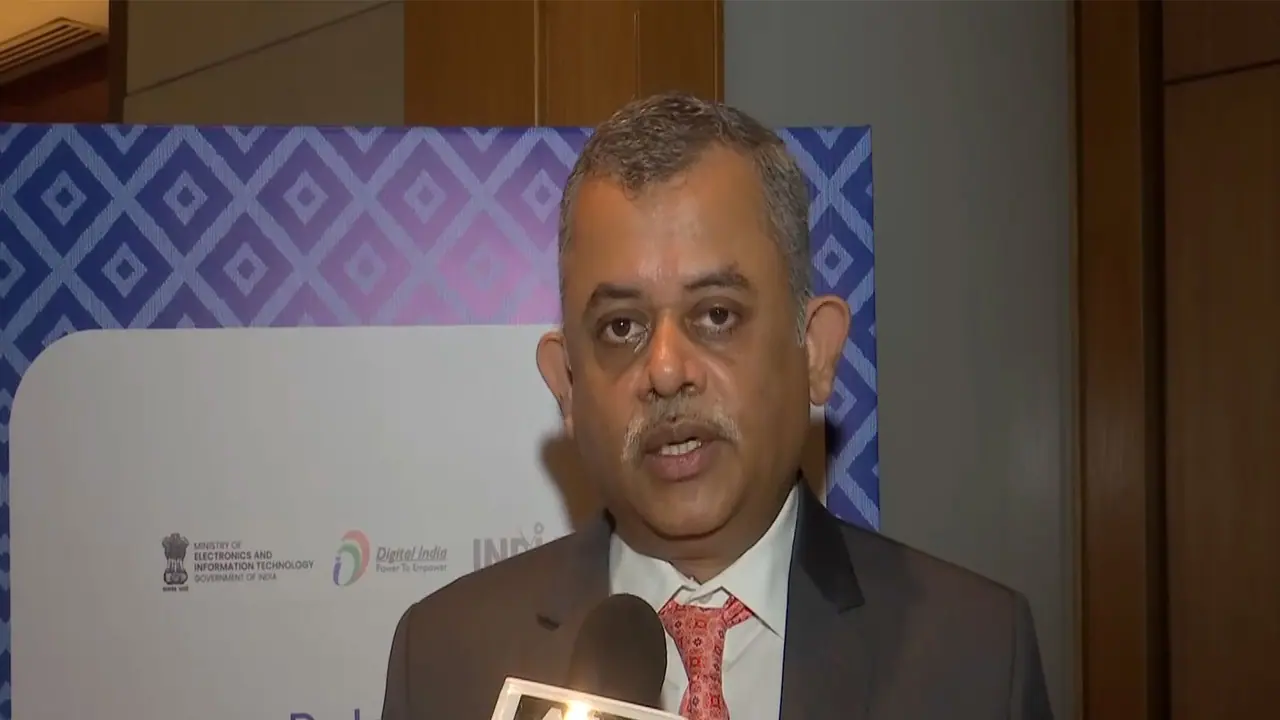
World Bank's Neelkanth Mishra states just over 4% of Indian jobs are at risk from AI, a lower figure than in developed economies. He emphasized that AI is more likely to support workers and boost productivity than to replace them.
Just 4% of Indian Jobs at Risk From AI
Slightly over 4 per cent of jobs in India are at risk of disruption from artificial intelligence, significantly lower than the mid-teens share seen in most developed economies, according to World Bank Group Executive Director Neelkanth Mishra.
AI to Support Workers, Not Replace Them
Speaking to ANI on the sidelines of the IndiaAI Mission and World Bank Group's India launch of the World Development Report 2026, Mishra said the report views AI primarily as a technology that can support workers rather than replace them.
The report found that developing economies face a lower risk of AI-led job losses, while the share of jobs that could benefit from AI remains comparable to that in advanced economies.
"Developing economies are less at risk of job losses. So only about slightly above 4 per cent of jobs in India, for example, are at risk of disruption from AI versus mid-teens in most of the developed markets," Mishra said.
He said AI could benefit workers in India by improving productivity and supporting existing jobs rather than necessarily displacing them.
Unlocking AI's Economic Benefits
Mishra also highlighted the importance of deploying AI at scale to unlock its economic benefits. He cited India's experience with digital public infrastructure such as Aadhaar, UPI and CoWIN, saying these platforms demonstrated how technology can be used to deliver services to millions of people.
He said AI is already being used in areas such as weather forecasting for farmers, improving sugarcane yields and large-scale tuberculosis diagnosis.
Skills and Infrastructure a Necessity
However, Mishra stressed that wider AI adoption would require access to energy and complementary skills.
"Making sure that there are complementary skills is important. In order for someone to be able to use AI, do they have the basic skills, like basic arithmetic or language skills, or whatever is needed to use AI," he said.
Data, Computing, and Government's Role
On data, Mishra said India's Digital Privacy Act could help create a secure framework for unlocking data held by companies, which could in turn strengthen AI models.
He also distinguished between computing capacity required to train AI models and that needed to run them. While developing AI models requires significant risk capital, he said inference computing, the capacity required to operate AI systems, can remain commercially viable for businesses.
"The government doesn't really have much of a role there. What the government can provide is the ecosystem, the regulation so that access to energy, access to water, access to land, the access to financing," Mishra said.
Need for Balanced AI Regulation
On AI regulation, Mishra said formal safeguards are becoming necessary as new safety concerns emerge. However, he cautioned that regulations should be carefully designed to avoid slowing technological innovation.
He said the government is expected to seek industry feedback through a consultation paper, adding that AI guardrails should balance safety with the need to encourage innovation.
(Except for the headline, this story has not been edited by Asianetnews Editorial staff and is published from a syndicated feed.)