Why Are Car Tyres Always Black? The Surprising Science Behind Their Colour
Synopsis
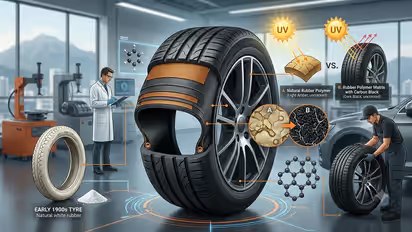
Natural rubber is actually light in colour, but car tyres are black due to the addition of carbon black during manufacturing. This crucial ingredient is not for aesthetics, but rather to significantly enhance the tyre's durability, heat management, and resistance to UV radiation.
Have you ever wondered why car tyres are almost always black, even though tyres can technically be made using different rubber compounds? Unlike the body of a car, which comes in countless colours, tyres have remained almost universally black for generations. The reason is not simply tradition or appearance. The colour of a tyre is closely linked to the materials added to rubber during the manufacturing process.
Rubber is not naturally black
Natural rubber itself is not black. In its original form, rubber is generally light or pale in colour. So why does it turn black when it becomes a car tyre? The answer lies largely in carbon black, a form of finely divided carbon that is added to rubber compounds used for tyres. Carbon black serves an important purpose beyond giving tyres their familiar colour. It helps improve the durability and performance of the rubber, making it better suited to the demanding conditions tyres face on the road.
Carbon black helps tyres last longer
Car tyres constantly experience friction, heat, pressure and exposure to sunlight. A tyre therefore needs to withstand considerable wear while maintaining its structural properties.
Carbon black can strengthen the rubber compound and improve its resistance to abrasion. It also helps protect the rubber from the damaging effects of ultraviolet radiation and heat. This means the familiar black appearance is essentially a result of a material that plays a practical role in tyre construction.
Why aren't tyres made in different colours?
Coloured tyres are technically possible. In fact, before carbon black became widely used in tyre manufacturing, early rubber tyres could have a much lighter appearance.
However, replacing carbon black with coloured materials would require changes to the rubber formulation. More importantly, manufacturers would need to maintain the strength, heat resistance, durability and other performance characteristics expected from modern tyres. For everyday passenger vehicles, black therefore remains the practical standard.
Carbon black also helps with heat management
Tyres generate heat while a vehicle is moving because of friction and repeated deformation of the rubber. Carbon black contributes to the thermal properties of the rubber compound and helps tyres cope with operating temperatures. This is particularly important because excessive heat can affect tyre performance and longevity.
Black tyres became the industry norm
The widespread use of carbon black eventually made black tyres standard across the automobile industry. Over time, the colour also became closely associated with tyres, but its original importance was largely functional rather than cosmetic.
So, the next time you look at your car's tyres, remember that their black colour is more than just a design choice. It is largely a visible result of the materials used to make the rubber stronger, more durable and suitable for everyday driving.
The takeaway
Car tyres are black mainly because tyre manufacturers add carbon black to rubber compounds. It helps strengthen the rubber, improve resistance to wear and protect it against environmental factors such as UV exposure and heat. In other words, the black colour is not merely about how tyres look—it is closely connected to how they perform on the road.
Explore the latest Lifestyle NewsFood and RecipesHealth NewsAsianet News Official App