Viral Video: How Menstrual Pads Looked 200 Years Ago
Synopsis
Viral Post: These were covered in undergarments. But stopping the flow was very difficult. Many women had to endure discomfort, pain, and embarrassment for five days.
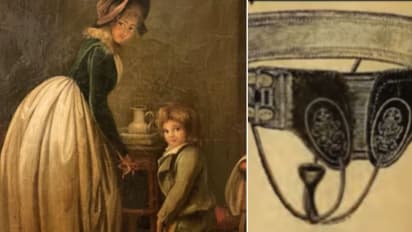
For today's women, menstruation is not a big problem. Sanitary pads, available in medical shops and general stores, are leak-proof for 8-12 hours. Not only that, they are fragrant and comfortable. But imagine that time 200 years ago, around 1820-1830, when menstruation was truly hell for women. There were no use-and-throw products, only home remedies. Rags (cloth patches) made from old clothes, flannel, or pieces of cotton were the only refuge. These were covered by undergarments, but stopping the flow was very difficult. Many women had to endure discomfort, pain, and embarrassment for five days.
In the early 19th century, women in Europe and America primarily relied on reusable rags. These rags were cut from old petticoats or bedsheets. On average, a woman had 6-10 pieces. But the problem was that these rags lacked an absorbent layer, so leakage was common. According to historians, during the Victorian era (1837-1901), women called this time of the month "rag time" or the "dirty week." Housewives would secretly wash them, clean them with soap, boil them, and dry them in the sun. Still, the risk of infection was always present because hygiene standards were not as high as they are today.
A Woman Wrote in Her Diary
A revolution occurred in the 1880s when washable sanitary pads entered the market. These were made with a top layer of cotton and multiple layers of cloth, attached to an elastic belt around the waist and secured with pins or snaps. The British company Southalls first released commercially reusable pads in 1888, which were gauze-based. But these were expensive and limited to wealthy households. Poor women still relied on homemade rags. The belt system was uncomfortable. The tight band caused irritation, and slipping while walking was a common problem. One American woman wrote in her diary, "With every step, it reminded me that I was 'unclean.'"
Using these pads was difficult, and reusing them was cumbersome. After use, the pads were soaked in cold water and then washed with warm soap. Bleaching powder was sometimes used, but the chemicals irritated the skin. Since menstruation was a taboo topic at the time, they were hung in hidden corners to dry. Going to school or work was difficult due to the fear of leakage. Historical records show that in the 1800s, 70% of women stayed indoors during their periods. Similar practices existed in Asian countries like India, where pieces of old sarees were used. But the Industrial Revolution in Europe brought change. Johnson & Johnson launched the first use-and-throw pads, "Lister's Towels," in 1896. These were made from wood pulp but still relied on a belt.
Hygiene is Essential
This period was one of the worst in its history, affecting women's health. Infections, anemia, and mental stress were common. Doctors called it "menstrual disorders," but the real problem was the lack of hygiene. The feminist movement brought change in the 20th century, with adhesive-backed pads being introduced in the 1920s. Today, the global market for sanitary products is worth $30 billion, but 500 million women in developing countries still use unsafe methods. According to a UN report, the effects of historical practices are still visible today. While disposable pads are not great for the environment, hygiene is essential.
Watch the video here
Explore the latest Lifestyle NewsFood and RecipesHealth NewsAsianet News Official App