Independence Day 2025: Why India Celebrates Independence Day on August 15?
Synopsis
India marks its Independence Day on August 15, commemorating the end of British colonial rule in 1947. But why was this date chosen? Here is the historical and political reasoning behind this day.
Independence Day is a great moment of pride and remembrance for every Indian, celebrated every year on 15th August, marking the day when the country achieved freedom from more than 200 years of British colonial rule. But why was this date chosen? Here is the historical and political reasoning behind this day.
Struggle For Independence:
The long and protracted struggle for India's independence continued for nearly two centuries under British colonial rule. Thousands of freedom fighters and national leaders, such as Subhas Chandra Bose and Mahatma Gandhi, faced their greatest disappointments in bringing in the civil disobedience, revolutionary movements, or armed uprising through the resistance.
The 1940s were quite accelerationist to the liberation movement, especially after World War II. The drain, increased nationalistic feeling, and global pressure forced Britain to think of quitting the country.
Why August 15 Was Chosen
The actual moment that India became independent was in 1947 in the British Parliament. It was entrusted to the last British Viceroy of India, Lord Louis Mountbatten, to oversee the transition.
Wanting to link India's independence with the day meaningful in modern history, Mountbatten fixed the transfer of power on August 15, 1947-the second anniversary of Japan's surrender to the Allies in World War II-a date that was of significance to the British military.
August 15 became the official Independence Day of India, even though the Indian Independence Act was passed on July 18, 1947.
Partition With Independence:
Independence has arrived with a heavy price which is the partition of India and Pakistan, which likewise took place in August 1947. Millions of people were uprooted, and there were widespread communal riots where many lives were lost. August 15 is celebratory, but it is also a day of reflection.
How India Celebrates Independence Day
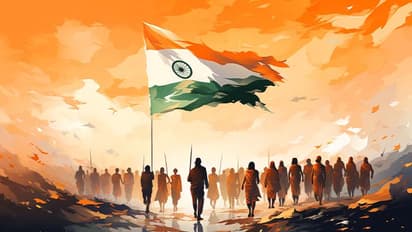
On the Independence Day, the Prime Minister hoists the national flag at the Red Fort in Delhi, after which he makes an address to the nation. Flag hoisting, cultural programmes, and patriotic parades are organized all across schools, offices, and communities.
Tricolored flags, strings of patriotic songs, and the spirit of oneness dominate the day's celebrations. These reaffirm the sacrifices made by our fighters for freedom.
India celebrates Independence Day on August 15. It is the day on which the centuries of colonialism ended, and self-governance emerged. A date fraught politically and symbolically with such deep historical meaning deserves to be celebrated. It is an acknowledgment of the sacrifice of millions who struggled for the freedom that we enjoy today. Why India celebrates Independence Day by an Address to the Nation Its Why in a Short Story
Explore the latest Lifestyle NewsFood and RecipesHealth NewsAsianet News Official App