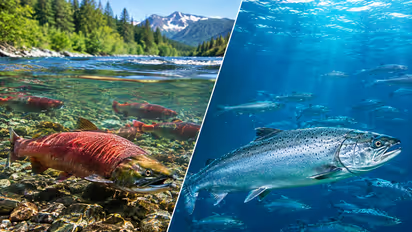
Why do salmon swim thousands of miles back to their birthplace only to die? Discover the science behind their remarkable migration, how they navigate home and why many Pacific salmon die after spawning.
People often want to return to their hometowns after spending years away. A salmon fish behaves exactly like this. This fish takes birth in a freshwater river. It then travels to the ocean to find food and grow. But when the time comes to lay eggs, the salmon swims thousands of kilometers back to its exact birth river. It lays its eggs there and then gives up its life. You might wonder why this fish takes such a tough journey just to die.
23
Born in the river, grows in the ocean
The salmon starts its life journey in fresh water. A female salmon lays eggs in a small pebble nest inside the river. The male fish then fertilizes these eggs. The baby fish grow there for some time before traveling to the ocean. The ocean gives them plenty of food to grow big. But how does the salmon remember its way back after swimming thousands of kilometers? Salmon fish possess a strong homing instinct. Scientists say these fish memorize the unique smells of their birth river. They use these smell memories and environmental cues to find their exact birthplace years later.
33
The fish that dies right after laying eggs
This is the most tragic yet fascinating part of a salmon's life. Most Pacific salmon species reproduce only once in their entire lifetime. These fish swim against very strong river currents to return home. They even jump over huge waterfalls during this journey. This takes a massive physical toll on their bodies. The salmon completely stops eating food once it enters fresh water. The long journey, nest digging, and reproduction drain all its energy. The fish dies just a few days after laying eggs. But even in death, the salmon helps nature. Its decaying body releases essential nutrients into the river and provides food for other wild animals.