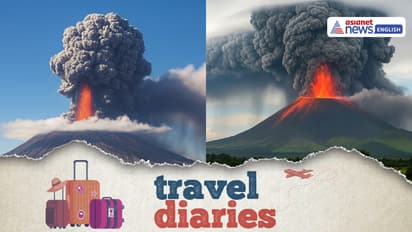
Explore the world’s most spectacular volcano-watching destinations, from glowing lava fields in Hawaii to dramatic crater views in Iceland. This guide highlights the top 10 volcanoes to visit and how to experience them safely and unforgettablely.
Volcanoes are among the most powerful forces on Earth, and watching them up close is an experience that stays with you for a lifetime. From glowing rivers of lava to mist-covered craters and landscapes shaped by centuries of eruptions, each volcano tells a story that is both ancient and alive. Travellers from around the world seek out these fiery wonders not just for the thrill, but for the chance to see nature in its rawest form.
Whether you want to stand on the rim of an active crater, hike across newly formed lava fields, or simply admire a perfect volcanic cone from a peaceful lakeside, the world offers many unforgettable choices. Here are the top volcano-watching destinations and how you can visit them.
211
Mount Etna, Italy
Fly into Catania, Sicily. Guided tours leave daily to Rifugio Sapienza on the southern flank. A cable car followed by 4x4 shuttles takes you close to the summit craters. Hiking tours are available with licensed volcano guides.
Best time: April to October.
What you will see: Lava fields, smoking vents, and sometimes glowing eruptions visible at night.
311
Kīlauea and Mauna Loa, Hawaii, USA
Fly to Hilo or Kona on Hawai‘i Island and enter Hawai‘i Volcanoes National Park. Trails like Kīlauea Iki, Sulphur Banks, and Devastation Trail offer safe access. Rangers provide real time updates on eruption areas.
Best time: Year round.
What you will see: Lava crust, steam vents, caldera overlooks, and glowing lava during active periods.
Take a train or bus from Tokyo to the Fuji Five Lakes region, especially Lake Kawaguchiko. Climbing is allowed only in July to September along four official routes.
Best time: Winter for clear views or July and August for trekking.
What you will see: A perfect snow capped cone rising above forests and lakes.
511
Arenal Volcano, Costa Rica
Travel to La Fortuna. You cannot hike to the summit, but trails in Arenal Volcano National Park offer great viewpoints. The region also has natural hot springs heated by the volcano.
Best time: December to April.
What you will see: Lava fields from past eruptions, rainforest, waterfalls, and thermal pools.
611
Mount Bromo, Indonesia
Fly to Surabaya or Malang in East Java. Jeeps take visitors to Mount Penanjakan before dawn for the classic sunrise view. You can walk across the Sea of Sand and climb the crater rim.
Best time: May to September.
What you will see: A smoking crater, a vast volcanic desert, and golden sunrise panoramas.
711
Eyjafjallajökull, Iceland
Rent a car or take a South Coast tour from Reykjavík. The volcano sits under a glacier, but you can explore nearby attractions like Þórsmörk, Sólheimajökull, and the Eyjafjallajökull Visitor Centre.
Best time: June to August.
What you will see: Glacial landscapes, black beaches, waterfalls, and dramatic volcanic terrain.
811
Stromboli, Italy
Take a ferry from Sicily, either Milazzo or Messina. Evening boat tours circle the Sciara del Fuoco, where regular eruptions can be viewed safely. Guided hikes are allowed depending on activity levels.
Best time: May to September.
What you will see: Frequent small eruptions, lava bursts, and a glowing crater at night.
911
Mount Yasur, Vanuatu
Fly to Tanna Island from Port Vila. Four wheel drive trucks take visitors to the base of the volcano. Short guided walks lead to the crater rim.
Best time: May to October.
What you will see: Explosive lava fountains, ash clouds, and loud rumbling eruptions.
1011
Mount Ruapehu, New Zealand
Drive from Taupō or Ohakune to Tongariro National Park. In winter, Ruapehu has ski fields. In summer, you can hike trails around the base. Summit access depends on alert levels.
Best time: December to April for hiking, June to September for skiing.
What you will see: A crater lake, geothermal vents, and dramatic alpine scenery.
1111
Piton de la Fournaise, Réunion Island, France
Fly to Réunion. From Pas de Bellecombe, hikers can walk across the caldera to reach viewpoints near active fissures. Local authorities provide safety updates regularly.
Best time: May to October.
What you will see: Fresh lava flows, ash plains, lava tubes, and smoking vents.