Published : Oct 30, 2026, 10:14 PM ISTUpdated : Oct 30, 2026, 10:20 PM IST
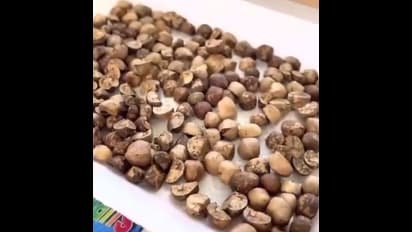
Mexican jumping beans move due to tiny moth larvae living inside seed pods. When exposed to sunlight and heat, the larva violently arches its body against silk-lined inner walls, making the pod hop to reach cooler shade and avoid dehydration.
What makes Mexican jumping beans move on their own?
Mexican jumping beans are not ordinary beans or edible pulses. They are seed pods from a Mexican shrub called Sebastiania pavoniana, which become home to the larvae of a small moth species known as Cydia saltitans. The larvae live inside the fallen seed pods for several months, and their movements make the pods appear to jump without any external force. The unusual behaviour is actually a survival mechanism that helps the insects escape extreme heat.
25
How does sunlight make Mexican jumping beans hop?
The jumping begins when the seed pods are exposed to hot conditions, particularly on the ground under direct sunlight. As temperatures rise, the larva moves its body sharply inside the hard outer shell. It grips silk threads attached to the inner wall, arches its body and strikes the shell with its underside.
Mexican Jumping Bean
They can move and jump. Is it possible? 🤔
Yes, because grey moth larvae live inside them.
🐛Caterpillars make these jumps to avoid overheating in the sun ☀️ https://t.co/6iWAvMVmPb
— Interesting Channel (@ChannelInteres) December 26, 2023
These repeated movements make the entire seed pod rock, roll, flip or jump across the ground. The movement can help the larva reach cooler spots, such as shade or small crevices, where it is less exposed to heat.
35
Why do Mexican jumping beans react differently to coloured light?
Researchers at Binghamton University in the US have investigated how different light wavelengths influence the movement of these larvae. A 2024 study, published in the journal Behavioural Processes, tested their responses to red, green, purple and white light. The larvae showed the greatest movement under red light and the least activity under purple light. Interestingly, less than one per cent of the light penetrated the seed walls.
Why Do Mexican Jumping Beans Jump 🤔 https://t.co/DcsJnKNyYH
— Zack D. Films (@zackdfilms1) June 20, 2026
Researchers believe the larvae may detect extremely small amounts of light or subtle temperature changes associated with different wavelengths. However, the exact sensory mechanism is still not fully understood.
Moving towards shade helps protect the larva from excessive heat and the risk of drying out. When temperatures become less stressful, its jumping activity generally decreases. The seed pod may then remain still until conditions change again. These movements are not random tricks or a reaction to an external force. They are part of the larva's heat-avoidance behaviour, helping it find a more suitable environment while remaining protected inside its seed shell. Research has also shown that the larvae use this movement to search for shelter through a process resembling a random walk.
55
How do Mexican jumping beans repair their shells and become moths?
The larva can also repair minor damage to its protective seed shell by producing fine silk threads. However, Binghamton University research found that larvae living in damaged seed pods were less likely to jump in response to high temperatures, even when given time to repair the damage. Scientists believe damage may disrupt the silk attachments that help the insect move its shelter. The larva eventually completes its development inside the pod, pupates and emerges as an adult moth. The entire larval period can last around six to eight months, making the seed pod a temporary home and protective shelter throughout its development.