
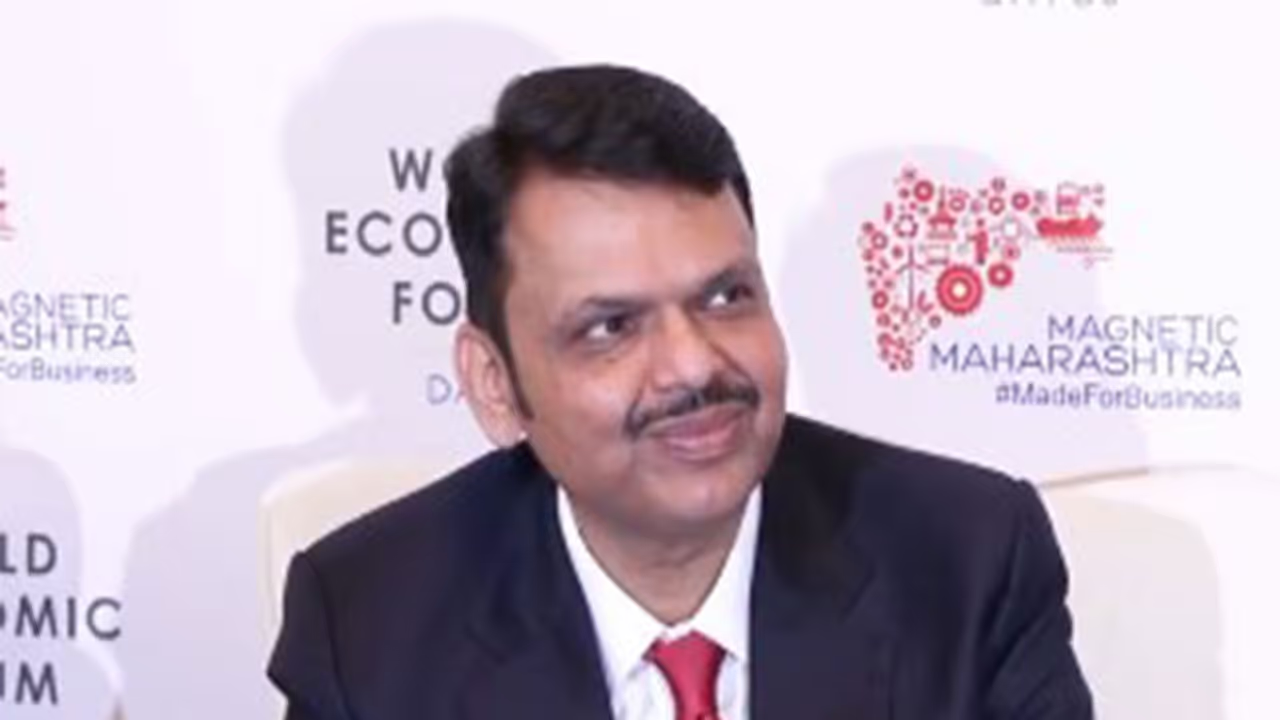
Maharashtra CM Devendra Fadnavis at WEF 2026 in Davos stated the state has a 55-60% MoU conversion rate, higher than other states. He pitched Maharashtra as the best place to invest in India, citing credibility and an investment-friendly ecosystem.
Fadnavis Touts High MoU Conversion Rate at Davos
Maharashtra Chief Minister Devendra Fadnavis on Monday said that the state has higher rate of converting Memorandums of Understanding (MoUs) into actual projects as compared to other states, highlighting that more than 55 per cent to 60 per cent in the state were "fructified" while 75 per cent of MoUs in Davos have been acted upon. Fadnavis was attending the World Economic Forum (WEF) 2026 in Davos.
Addressing the press conference here, Fadnavis said, "In India, we have seen that normally 35 per cent of the MoUs are fructified in most of the states in India, but in Maharashtra, it is more than 55 per cent to 60 per cent. In case of the MoUs in Davos, over 75 per cent have been acted upon."
He credited the investment-friendly environment created under Prime Minister Narendra Modi's leadership for boosting global confidence in India. "Maharashtra offers credibility, which is more than capital in today's world. We delivered what we said. PM Modi has created an ecosystem where everyone wants to invest in India, and we are here to tell that in India, Maharashtra is the best place to invest," Fadnavis said.
He said the government is targeting investments across a wide range of sectors. "We are targeting all sectors because we have a diverse portfolio. Ten to twelve different sectors will be executing the MoUs," he added.
Maharashtra's Cultural Showcase in Zurich
Meanwhile, sharing a post on X, the Chief Minister's Office (CMO) wrote, "In the esteemed presence of Chief Minister Devendra Fadnavis, various programmes showcasing the culture and traditions of Maharashtra were presented yesterday in Zurich by the Brihan Maharashtra Mandal Switzerland."
मुख्यमंत्री देवेंद्र फडणवीस यांच्या प्रमुख उपस्थितीत काल झ्युरिक येथे बृहन्महाराष्ट्र मंडळ स्वित्झर्लंडतर्फे महाराष्ट्राच्या संस्कृतीचे आणि परंपरेचे दर्शन घडविणारे विविध कार्यक्रम सादर करण्यात आले.@Dev_Fadnavis #MahaAtDavos #WEF2026 #UnstoppableMaharashtra pic.twitter.com/NxdikFMcr7 — CMO Maharashtra (@CMOMaharashtra) January 19, 2026
India's Strongest-Ever Presence at Davos
The 56th World Economic Forum in Davos (Jan 19-23, 2026) is seeing India step onto the world stage with its biggest-ever delegation, a 10,000 sq ft India Pavilion, and a clear message: India is already a key driver of global growth, not just a long-term bet.
Top industry leaders and policymakers highlighted India's transformation and future potential at the World Economic Forum (WEF) in Davos, Switzerland, reflecting India's growing influence in global technology, infrastructure, and financial services.
States and Corporate Leaders Pitch India's Growth
Bharat Kaushal, Executive Chairman of Hitachi India, at the World Economic Forum in Davos, Switzerland, highlighted how technology is essential for tackling global disruptions and shaping the future of infrastructure and manufacturing. Speaking to ANI, he noted that Hitachi, with a 90-year history in India, plays a key role in the country's twin push for both physical and digital infrastructure development.
Ten states, including Maharashtra, Andhra Pradesh, Assam, Gujarat, Karnataka, Jharkhand, Kerala, Madhya Pradesh, Telangana, and Uttar Pradesh, are pitching investment-ready projects at the Pavilion. Chief Ministers like N Chandrababu Naidu (Andhra Pradesh), Devendra Fadnavis (Maharashtra), Himanta Biswa Sarma (Assam), and others are leading state-specific roadshows.
Over 100 Indian CEOs are in Davos, including Mukesh Ambani (Reliance), N Chandrasekaran (Tata Sons), Sunil Bharti Mittal (Bharti Enterprises), Sanjiv Bajaj (Bajaj Group), and Nandan Nilekani (Infosys). They are meeting with global investors, sovereign funds, and multinational CEOs to secure long-term capital flows.
The combined presence of central government, state governments, and top corporate leaders makes this the most comprehensive Indian outreach at Davos to date. It signals a shift from "potential" to "present" in the global economic narrative, aiming to convert dialogue into concrete investments and partnerships. (ANI)
(Except for the headline, this story has not been edited by Asianet Newsable English staff and is published from a syndicated feed.)