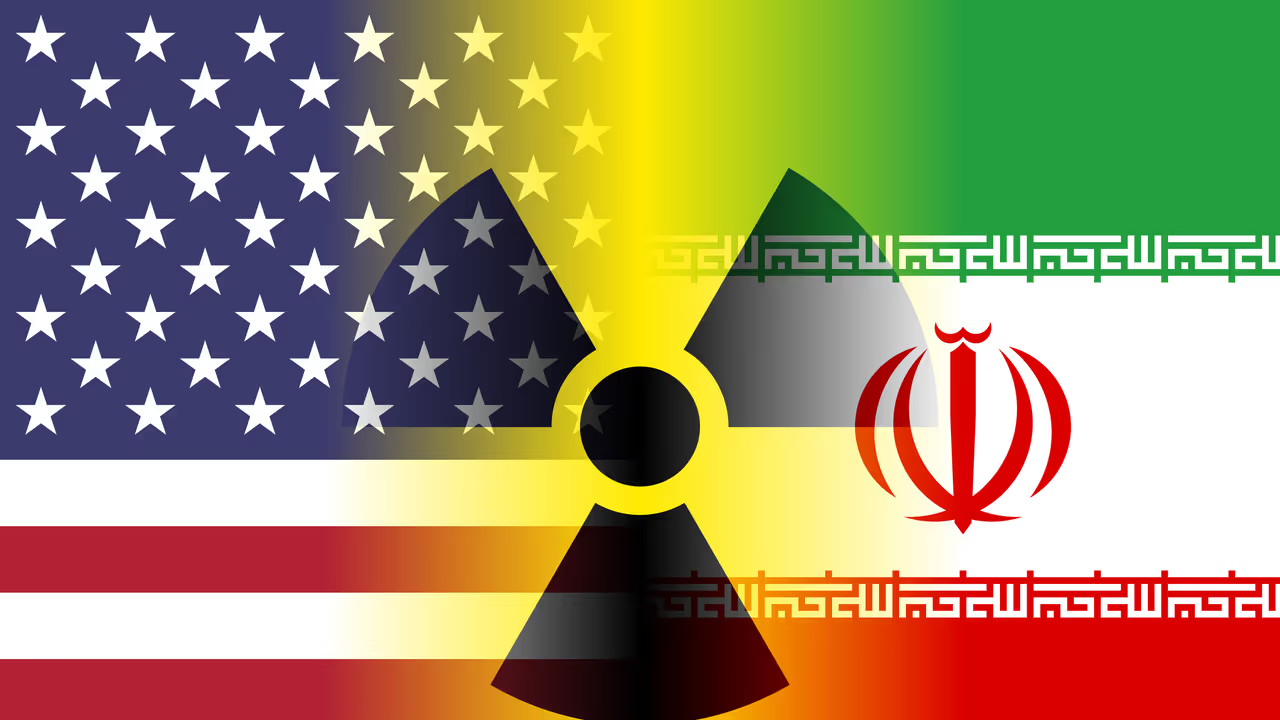
IAEA chief Rafael Grossi urges “utmost restraint” after US-Israeli strikes on Iran, as the International Atomic Energy Agency says there is “no indication” nuclear sites were hit during the escalation.
The head of the UN’s nuclear watchdog on Monday urged calm after a sharp escalation in tensions between Israel, the United States and Iran, warning that the situation in the region remains deeply worrying even as inspectors continue to assess the impact on nuclear facilities.
IAEA sounds alarm amid rising tensions
Speaking in Vienna, Rafael Grossi, who leads the International Atomic Energy Agency, said the latest developments in West Asia demand restraint from all sides.
Opening a special session on Iran at the agency’s headquarters in Vienna, Grossi struck a cautious but firm tone as diplomats gathered following the recent military exchanges.
Related Articles

“I reiterate my call on all parties to exercise maximum restraint to avoid further escalation,” Grossi said as he addressed the board of governors.
He also described the situation in the Middle East as “very concerning,” reflecting growing international anxiety after the strikes and Iran’s retaliatory missile attacks.
No signs of damage to nuclear facilities so far
Even as tensions remain high, the agency said it has not seen evidence that Iran’s nuclear infrastructure was directly hit.
According to the IAEA, there is currently “no indication” that any nuclear installations in Iran were damaged or struck during the recent attacks. The agency continues to monitor developments closely, given the potential risks associated with military activity around nuclear sites.
"Efforts to contact the Iranian nuclear regulatory authorities... continue, with no response so far. We hope this indispensable channel of communication can be re-established as soon as possible," Grossi added.
Emergency meeting requested
The extraordinary meeting of the board of governors was convened after requests from both Tehran and Russia, a key ally of Iran.
Diplomats gathered ahead of a previously scheduled session of the board, which includes representatives from 35 countries. The discussions come at a moment of heightened scrutiny of Iran’s nuclear programme, which the agency monitors as part of its international mandate.
Earlier, the IAEA said it was “closely monitoring developments in the Middle East, and urges restraint to avoid any nuclear safety risks to people in the region.”
Growing global concern
The emergency talks underline the wider concern within the international community following the recent strikes by United States and Israel, and Tehran’s response.
For many diplomats in Vienna, the immediate priority is preventing the crisis from spilling over into a larger regional confrontation — particularly one that could threaten nuclear facilities or escalate into a broader conflict.