
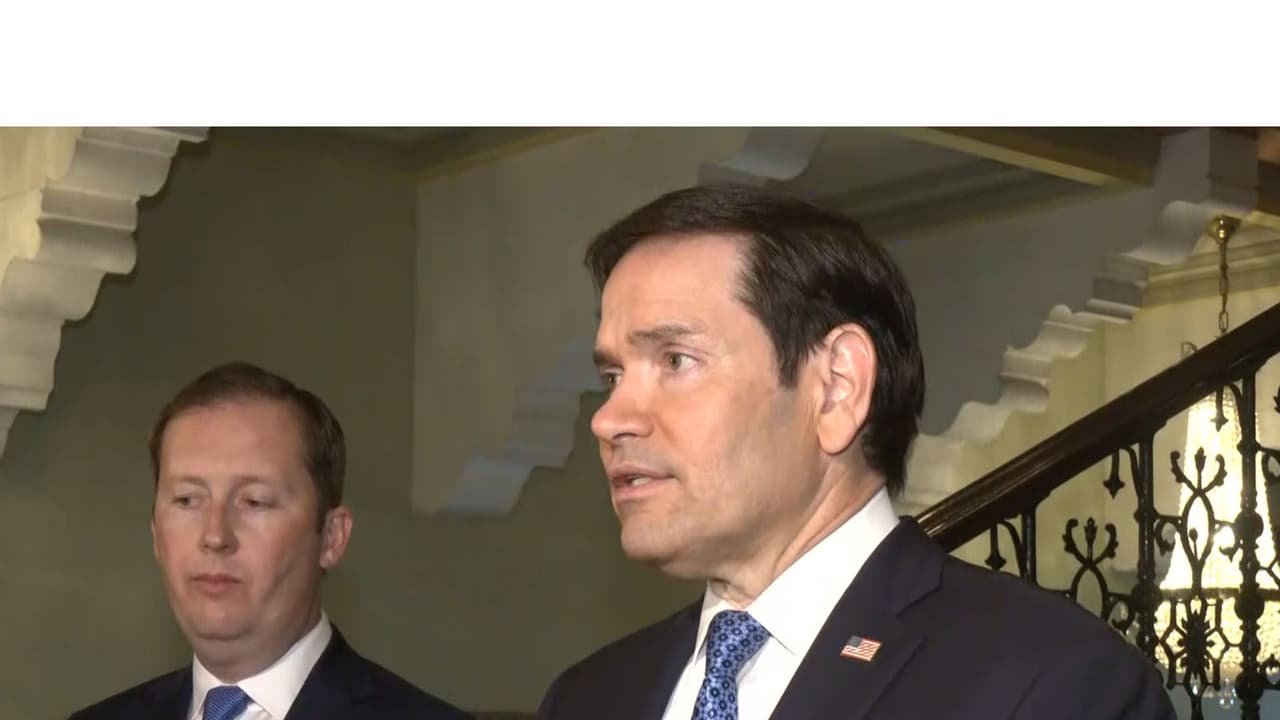
US Secretary of State Marco Rubio, in Mumbai, stated the bilateral trade pact is 'very close' to being finalized. He highlighted strategic ties, plans to discuss Venezuelan oil with Reliance, and called India a 'refining superpower'.
US Secretary of State Marco Rubio arrived in India on Tuesday, where he spoke about trade and "strategic" relations with India and outlined upcoming plans ahead of his scheduled meeting with External Affairs Minister S Jaishankar. Interacting with reporters in Mumbai, Rubio addressed topics encompassing geopolitical situations such as the Ukraine war, US arms control and the ongoing dialogue regarding Russian oil procurement.
US-India Trade Agreement
Addressing the status of the long-awaited bilateral pact, Rubio clarified that the State Department does not directly negotiate trade agreements, stating, "As far as the trade agreement is concerned, the State Department doesn't negotiate trade agreements, but we are very much involved in what's happening. My counterpart, the National Security Advisor, and I care a lot about it. We're very, very close. I would say we're about as close as you can be without having executed the agreement. I think there's a small number of items left to wrap up, so I think that will happen shortly. We're hoping, which it should, and hopefully have some good news to announce soon and sign it thereafter. So, we're very optimistic that we will have something in place here very soon."
India's Role in Global Energy
Furthermore, he mentioned that the American delegation would hold a meeting with Reliance regarding oil production in Venezuela, observing that India had made significant progress in diversifying its petroleum procurement, which he described as a prudent measure. Responding to inquiries regarding India's capacity to address global energy requirements, Rubio remarked, "India is a refining superpower. They have the capability to refine heavy crude. They've done so in the past, and I think as more and more Venezuelan oil comes online, it's something they can do. They also, by the way, have pre-existing oil concessions in Venezuela that can produce more themselves."
"So, all these are positive things. I'm not claiming to you that Venezuela alone can fill the hole that could be caused by some of the things that are happening around the world, but I think over time, it most certainly can, and in the short term, it can certainly help. So, that's one of the things we'll talk about. With India, we've talked about it in the past, and they sound ready. They're willing to do it. There might be a few impediments that stand in the way in terms of sanctions and so forth that we'll have to work through," he added.
Significance of Strategic Partnership
Shedding light on the significance of his visit, Rubio noted, "First of all, I will point out that the Foreign Minister of India has been to the United States four times this year. This is the most populous country in the world. It's the largest democracy in the world. It's an important commercial partner and business partner of the United States. We also do a lot of defence cooperation. They're a key member of the Quad. They're a strong strategic partner. I actually don't think we've come enough, and I think we need to have more of them."
Wider Geopolitical Issues
In addition, Rubio discussed wider geopolitical situations such as the Ukraine war and US arms control. Regarding reports that the administration under Donald Trump had withheld approval for transferring Patriot interceptor missiles to Ukraine from allied nations possessing American-manufactured defence systems, Rubio clarified that "nothing [was] being deliberately denied" to Kyiv. He further noted that Trump was frustrated by allegations suggesting he was undermining Ukraine.
Additionally, Rubio told journalists that a discussion concerning arms control involving China, Russia and the United States would represent a constructive development globally.
(Except for the headline, this story has not been edited by Asianet Newsable English staff and is published from a syndicated feed.)
