
The US Central Command confirmed its Marines boarded a vessel in the Gulf of Oman as part of the naval blockade against Iran. The White House said the blockade applies only to ships from Iranian ports, while Iran warned of targeting US infrastructure.
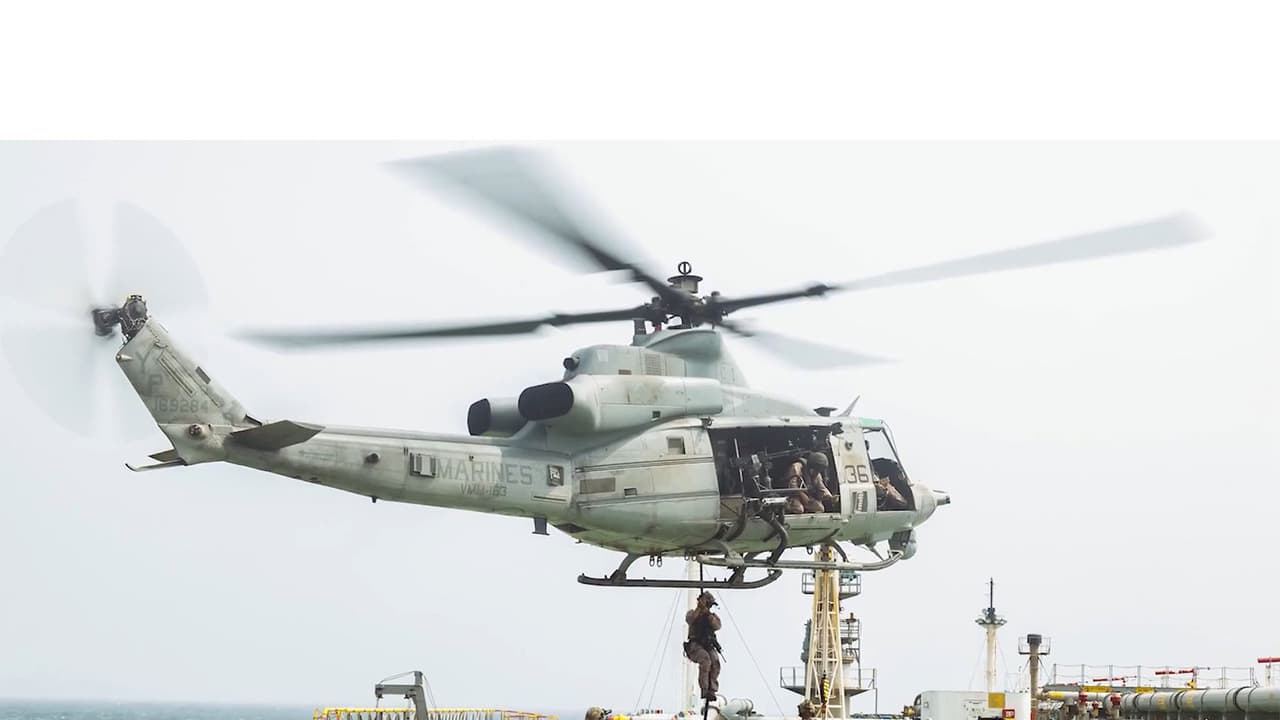
The United States Central Command (CENTCOM) on Thursday (local time) said that the US Marines carried out a verification boarding in the Gulf of Oman as part of the ongoing enforcement of the US naval blockade against Iran and redirected 3 other commercial vessels.
In a post on X, CENTCOM said, "U.S. Marines from the 11th Marine Expeditionary Unit conduct a verification boarding aboard M/T Wen Yao in the Gulf of Oman, July 16." U.S. Marines from the 11th Marine Expeditionary Unit conduct a verification boarding aboard M/T Wen Yao in the Gulf of Oman, July 16. As of today, American forces have redirected 3 commercial vessels trying to run the blockade, disabled 1 that didn’t comply, and boarded 1 to… pic.twitter.com/vbjArHuLaO — U.S. Central Command (@CENTCOM) July 16, 2026
Details of Blockade Enforcement
The command said that it redirected 3 commercial vessels, disabled one that didn't "comply", and boarded one to ensure full "compliance". The command said, "As of today, American forces have redirected 3 commercial vessels trying to run the blockade, disabled 1 that didn't comply, and boarded 1 to ensure full compliance with the ongoing U.S. naval blockade against Iran."
CENTCOM further asserted that, "The Strait of Hormuz and the surrounding waters remain free and open, except for vessels attempting to violate America's steel wall blockade. "
White House Clarifies Blockade Policy
The Gulf of Oman lies southeast of the Strait of Hormuz, a strategically important maritime corridor through which a significant share of global oil shipments pass.
Earlier, the White House on Thursday (local time) said the Strait of Hormuz remains open for commercial vessels that are not travelling to or from Iranian ports as part of the US blockade on Tehran, adding that the US Navy is deployed to ensure the continued flow of maritime traffic through the strategic waterway.
Responding to a question during a press briefing on the decline in commercial shipping through the Strait of Hormuz amid escalating US military operations, White House Press Secretary Karoline Leavitt said the United States had implemented a blockade that applies only to vessels entering or departing Iranian ports.
"We know that there is a blockade of ships directed by the President for ships entering and departing Iranian ports only. This has been fully implemented and is in full force. This blockade was reimposed due to Iran's inability to honour its agreement with the United States of America," Leavitt said.
She said the blockade is being enforced by a large US military deployment in the region. "More than 10,000 US sailors, Marines, and airmen, along with two aircraft carriers and more than 20 warships and dozens of aircraft, are executing the blockade mission as we speak," she said.
Iran Issues Warning
From the Iranian side, a senior spokesperson for Iran's Armed Forces on Thursday (local time) warned that Tehran could target US infrastructure across West Asia if Iranian infrastructure comes under attack, while asserting that the presence of American forces is the main cause of insecurity in the Strait of Hormuz.
According to statements carried by Iranian state media outlet Islamic Republic of Iran Broadcasting (IRIB), Brigadier General Abolfazl Shekarchi, the senior spokesperson for Iran's Armed Forces, said the United States and Israel had "no right" to be present in the region.
"America and the fake Zionist government have no right to be in the region," Shekarchi said during a televised interview carried by IRIB.
He claimed that the Strait of Hormuz remains secure under Iran's control and blamed the US military presence for rising tensions in the strategic waterway.
"The Islamic Republic's sovereignty over the Strait of Hormuz is a factor of security for the entire region, not insecurity," he said, adding, "The reason the Strait of Hormuz is becoming insecure is the presence of the Americans."
(ANI)
(Except for the headline, this story has not been edited by Asianet Newsable English staff and is published from a syndicated feed.)