
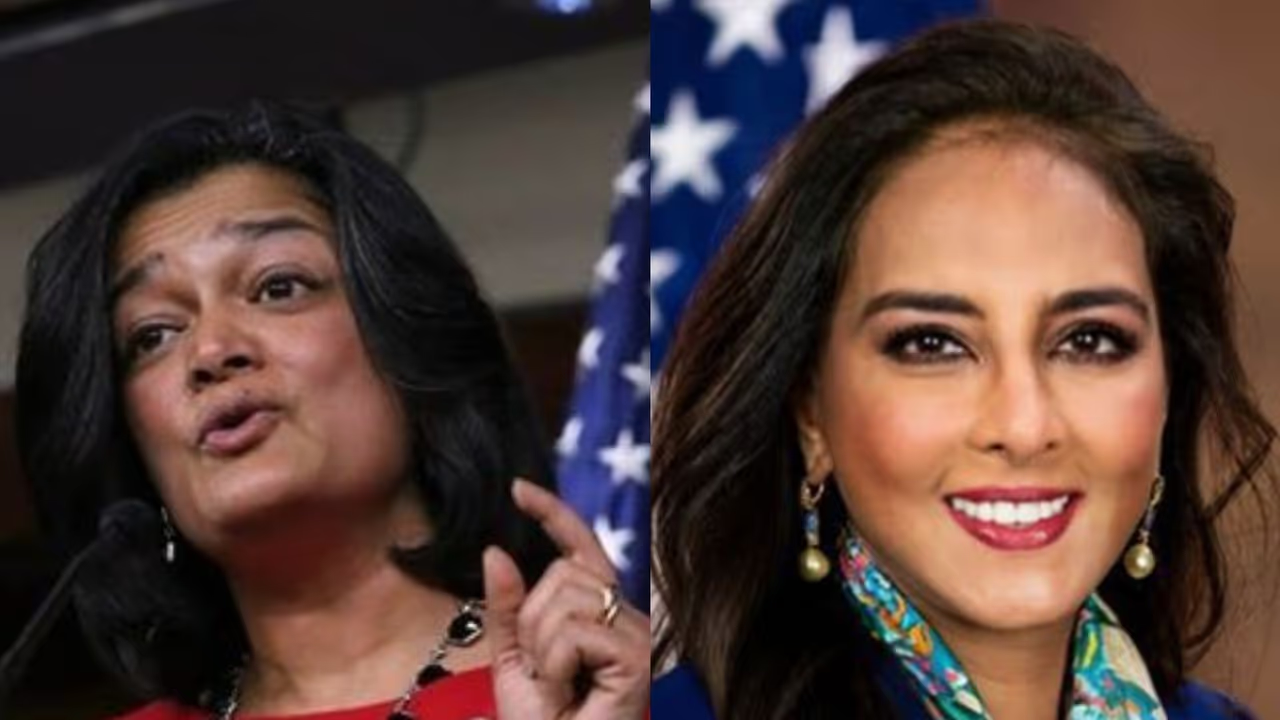
Congresswoman Pramila Jayapal and former DOJ official Harmeet K. Dhillon trade barbs on social media following Dhillon's resignation as head of the Civil Rights Division, amidst ongoing political tension following the midterm election results.
Public Clash Over DOJ Resignation
A war of words has erupted between Indian-American Congresswoman Pramila Jayapal and former US Justice Department official Harmeet K Dhillon after the latter's resignation as head of the Civil Rights Division, with the two exchanging sharp remarks on social media following the Republican Party's setback in the midterm elections. The exchange began after Jayapal, in a post on X, reacted to news of Dhillon's resignation by criticising her tenure at the Justice Department's Civil Rights Division and taking a swipe at her interest in knitting. "Harmeet Dhillon made a mockery of the Department of Justice’s Civil Rights Division by attacking diversity, equity, and inclusion and bullying states into disenfranchising voters. She will not be missed. Enjoy your knitting," Jayapal said.
Responding to the Congresswoman, Dhillon hit back, accusing her of engaging in bullying and trolling and urging her to conduct herself in accordance with the responsibilities of a public representative. "Grow up, Pramila. Bullying and trolling are not really the role of members of Congress. You are a public servant. Act like it. By the way, knitting is a skill. Acquiring some skills is part of a healthy, balanced life. I recommend this to you. No need to be hateful all day!" Dhillon said in a post on X.
Context of the Resignation
The exchange comes days after Dhillon announced her resignation as head of the US Justice Department's Civil Rights Division, a position she held for around 18 months. US Attorney General Todd Blanche announced her departure on Thursday, acknowledging her contributions and leadership of the division. "Today, I accepted the resignation of Assistant Attorney General Harmeet Dhillon, who led the Civil Rights Division with conviction the past 18 months. She has defended the civil liberties of every American and enforced the law without fear or favor," Blanche said in a post on X. He also expressed gratitude for her public service and wished her success in her future endeavours.
However, Dhillon clarified that her decision to leave the administration was taken well before the Republican Party's electoral setback and was not linked to the midterm results. Speaking to Fox News, she said, "I wasn't asked to resign. I resigned three weeks ago, and Susie asked me to please wait until after the midterms." In her resignation letter addressed to US President Donald Trump, Dhillon said she had informed White House Chief of Staff Susie Wiles in early October about her intention to step down, as she believed she had accomplished what she had come to Washington to do. She also expressed her desire to return to private legal practice. "My decision, my choice. It's time," she said.
Achievements and Future Outlook
Describing her tenure in the administration as the "greatest honour" of her lifetime, Dhillon highlighted several initiatives undertaken during her leadership, including ending what she described as unlawful diversity, equity and inclusion (DEI) practices; protecting women's sports; defending parental rights; establishing the division's first Second Amendment Section; and combating antisemitism and religious discrimination. Dhillon also credited Trump and the White House team for supporting the division's work, adding that she would continue working for the country after leaving her government position.
Her departure followed significant changes in the Civil Rights Division under her leadership. According to The Washington Post, Dhillon oversaw the dismantling of several longstanding priorities of the department's civil rights enforcement work. The newspaper described her exit as the first major shake-up at the Justice Department following the midterm elections, in which Democrats secured control of both chambers of Congress. Dhillon also addressed the possibility of appearing before Congress after leaving office, saying there could be limitations arising from executive privilege if she were subpoenaed.
(Except for the headline, this story has not been edited by Asianetnews Editorial staff and is published from a syndicated feed.)








