
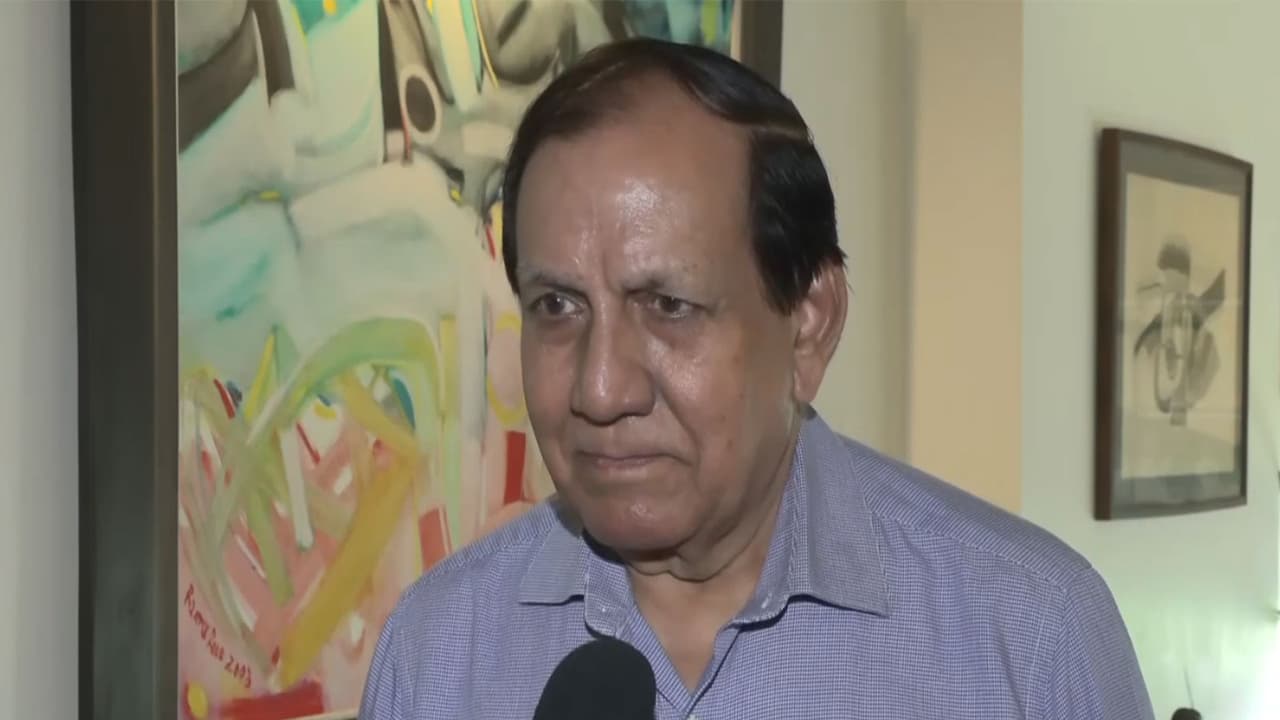
Former senior diplomat Surendra Kumar has warned that Pakistan could misuse the new defence pact with Saudi Arabia and Turkiye against India, calling it a 'very significant development' that needs careful analysis of its 'aggression' clause.
Former senior diplomat Surendra Kumar said India needs to carefully assess the implications of the new defence agreement between Saudi Arabia, Pakistan and Turkiye, particularly its provisions on collective deterrence and "aggression", while warning that Pakistan could potentially misuse the pact against India. Speaking to ANI, Kumar on Wednesday called the agreement a "very significant development" and said there were several aspects that needed to be analysed.
"Well, this is a very significant development. Nobody can ignore it. And I agree with our official spokesperson that we are studying it. See, there are quite a few points which have to be analysed," he said.
Defining 'Aggression'
On the pact's provision that an attack against one state would be treated as an attack against all, Kumar said the definition of aggression would need to be examined carefully. "When they say 'common deterrence', one can understand. But what do they say? 'An attack against any state will be an attack on all'. But then what is aggression? They say aggression. Now, we will have to define what aggression is," he said.
Referring to India's counter-terror operations against Pakistan-based terror groups, Kumar stressed that New Delhi's actions were focused on terrorist targets. "We attacked Masood Azhar and all those outfits of terrorists in Pakistan surgically. Only them, not anybody else. Will this be considered aggression?" he said.
He said India's counter-terror operations cannot be equated with aggression against Pakistan, as New Delhi did not seek to occupy Pakistani territory or damage its property. "Now, in our view, a terrorist attack on terrorists, like any other country, cannot be considered aggression. We were not committing aggression against Pakistan. We didn't want to occupy their territory or damage their property," Kumar said.
Regional Security and Diplomatic Outreach
Kumar also pointed to Turkiye's support for Pakistan during Operation Sindoor, saying India would have to monitor how the new pact affects the regional security environment. "After all, Turkiye, during Operation Sindoor, supported Pakistan. Drones were coming from there. We will have to keep a watch on how they react," he said.
He also questioned the pact's stated position that it was not directed against a third country and warned of the possibility of Pakistan using the arrangement against India. "They are saying it's not against a third country. Against a third country means what? They talk about a third country; Israel or a third country could be India. We will have to see how Pakistan misuses it," he said.
Kumar warned that the pact could bring additional countries closer to any future India-Pakistan confrontation. "Because it could be bringing all these countries to our doorstep, which is a very serious matter. I hope they don't use it," he said.
He said India should use its existing diplomatic relations with Saudi Arabia and Turkiye to understand the agreement and its implications. "So I personally feel that we have a lot of sort of goodwill and relations even with Turkiye or Saudi Arabia. We should really talk to them and find out what the implications are," he said.
Kumar called for India to carefully monitor developments before reaching a final conclusion. "But let's watch, wait, and watch, and analyse more before we really comment further," he said.
India Examining Implications: MEA
Earlier on Tuesday, the Ministry of External Affairs (MEA) stated that it is evaluating the impact of the newly inked Mecca Defence Pact between Pakistan, Turkiye, and Saudi Arabia. Responding to media queries during a biweekly news briefing regarding the recent treaty, MEA official spokesperson Randhir Jaiswal emphasised that India will take every required step to protect its national interests.
"Regarding the agreement that was signed recently, let me say that we continue to closely follow developments in the West Asia conflict. As far as this particular agreement is concerned, we are examining its implications, both from the perspective of our national security and from considerations of regional stability, peace, and stability. India remains fully committed to meeting or safeguarding its national interests and will take all necessary measures in this regard," the spokesperson stated.
Details of the Mecca Defence Pact
The accord was inked on Friday, August 7, in Mecca by Saudi Crown Prince Mohammed bin Salman, Turkish President Recep Tayyip Erdogan, and Pakistani Prime Minister Shehbaz Sharif, as per official releases issued by the three nations. Under the terms of the treaty, an armed assault against any single member country will be treated as an act of aggression against all three.
Expanding on the mandate, official declarations from the signatory nations indicated that the accord "is intended to strengthen collective deterrence against any act of aggression" and "provides for the enhancement of all aspects of defence cooperation among the three states."
Addressing concerns surrounding the broader regional architecture, Saudi Arabia released a separate statement clarifying that the pact does not constitute a military alliance or a religious faction, nor does it involve nuclear pursuits or a regional arms race. The statement noted that the treaty is designed for "building sustainable self-reliant capabilities" without compromising Riyadh's current ties across Gulf, Arab, and global tiers. (ANI)
(Except for the headline, this story has not been edited by Asianet Newsable English staff and is published from a syndicated feed.)
