
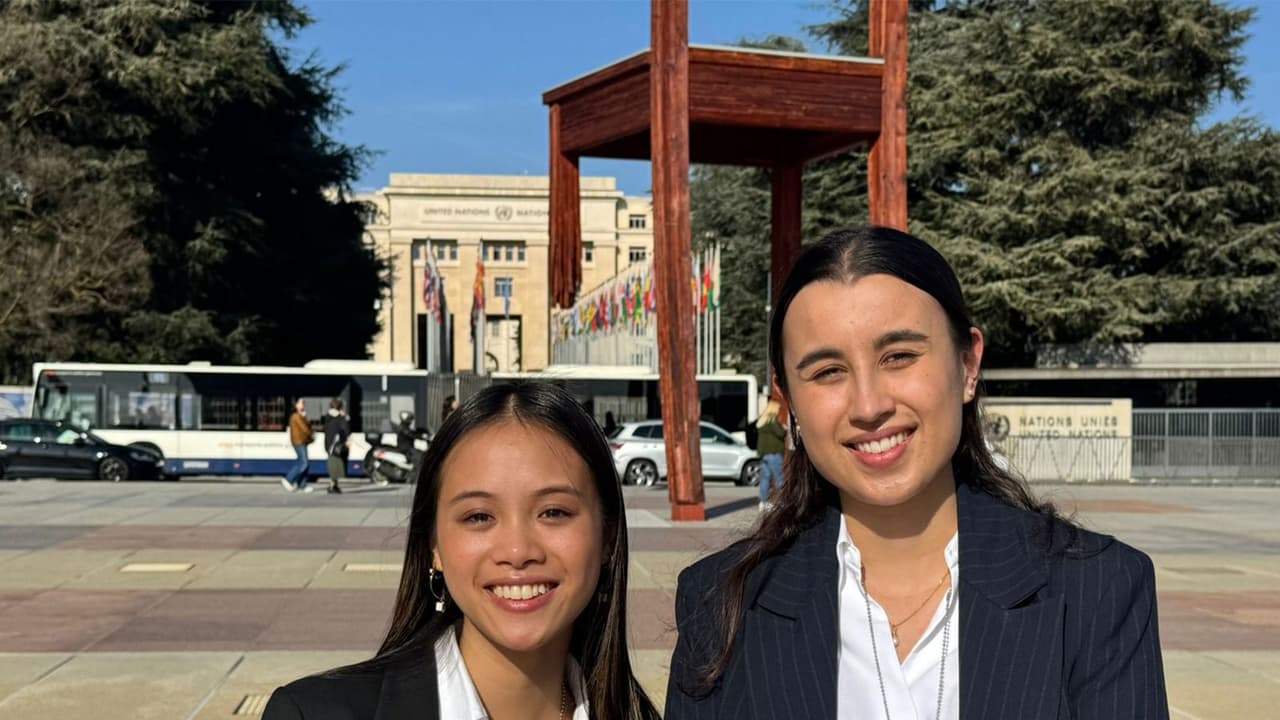
Two Oxford University students praised India's innovative education at a UNHRC session, highlighting the balanced approach of combining academics with vocational skills and the success of models like the Akshar Foundation in promoting holistic learning.
On the sidelines of the 61st session of the United Nations Human Rights Council (UNHRC), two students from the University of Oxford have praised innovative education practices that promote holistic learning, vocational skills and inclusive access to schooling. In an exclusive interview with ANI, Zoe Barclay and Petrina Lander shared their perspectives on education and youth development.
A Balanced Approach: Vocation and Philosophy
Barclay said young people in India often display strong ambition and determination because opportunities are not always easily available. According to her, this encourages students to think creatively and actively seek opportunities to improve their education and professional prospects. She highlighted the importance of combining academic learning with vocational training. Skills such as carpentry, tailoring and other trades, she said, should be recognised with the same dignity as white-collar professions. Barclay suggested that Western countries, particularly the United Kingdom, could learn from this balanced approach that values practical skills alongside academic achievement.
The Oxford graduate also pointed to the influence of Mahatma Gandhi's philosophy in education, which emphasises the development of the individual as a whole. She noted that this approach encourages schools to focus not only on academic outcomes but also on personal growth, life skills and social responsibility.
Case Study: The Akshar Foundation Model
Both students cited the Akshar Foundation's work in Assam, which implements elements of the National Education Policy 2020. The model emphasises peer learning, mentorship and flexible grade placement based on students' abilities rather than age.
Through peer learning, older students mentor younger learners, helping them develop both academic understanding and soft skills such as communication, empathy and leadership. This system also reduces pressure on teachers by allowing students to support one another in the learning process.
Inclusive Education for Disadvantaged Children
The foundation also focuses on bringing children from disadvantaged backgrounds into education, including those who may have previously experienced child labour or early marriage. By allowing students to progress at their own pace, the model aims to reduce barriers to education.
Preparing for the Future
The students further highlighted the importance of integrating technology and digital skills into education systems to prepare young people for future careers.
About the Students
Zoe Barclay is a University of Oxford BA Geography graduate. Through her work with Akshar, she has witnessed firsthand the power of holistic education in transforming the lives of vulnerable children.
Petrina Lander is a medical student at the University of Oxford. As a former intern with Akshar Foundation in Assam, India, she taught and observed the implementation of Akshar's educational model in government schools. (ANI)
(Except for the headline, this story has not been edited by Asianet Newsable English staff and is published from a syndicated feed.)