
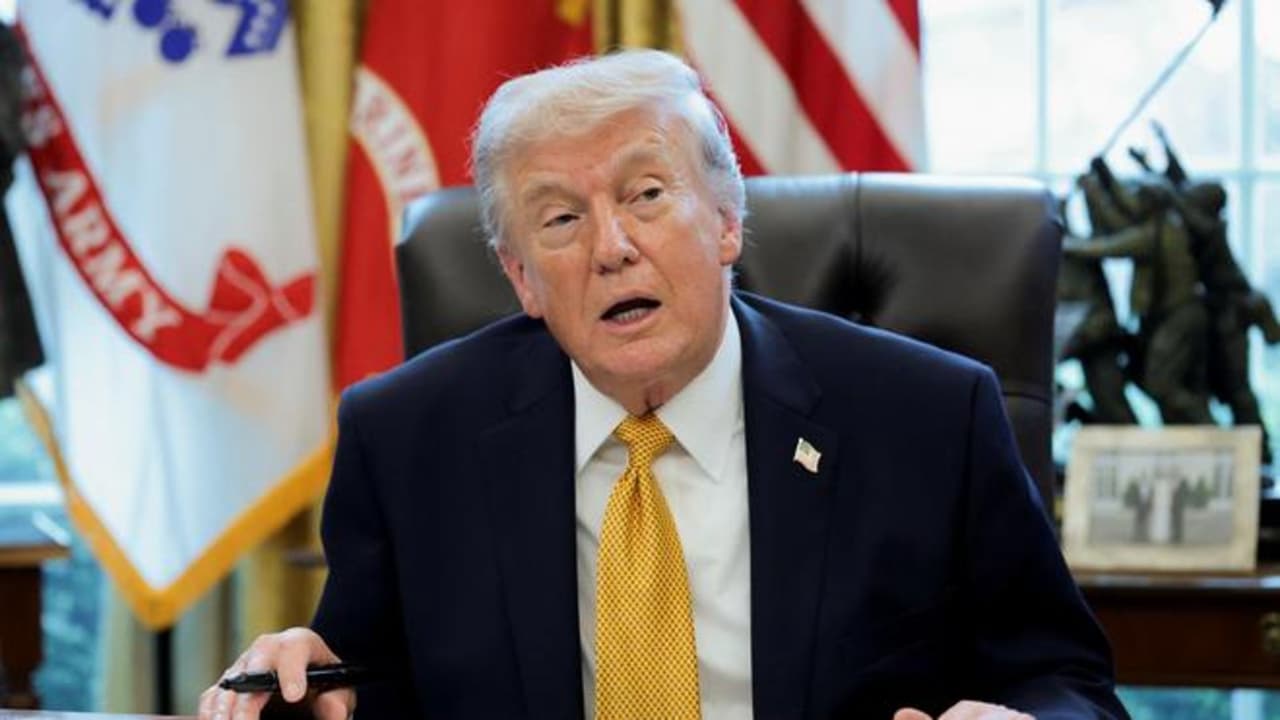
Trump issued a 48-hour ultimatum to Iran to reopen the Strait of Hormuz, threatening military action against its energy infrastructure. The move escalates a weeks-long conflict involving the US and Israel that has already caused thousands of casualties. Iran, which has launched long-range missiles, responded defiantly with threats of retaliation.
US President Donald Trump has sharply escalated tensions in the Middle East by issuing a dramatic 48-hour ultimatum to Iran, demanding the immediate reopening of the strategically vital Strait of Hormuz. In a strongly worded social media post, Trump warned that failure to comply would trigger direct military action against Iran’s energy infrastructure.
“If Iran doesn’t FULLY OPEN, WITHOUT THREAT, the Strait of Hormuz, within 48 HOURS… the United States… will hit and obliterate their various POWER PLANTS, STARTING WITH THE BIGGEST ONE FIRST,” Trump declared.
The Strait of Hormuz is one of the world’s most critical energy chokepoints, handling nearly 20% of global oil and gas flows. Its disruption has already sent shockwaves through international markets, with oil prices surging and global supply chains facing uncertainty.
The warning comes as the ongoing conflict between Iran, the United States, and Israel enters its fourth week, with violence intensifying across the region. Iranian forces have reportedly launched long-range ballistic missiles for the first time since hostilities began, including strikes targeting a US-UK military base in Diego Garcia. Israeli officials noted that these missiles have a range of up to 4,000 km, putting major European capitals “within direct threat range.”
The conflict has already resulted in heavy casualties. More than 2,000 people have reportedly been killed in Iran following US and Israeli strikes, while Iranian retaliatory attacks have claimed lives in Israel and injured dozens near sensitive nuclear facilities.
Iran, however, has responded defiantly to Trump’s ultimatum. Tehran has warned that any attack on its infrastructure would be met with immediate retaliation targeting US and allied energy facilities across the region.
The crisis has rapidly expanded beyond a localized conflict into a broader geopolitical flashpoint. Iranian missile and drone attacks have struck targets in Israel and the Gulf, while the US and Israel have carried out coordinated strikes on Iranian military and nuclear sites.
Global concern is mounting as the standoff threatens to spiral into a wider regional war. Key allies, including NATO countries, have expressed hesitation about deeper military involvement, even as pressure builds to secure maritime routes and stabilize energy markets.
With oil prices soaring and fears of prolonged disruption growing, the situation remains volatile. Diplomatic efforts are ongoing, but there is little indication of immediate de-escalation. As both sides exchange threats and military actions intensify, the Strait of Hormuz has once again become the focal point of a crisis with far-reaching global consequences.
Also Read: 'Surprise awaits Trump': Iran warns US against ground operations
