
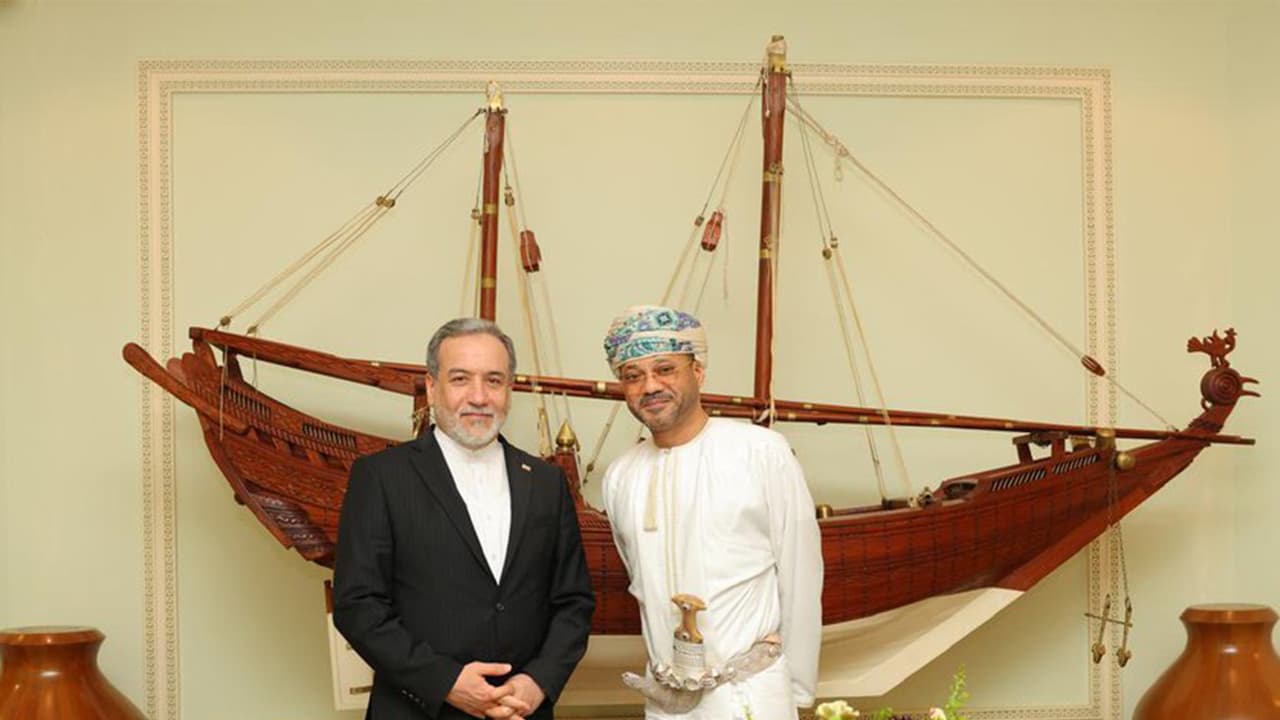
Omani and Iranian foreign ministers held talks to resolve the Strait of Hormuz deadlock. This comes as Tehran reportedly sent a new two-stage proposal to the US, prioritising an end to the maritime crisis over nuclear talks.
In a major diplomatic push to resolve the maritime deadlock in West Asia, Omani Foreign Minister Badr bin Hamad Al Busaidi held extensive talks with Iran's Abbas Araghchi on Monday to address the volatile situation in the Strait of Hormuz. The meeting in the Omani capital comes amidst a flurry of regional mediation aimed at de-escalating tensions that have severely impacted global energy corridors.

In a post on X, the Omani diplomat detailed the nature of the engagement, emphasising the collaborative role required by regional stakeholders to secure the strategic waterway. "Good discussion on the Strait of Hormuz with Iran's Foreign Minister Dr. Araghchi. As littoral states, we recognize our shared responsibility to the international community and the urgent humanitarian need to free the seafarers held for far too long," he stated. Good discussion on the Strait of Hormuz with Iran’s Foreign Minister Dr. Araghchi. As litoral states, we recognize our shared responsibility to the international community and the urgent humanitarian need to free the seafarers held for far too long. Much diplomacy is required and… pic.twitter.com/0aTRBvqQd3 — Badr Albusaidi - بدر البوسعيدي (@badralbusaidi) April 26, 2026
Iran's 'New Proposal' to US
The emphasis on "practical solutions" by the Omani leadership aligns with reports that, amidst this deepening diplomatic deadlock, Tehran has reportedly submitted a "new proposal" to the United States via Pakistani intermediaries. The framework, as reported by American news outlet Axios, seeks to prioritise the reopening of the Strait of Hormuz and secure a definitive conclusion to the ongoing hostilities in West Asia, while deferring more contentious nuclear discussions to a subsequent phase.
The initiative emerges as peace efforts remain largely stagnant. US President Donald Trump recently suggested that Tehran could "call" Washington if it intended to negotiate, though he maintained his firm stance that Iran must never be allowed to develop nuclear weapons. Momentum for direct engagement appeared to diminish after the White House cancelled a scheduled visit by envoys Steve Witkoff and Jared Kushner to Islamabad, a decision widely viewed as a sign of "dissatisfaction with Tehran's earlier offer."
Adding to the complexity of the negotiations, Washington has maintained its demand that Iran halt uranium enrichment for a minimum of ten years and relocate its current nuclear stockpile abroad. However, according to the report, Iran's Foreign Minister Abbas Araghchi informed mediators during the weekend that there is "no consensus within the Iranian leadership" regarding a response to these specific requirements. Consequently, the "two-stage plan" delivered via Pakistan focuses on resolving the maritime crisis and lifting the US naval blockade as an immediate priority. This latest framework envisions either a "prolonged period" of ceasefire extension or a "permanent end to the war." Under this arrangement, nuclear discussions would "begin only at a later stage," specifically once the strategic waterway is cleared and the port blockade is removed.
Shuttle Diplomacy Amid US Skepticism
While Axios indicates that the White House has officially "received the proposal," it remains "unclear whether the United States is willing to explore it." In recent days, Abbas Araghchi has been engaged in shuttle diplomacy between Pakistan and Oman to bridge these gaps. He is expected to hold further high-level consultations in Russia with President Vladimir Putin on Monday to discuss the regional situation.
This outreach occurs as the American leadership remains sceptical of deploying diplomatic teams for long-distance talks. On Sunday, President Trump expressed his reluctance to send negotiators abroad, stating, "I see no point in sending them (US negotiators) on an 18-hour flight in the current situation. It's too long." He further noted, "We can do it just as well by telephone. The Iranians can call us if they want. We are not gonna travel just to sit there."
Conflicting Priorities Divide Nations
Despite a cessation of full-scale combat following US-Israeli military strikes on February 28, a formal peace treaty has yet to materialise. The conflict has resulted in thousands of casualties and significant global economic instability. Tehran continues to use its strategic control over the Strait of Hormuz, a conduit for approximately 20 per cent of global oil, as leverage, while the US maritime blockade of Iranian ports continues to drive "price spikes and market volatility."
To resolve this, Tehran has insisted that Washington must first eliminate "obstacles," most notably the naval blockade, before substantive talks can take place. The Iranian position also includes requests for "compensation," a revised "legal framework governing the strait," and assurances against future military intervention. Conversely, the US remains focused on forcing Iran to scale back its "nuclear ambitions," missile development, and ties to regional groups. These conflicting priorities illustrate the "wide gaps" that continue to divide the two nations as they navigate this fragile diplomatic opening. (ANI)
(Except for the headline, this story has not been edited by Asianet Newsable English staff and is published from a syndicated feed.)