
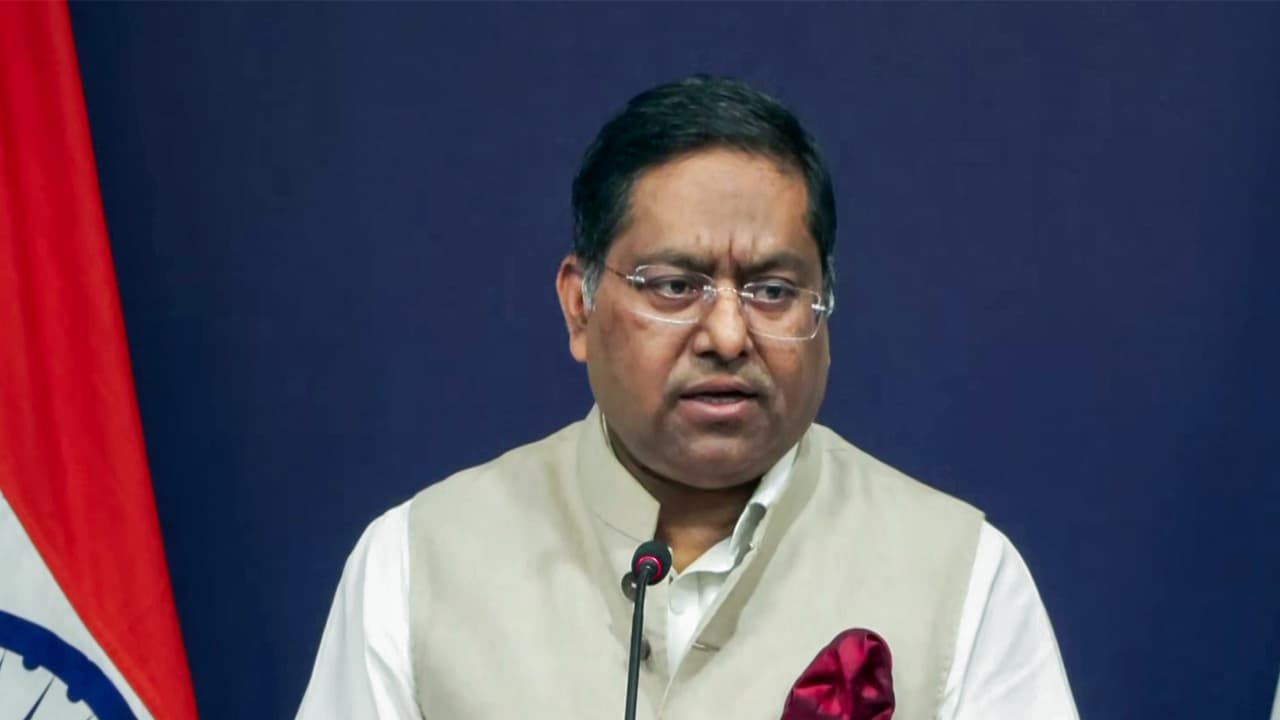
India rejected Nepal's claim over Lipulekh Pass, calling its 'artificial enlargement' untenable. The MEA clarified the pass has been a long-standing route for the Kailash Manasarovar Yatra and that India is open to dialogue on boundary issues.
India on Sunday rejected Nepal's recent territorial claims over Lipulekh Pass terming the unilateral artificial enlargement as "untenable" as Kathmandu objected to Kailash Mansarovar route being undertaken through the region.
India's Consistent Position
MEA Spokesperson Randhir Jaiswal said in response to media queries regarding comments made by the Foreign Ministry of Nepal on the border issue in the context of the Kailash Mansarovar Yatra that India's position in this regard had been consistent and clear. "Lipulekh Pass has been a long-standing route for the Kailash Manasarovar Yatra since 1954, and the Yatra through this route has been going on for decades. This is not a new development", he said.
Jaiswal further said that with regards territorial claims, India has consistently maintained that such claims are neither justified nor based on historical facts and evidence. "Such unilateral artificial enlargement of territorial claims is untenable." He said that India remains open to constructive interaction with Nepal on all issues of the bilateral ties. "India remains open to a constructive interaction with Nepal on all issues in the bilateral relationship, including on resolving agreed outstanding boundary issues through dialogue and diplomacy", Jaiswal said.
Background of the Dispute
This comes after the Government of Nepal had sent diplomatic notes to India and China over the Kailash Mansarovar pilgrimage via Lipulekh, stating formal objection over the plan.
Back in May 20, 2020, under KP Sharma Oli-led government, Nepal issued a new map incorporating Limpiyadhura, Lipulekh, and Kalapani through a constitutional amendment. India had firmly rejected the Nepal move and said Nepal government has released a revised official map that includes parts of Indian territory. "This unilateral act is not based on historical facts and evidence. It is contrary to the bilateral understanding to resolve the outstanding boundary issues through diplomatic dialogue. Such artificial enlargement of territorial claims will not be accepted by India," India's Ministry of External Affairs had earlier stated. (ANI)
(Except for the headline, this story has not been edited by Asianet Newsable English staff and is published from a syndicated feed.)