
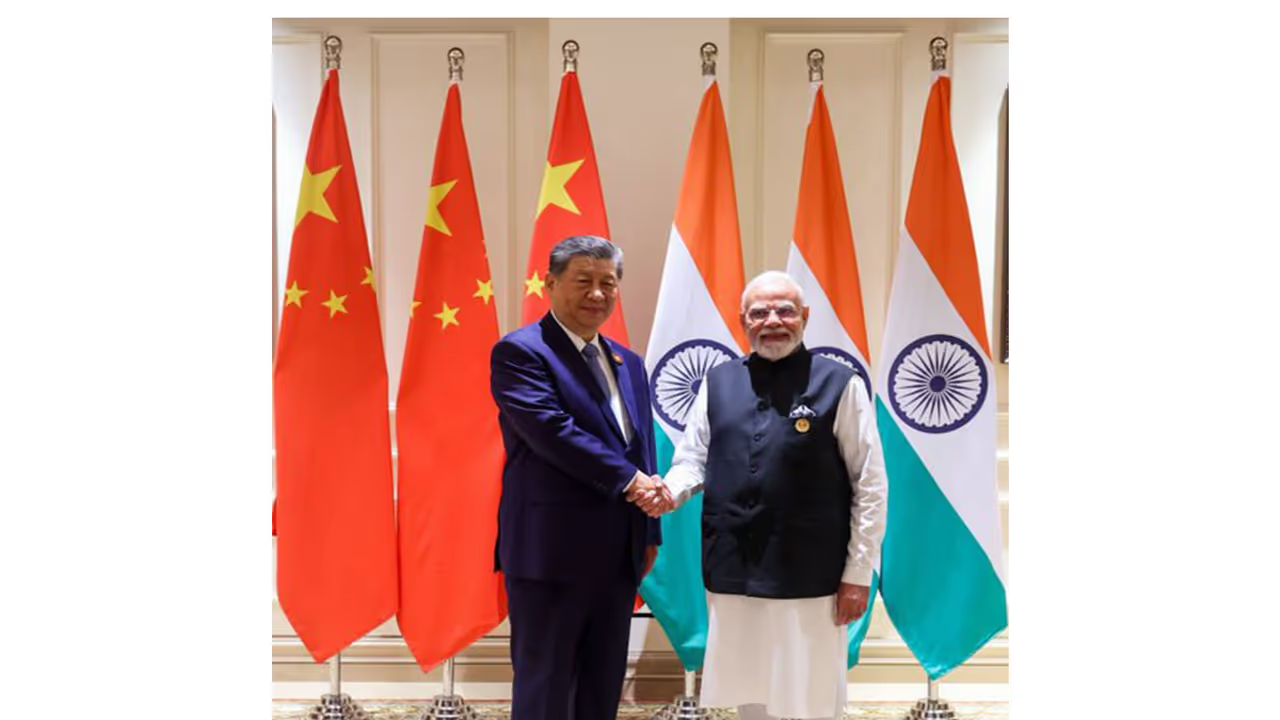
PM Narendra Modi and Chinese President Xi Jinping met on the sidelines of the Delhi BRICS Summit to review bilateral relations. They stressed that 'differences should not become disputes' and highlighted peace at the border as key for progress.
Met President Xi Jinping on the sidelines of the Delhi BRICS Summit. We reviewed the full range of India-China relations. Also conveyed best wishes for China’s BRICS Presidency that commences next year. 在德里金砖峰会期间,会见了习近平主席。 双方全面回顾了印中关系。 同时,也向中方转达了对中国明年开始担任金砖国家主席国的良好祝愿。 — Narendra Modi (@narendramodi) September 12, 2026
'Differences Should Not Become Disputes': Leaders Reaffirm
As outlined in a release issued by the Ministry of External Affairs (MEA), the two leaders stressed that "differences should not become disputes" and reiterated that both nations ought to adopt a strategic and long-term outlook regarding their relationship. Elaborating on the exchange, the statement noted, "The two leaders welcomed the steady progress in India-China bilateral relations since their last meeting in Tianjin in August 2025. They reaffirmed that both countries should take a strategic and long term perspective of their ties. Differences should not become disputes. Prime Minister highlighted that both sides must be guided by three mutuals -- mutual respect, mutual sensitivity and mutual interest."
Peace on Frontier Zones Essential for Ties: PM Modi
Throughout the interaction, PM Modi underscored that maintaining peace and tranquillity across frontier zones is a fundamental prerequisite for advancing bilateral ties. Providing further details from the engagement, the MEA communiqué specified, "He underlined the need for both sides to observe existing agreements and understandings on border-related issues. The two leaders expressed commitment to a fair, reasonable, and mutually acceptable resolution of the boundary question proceeding from the political perspective of their overall bilateral relations and the long-term interests of the two peoples."
Economic and Cultural Ties Reviewed
Additionally, both heads of state reviewed advancements in interpersonal connections, highlighting the imperative to further expand cultural interactions, commercial connectivity, and cross-border mobility.
Addressing financial and commercial ties during the session, the ministry recorded, "On economic and trade relations, they underlined the need to address each other's concerns, including structural trade imbalance and supply chain issues, and facilitation of meaningful and predictable market access."
As stated by the MEA, both leaders concurred that the two nations must persist in widening areas of agreement concerning regional and international matters, alongside tackling shared challenges. (ANI)
(Except for the headline, this story has not been edited by Asianet Newsable English staff and is published from a syndicated feed.)