Avigdor Liberman confirms his party will support Gadi Eisenkot for Prime Minister and Yair Lapid for Knesset Speaker, while definitively ruling out any coalition with Benjamin Netanyahu amid the ongoing political deadlock in Israel.
Liberman Endorses Eisenkot for Prime Minister
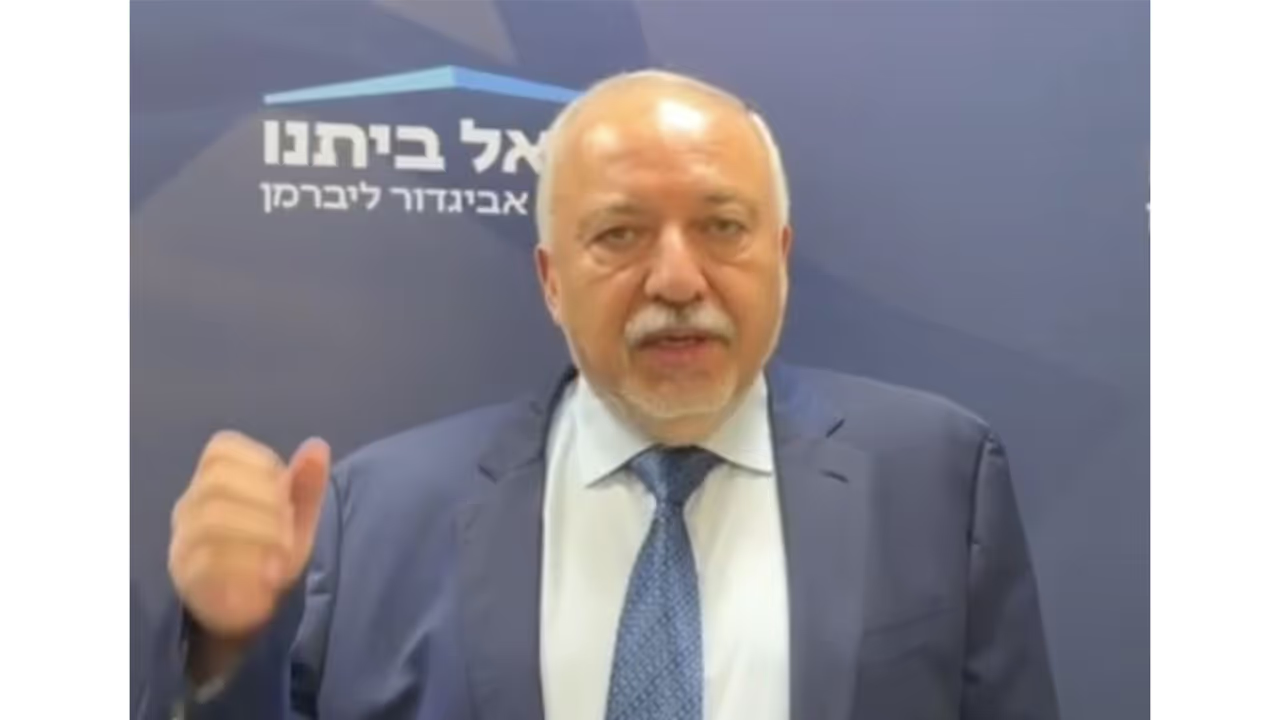
Ending speculation, Yisrael Beytenu party leader Avigdor Liberman said his party would recommend Yashar leader Gadi Eisenkot for Prime Minister and support Opposition Leader Yair Lapid for the post of Knesset Speaker, while ruling out any possibility of joining a government led by Prime Minister Benjamin Netanyahu, according to The Times of Israel.
Speaking at a press briefing, Liberman confirmed his party's support for Eisenkot's bid to form the next government and Lapid's candidacy for Knesset Speaker. Despite backing Eisenkot, Liberman criticised his election campaign, accusing the Yashar leader of prioritising his party's position over the broader anti-Netanyahu bloc. "We failed – 48 mandates is far lower than what we expected," Liberman said, referring to the bloc comprising Yisrael Beytenu, Yashar, B'Yachad and the Democrats, The Times of Israel reported.
Stance on Coalition and Netanyahu
He accused Eisenkot of running an "egotistical" campaign that prioritised becoming the largest party rather than building the largest bloc, adding that it had harmed his political partners more than his opponents. Liberman also ruled out a unity government with Netanyahu or a minority government dependent on Arab-led parties, warning that such an arrangement would "survive less than a year."
While reiterating that he would not support a government reliant on Arab parties, Liberman was less direct about the possibility of external support from the ultra-Orthodox party United Torah Judaism (UTJ), which has indicated that it may support the anti-Netanyahu bloc. Asked how the opposition could form a government without relying on Arab or Haredi parties, Liberman suggested that defections from within Likud could provide a possible solution. "Maybe we'll get defectors from Likud," he said. "We'll wait; we have patience. We need to take command of the Knesset. It's critical to first replace the speaker," according to the publication.
Liberman clarified that his objective was not to become Prime Minister but to establish a government as quickly as possible and avoid repeat elections, which he called "the worst possible option." He also rejected the proposal of holding direct elections for Prime Minister, an idea floated by other members of his political bloc. Reiterating his opposition to Netanyahu, Liberman said he would not serve in a government with the Prime Minister under any circumstances, including through a rotation agreement in which Liberman would become Prime Minister first. He added that since the elections, he had been "approached by leaders from the coalition with the strangest proposals," while clarifying that he had not met Netanyahu himself, The Times of Israel reported.
Likud Efforts and Political Deadlock
Meanwhile, a delegation of Likud mayors reportedly met Liberman in an attempt to persuade him to join a coalition headed by Netanyahu, according to the publication, citing Israeli Channel 13 News. The delegation reportedly included Jerusalem Mayor Moshe Leon and sought to convince Liberman that joining a Netanyahu-led government would benefit Israel's economy and social cohesion. However, Liberman is said to have rejected their arguments, telling the delegation, "I recognise the need to form a government, but I don't trust Netanyahu. He needs to go."
Separately, Yashar criticised what it called the "spirit emanating from Netanyahu's office" following a protest outside Eisenkot's home, where demonstrators reportedly used the slogan, "You murdered your son," The Times of Israel reported.
Earlier, former Israeli Prime Minister Naftali Bennett's 'B’Yachad' faction threw its support behind Yashar party chief Gadi Eisenkot, announcing that it will recommend him to President Isaac Herzog to form the next government amid a political deadlock following Tuesday's Knesset elections.
The developments come as Israeli President Isaac Herzog has urged political leaders to accept the election results and find creative solutions to prevent another election, with neither of the main political blocs securing a clear majority in the 120-member Knesset. According to The Times of Israel, Herzog said he would receive the official election results on November 4 before beginning consultations with representatives of political factions at the President's Residence. The election results gave the opposition 67 seats against 53 for the incumbent coalition. However, the opposition bloc comprises 48 seats held by Zionist factions and 19 secured by Arab non-Zionist parties, presenting a challenge to coalition formation. Herzog urged party leaders to "stop climbing up trees and face the reality" of the election outcome, calling for flexibility to break the political deadlock. The newly elected Knesset is scheduled to be sworn in on November 10.
(Except for the headline, this story has not been edited by Asianetnews Editorial staff and is published from a syndicated feed.)