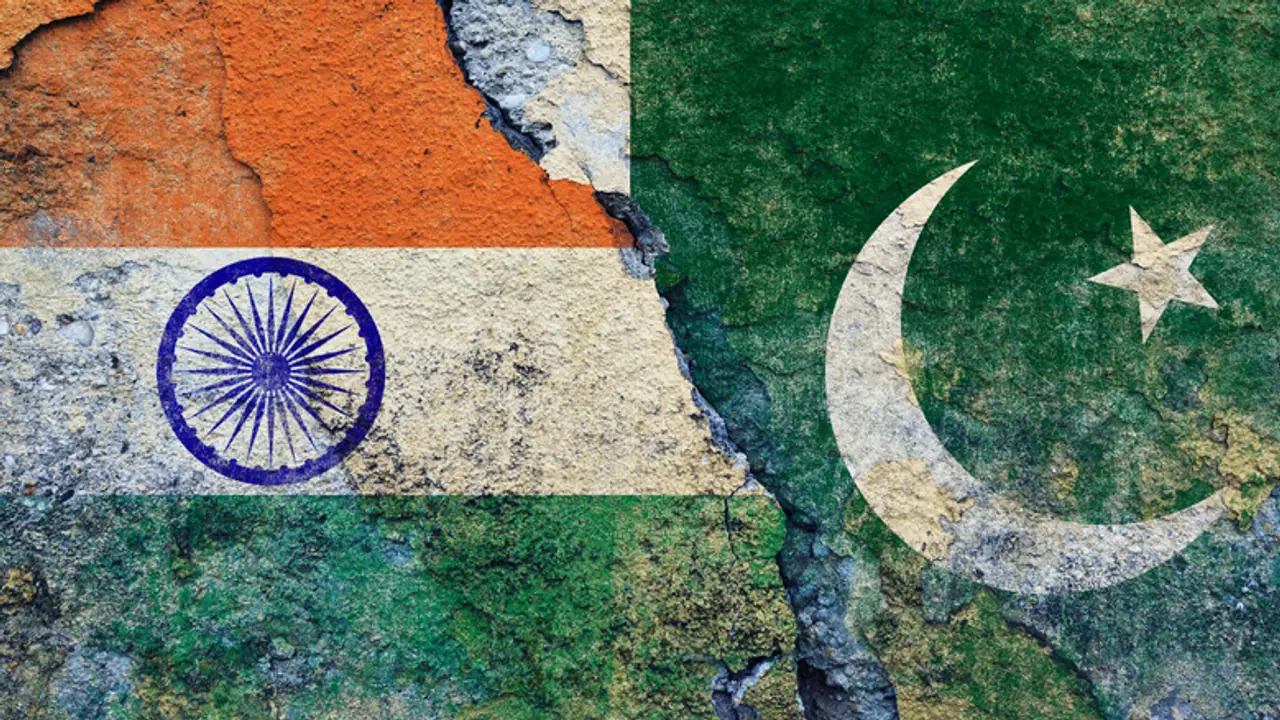
Pakistan has been accused of selectively adhering to agreements with India for diplomatic leverage, often prioritising its own strategic interests over commitments.
Pakistan has been accused of selectively adhering to agreements with India for diplomatic leverage, often prioritising its own strategic interests over commitments. This practice involves using agreements as bargaining chips, adhering to them when beneficial, while disregarding them when they become inconvenient. This approach creates an atmosphere of distrust and hinders genuine progress in bilateral relations.
Pakistan has a history of not fully adhering to or suspending bilateral agreements with India. While not a comprehensive list, some key agreements that have been impacted include the Karachi Agreement of 1949, the Shimla Agreement (1972), the Lahore Declaration (1999), and others.
First, the Karachi Accord of 1949, and then the Shimla Agreement of 1972, aimed to normalise relations and resolve disputes peacefully. It included provisions for respecting the Ceasefire Line and later the Line of Control and resolving issues through bilateral dialogue. However, Pakistan has been accused of violating both the agreements through repeated intrusions of its army, cross-border terrorism, and ceasefire violations. It has made matters worse by suspending the Shimla Agreement following India’s suspension of the Indus Water Treaty following the Pahalgam terror attack.
Related Articles

The Lahore Declaration of 1999
The Lahore Declaration of 1999 focused on promoting peace and security between India and Pakistan. It also included provisions for nuclear safety. However, Pakistan's involvement in the Kargil conflict, which occurred shortly after the declaration, was seen as a major violation.
The Non-Attack Agreement on Nuclear Installations, signed in 1991, commits both countries to refrain from attacking each other's nuclear facilities. While not officially suspended, there have been concerns raised about its implementation and Pakistan’s nuclear programme.
While Pakistan has declared certain nuclear sites, concerns exist regarding undeclared facilities, which is against the spirit of the agreement. Some locations of interest include underground facilities at Kirana Hills and areas like Dera Ghazi Khan and Khushab, where expansions and construction of nuclear-related facilities have been observed. While India has denied the reports, it is being speculated that the Indian Air Force bombed some of these undeclared nuclear sites in Pakistan, specifically at Kirana Hills, during Operation Sindoor.
This chain of events demonstrates that Pakistan chooses to uphold certain aspects of an agreement when they align with its interests, but disregards others when it perceives a disadvantage. This selective approach undermines the spirit of cooperation and trust essential for stable bilateral relations as a tactic to gain diplomatic leverage over India. By seemingly adhering to agreements while simultaneously violating their spirit, Pakistan seeks to portray itself as a responsible actor while continuing to pursue its strategic objectives.
This strategy can be particularly effective in international forums where Pakistan can highlight its adherence to agreements while deflecting blame for violations. Pakistan's selective approach to agreements has significantly strained relations with India. India has repeatedly accused Pakistan of failing to fulfill its commitments, particularly regarding cross-border terrorism and the status of Jammu and Kashmir. This lack of trust makes it difficult to build a constructive dialogue and address outstanding issues.
Despite agreements not to allow their territory to be used for attacks against India, Pakistan has been accused of providing safe havens for terrorist groups. Pakistan's continued support for separatist movements in Kashmir, despite agreements to resolve the issue peacefully, is another example of selective adherence.
The selective adherence to agreements by Pakistan has led to a cycle of mistrust and tension in India-Pakistan relations. It has also hindered regional stability and cooperation. This poses a severe threat to the entire region as both countries are nuclear-armed, and a risk of a nuclear holocaust is permanently looming on the horizon, putting billions of lives at risk.
(Ashu Maan is an Associate Fellow at the Centre for Land Warfare Studies. He was awarded the Vice Chief of the Army Staff Commendation card on Army Day 2025. He is pursuing a PhD from Amity University, Noida, in Defence and Strategic Studies. His research focuses include the India-China territorial dispute, great power) rivalry, and Chinese foreign policy.
Disclaimer: The opinions expressed are solely those of the author and do not reflect the views or stance of the organization. The organization assumes no responsibility for the content shared.