Israel’s military says it struck a major Iranian security compound in Tehran, targeting command centres of forces linked to Iran as the war with Israel rapidly escalates.
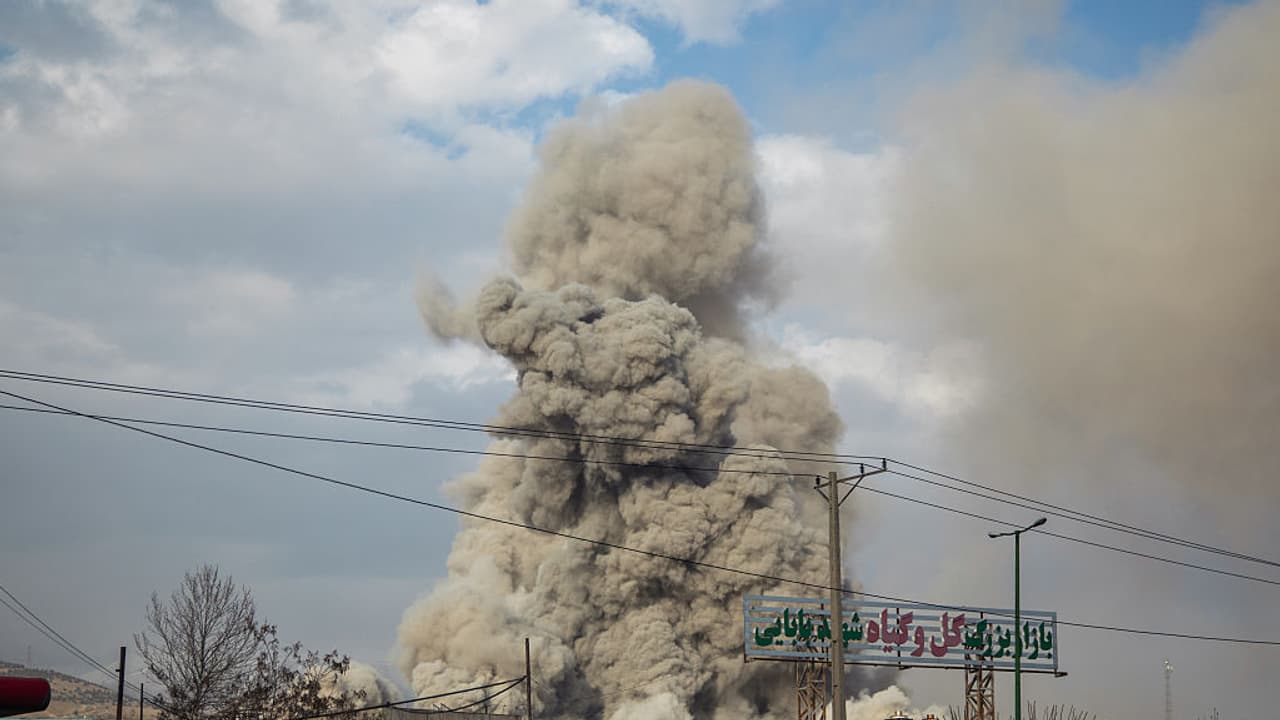
Tensions in the Middle East escalated sharply on Wednesday after the Israeli military said it carried out a major strike inside the Iranian capital, targeting a compound believed to house several of Iran’s most powerful security organizations. According to the Israeli army, the operation was guided by intelligence and aimed at crippling Iran’s internal command structure at a time when the conflict between Israel and Iran continues to intensify.
Strike Targets Core Security Institutions in Tehran
The Israeli military said the operation focused on a sprawling security complex in eastern Tehran that allegedly hosted command centres linked to the country’s most influential forces, including the Islamic Revolutionary Guard Corps, the Quds Force and the Basij.
In its statement, the military said: "A short while ago, the Israeli Air Force, precisely guided by IDF (military) intelligence, completed a wide-scale strike targeting a large... military compound in eastern Tehran" that contained "headquarters of all of the Iranian security organisations".
Related Articles

Israeli officials said the compound also included Iran’s intelligence directorate, internal security forces, and cyber warfare units — agencies that play a central role in surveillance, internal control, and military coordination.
For residents in Tehran, the strike marks another moment in what has rapidly become one of the most dangerous escalations in the region in years, with the conflict now stretching far beyond conventional military targets.
Planned Attack Moved Up Amid Changing Conditions
Earlier in the day, Israeli Defence Minister Israel Katz revealed that the operation had originally been scheduled for later in the year but was advanced due to changing developments inside Iran and the broader geopolitical situation.
"An operation was planned for the middle of the year with the same target set," Katz said in an address to military intelligence officials, according to a statement issued by his office.
"But due to developments and circumstances -- mainly what happened inside Iran, the position of the US president and the possibility of creating a combined operation -- it became necessary to move everything up to February."
The decision underscores how quickly the strategic calculations around the conflict have shifted, especially with Washington playing a more direct role.
Political Signals and Growing International Involvement
The conflict has also been shaped by political messaging from leaders abroad. During anti-government protests in Iran earlier this year, US president Donald Trump voiced support for demonstrators and publicly criticized Iran’s leadership.
Top Israeli officials, including Prime Minister Benjamin Netanyahu, echoed similar sentiments, urging Iranians to rise up against the country’s clerical establishment.
Shortly afterward, the United States and Israel jointly launched strikes on Iran over the weekend. In the opening wave of attacks, they killed Iran’s supreme leader Ayatollah Ali Khamenei — a development that dramatically reshaped the trajectory of the confrontation.
Rising Casualties on Both Sides
The violence has already taken a heavy toll. Iran responded with missile attacks targeting Israel and strikes aimed at US assets across the region, raising fears of a broader regional war.
Iran’s state news agency IRNA reported that US-Israeli strikes have killed 1,045 military personnel and civilians since the beginning of the war. AFP said it was not in a position to independently verify the toll.
Israeli authorities, meanwhile, said Iranian missile attacks have killed 10 people in Israel and injured many others.
(With inputs from AFP)