
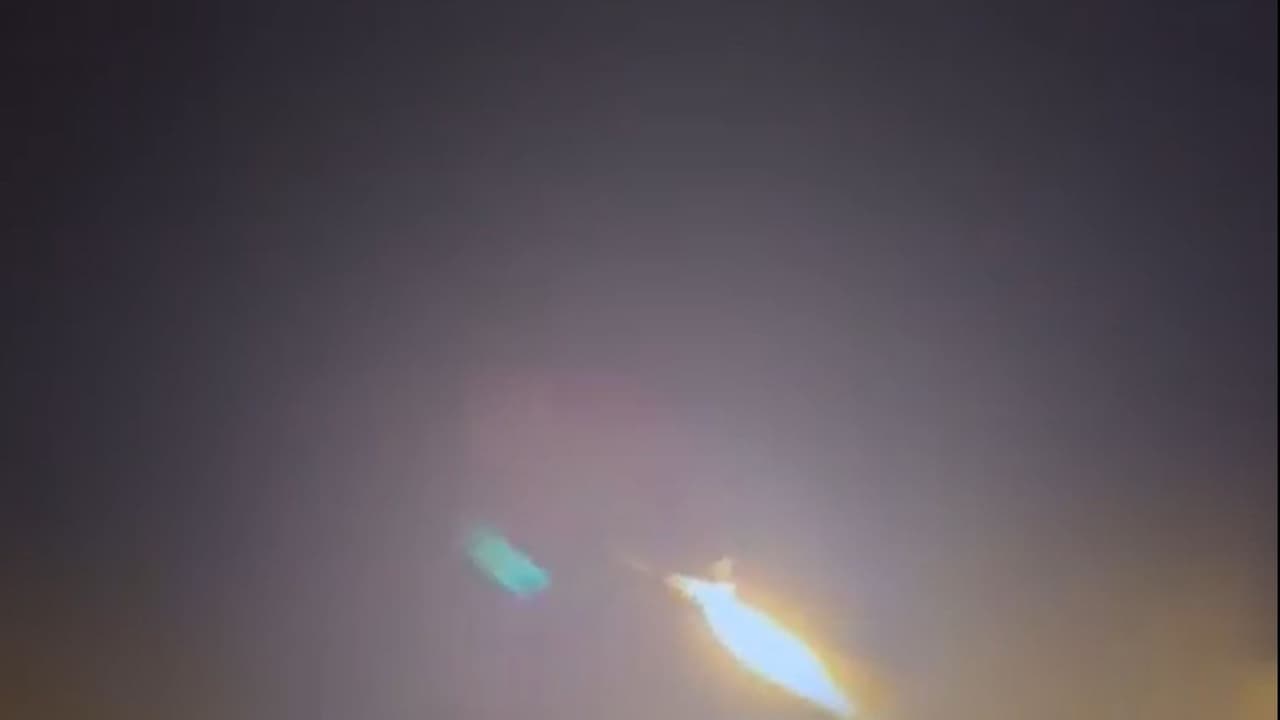
Iran's military launched retaliatory kamikaze drone strikes on US military bases in Kuwait. This followed US airstrikes on Iran, which were a response to a drone and missile attack in Jordan that killed two American service members.
Iranian Retaliation: Drone Strikes on US Bases
In a sharp escalation of regional hostilities, the Iranian military announced that it had launched targeted drone strikes against two United States military installations in Kuwait, characterising the operation as direct retaliation for American strikes executed on Iranian soil. According to a statement broadcast by the state media outlet, the Islamic Republic's armed forces confirmed that the operation involved "large-scale attacks with kamikaze drones against the US military's ammunition depot at Camp Udairi and the Patriot radar system and air surveillance radar at Ali Al Salem Air Base in Kuwait."
This Iranian offensive followed a fresh round of American airstrikes conducted against Iran on Sunday. The Pentagon stated that its operation was launched after a lethal drone and missile attack on a military outpost in Jordan on Friday killed two American service members, left one missing, and resulted in the hospitalisation of four others.
US Strikes and American Casualties
According to US Central Command, these retaliatory strikes were explicitly intended to "swiftly punish" Iran's Revolutionary Guard and further reduce Iran's ability to restrict the movement of oil tankers through the strategic Strait of Hormuz. Detailing the impact of the American strikes, Iran's state-run IRNA news agency, citing local authorities in the southern Hormozgan province, reported that an area situated near Sirik on the Strait of Hormuz was targeted at approximately 01:30 am local time.
This cross-border military action unfolded amidst widening regional volatility, marked by reported drone strikes in Iraq, renewed warnings from Tehran, and damage inflicted upon civilian and energy infrastructure in Kuwait. While Central Command withheld specific details and did not disclose the identities of the two deceased personnel in Jordan, the Pentagon confirmed that this represented the first American troop fatalities caused by direct Iranian fire since the initial phase of the conflict. Official records indicate that 16 US service members have now been killed and over 430 wounded since the outbreak of hostilities.
Diplomatic Collapse and Iranian Warnings
The diplomatic framework has completely unravelled alongside these military strikes. Shortly before Washington confirmed the service members' deaths on Saturday, Iran's supreme leader cautioned that the US would face "unforgettable lessons" if it persisted in targeting the Islamic Republic. The televised statement, attributed to Mojtaba Khamenei, who has remained out of public view since the inception of the war, additionally characterised US President Donald Trump's signature as "worthless and invalid".
Compounding the crisis, an Iranian negotiator announced that Tehran was formally suspending its commitments under the interim deal signed roughly a month ago, which had been designed to permanently conclude the hostilities. Tehran further clarified that its warning extended beyond its own direct forces to include its "regional armed proxies", which it designated as the "Axis of Resistance".
As a consequence of the escalating friction, Washington issued a global travel alert. The core of the military confrontation remains tightly focused on the strategic control of the Strait of Hormuz, a maritime transit corridor that accounted for nearly 20 per cent of the world's oil supplies prior to the war. However, the expansion of the airstrikes has increasingly placed civilians and vital infrastructure, including drinking water desalination facilities, at risk. Iran's Deputy Foreign Minister, Kazem Gharibabadi, informed state television that the US had breached its obligations under the interim accord, asserting that Iran was "no longer implementing them", with no further updates provided regarding potential mediation efforts.
Previous US Fatalities in the Conflict
Prior to these latest fatalities, the toll of the conflict underscores the high stakes involved. The last recorded American military death involved a helicopter pilot who crashed in the Arabian Sea earlier this month. The conflict's early stages also saw six soldiers killed by an Iranian drone strike on a command facility in Kuwait, whilst one soldier perished in an attack on a base in Saudi Arabia, and six others lost their lives when a refuelling aircraft crashed in Iraq.
Direct Impact on Kuwait
The most significant immediate fallout from Saturday's Iranian strikes occurred in Kuwait, where a water desalination plant and a petroleum facility were hit, though specific locations were withheld by Kuwaiti authorities and the Kuwait Petroleum Corporation. The incident marked the second strike on a desalination plant within a 48-hour window in the desert nation, which relies on the process for 90 per cent of its potable water supply.
The strikes resulted in multiple injuries at the oil installation and ignited a fire at the desalination plant, forcing several power generation units offline. The Kuwait Fire Force confirmed that multiple firefighters and a worker sustained injuries whilst tackling two other blazes triggered by the Iranian bombardment, prompting Kuwait to temporarily suspend its airspace and forcing Kuwait Airways to restructure the majority of flights operating out of the capital.
Wider Regional Reactions
The spillover effect has triggered immediate defensive measures from neighbouring nations. Jordan's state-run news agency announced that the Kingdom's air defence units successfully intercepted and downed several Iranian missiles. Meanwhile, according to respective governments, air raid sirens were activated repeatedly in Bahrain throughout the day, as well as in Saudi Arabia during the morning hours, as the region braces for further fallout.
(Except for the headline, this story has not been edited by Asianet Newsable English staff and is published from a syndicated feed.)