
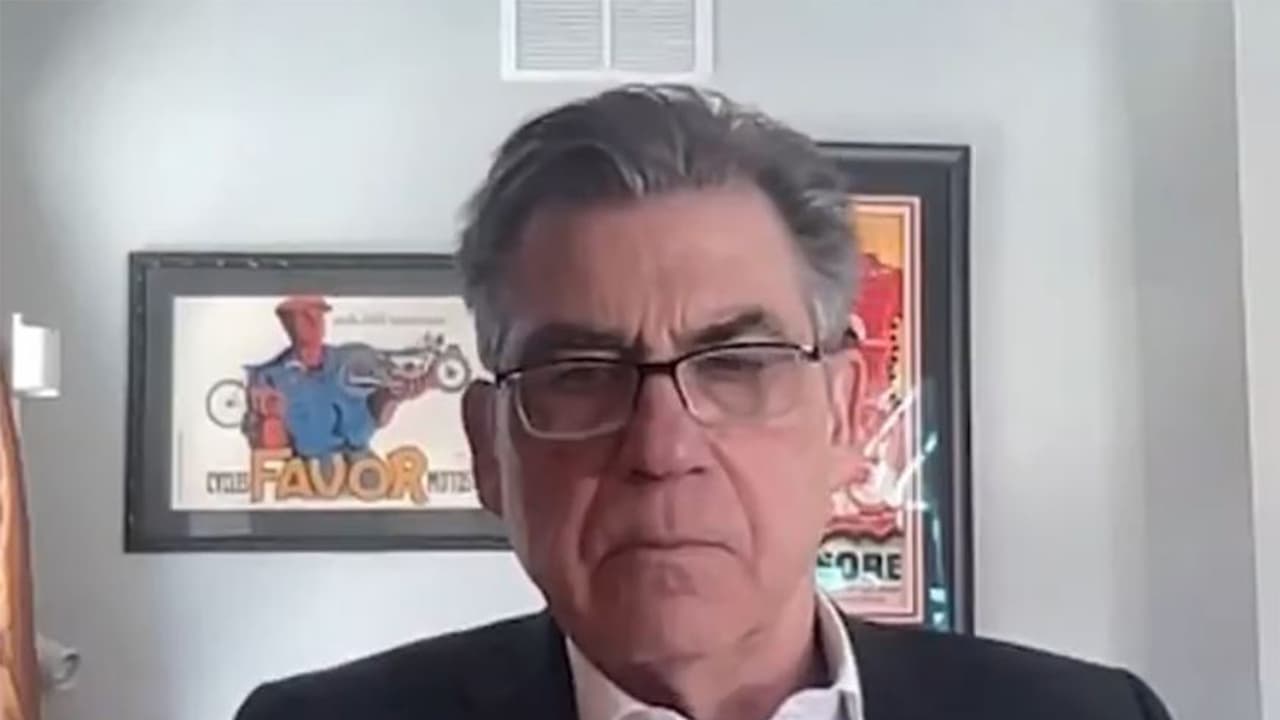
Former US official Mark Linscott welcomes the India-US trade deal, where Washington cut tariffs to 18%. He called it a relief that will cement economic ties, noting the deal was finalized after direct talks between PM Modi and President Trump.
'Finally here': Linscott's Reaction
Former Assistant US Trade Representative Mark Linscott on Monday (local time) welcomed the India-US trade deal, in which Washington reduced the tariffs on India to 18 per cent, saying that the agreement will help cement efforts by both countries to come closer economically.
Speaking to ANI following the announcement, Linscott said that his immediate response was one of relief and optimism. "My first reaction was--'Wow! It's finally here'. It's taken too long, and I am glad we have got an announcement of a deal," he said.
Negotiation Breakthrough and Trump's Approach
Linscott noted that trade negotiators on both sides had been working towards an agreement for a long time and appeared close as early as July last year, before talks stalled, adding that it became clear the deal would require direct engagement between the two leaders. He noted that the breakthrough came after Prime Minister Narendra Modi and US President Donald Trump spoke directly on the matter, saying the leaders' perspectives "match up well".
"The trade negotiators on both sides have been working at this. It appeared last July that they were very close. Things went off the rails at that time. It was largely on the Russian oil purchases issue but there were other problems as well. It's been clear that to get this across the finish line, it would require the two leaders to speak and that's what happened. I think their perspectives match up well. They realised that they had the winds of momentum behind them and it was time for the two of them to do their job and reach this deal," the former assistant US Trade Representative said.
Drawing parallels with earlier trade negotiations led by the Trump administration, Linscott said tariffs were used as leverage to shape the agreement. He described the negotiations as aggressive and at times chaotic, but said such an approach was a reality of Trump-era trade policy.
"The way that deals shaped up, and this is not too dissimilar to many of the negotiations over the first year of Trump Administration with a lot of other countries. There were threats of tariffs as leverage. There was then the imposition of reciprocal tariffs. All of these played a role in the negotiations on deals that have been struck so far. The chaos and the aggressiveness of Trump trade policy definitely were a reality in this negotiation, like so many others," he stated.
Economic Complementarities and Future Steps
Despite the challenges, Linscott said it had long been clear that the two economies could thrive together, noting that the US, being the largest and India, "soon to be" the third largest economy in the world, have strong complementarities "They've got a lot of complementarities. This is the first-largest economy in the world, soon to be the third-largest economy in the world, and a trade agreement can really cement their efforts to come closer together economically," Linscott said.
He added that while the agreement marks a significant step forward, it is only a beginning and there is "work ahead" on this deal. "This is a Phase One. This is an interim agreement on reciprocal tariffs, Russian oil tariffs, and certain priority non-tariff barriers. There's work ahead," he added.
Trump Announces Deal Details
His remark comes after Trump, earlier on Monday, said that the US and India "have agreed to a trade deal" with Washington reducing the reciprocal tariff from 25 per cent to 18 per cent "out of friendship and respect" for PM Modi.
In his Truth Social post, Trump referred to his conversation with PM Modi earlier in the day, noting that the Prime Minister was one of his closest friends and a powerful, respected leader of India. The US President also claimed that PM Modi had agreed to "stop buying Russian oil" and to buy much more from the US. He further noted that India would reduce tariffs and non-tariff barriers against the US.
"It was an Honor to speak with Prime Minister Modi, of India, this morning. He is one of my greatest friends and, a Powerful and Respected Leader of his Country. We spoke about many things, including Trade, and ending the War with Russia and Ukraine. He agreed to stop buying Russian Oil, and to buy much more from the United States and, potentially, Venezuela. This will help END THE WAR in Ukraine, which is taking place right now, with thousands of people dying each and every week! Out of friendship and respect for Prime Minister Modi and, as per his request, effective immediately, we agreed to a Trade Deal between the United States and India, whereby the United States will charge a reduced Reciprocal Tariff, lowering it from 25% to 18%. They will likewise move forward to reduce their Tariffs and Non Tariff Barriers against the United States, to ZERO," Trump's post read.
PM Modi Welcomes Announcement
Following Trump's post, Prime Minister Narendra Modi, on X, said it was wonderful to speak with his "dear friend President Trump" and expressed delight that "Made in India products will now have a reduced tariff of 18%".
"Wonderful to speak with my dear friend President Trump today. Delighted that Made in India products will now have a reduced tariff of 18%. Big thanks to President Trump on behalf of the 1.4 billion people of India for this wonderful announcement," PM Modi wrote in a post on X.
White House Confirms Terms
Meanwhile, a White House official confirmed to ANI that Washington will also drop the additional 25 per cent tariff on Indian imports imposed due to New Delhi's purchase of Russian oil, noting that India has to "cease, not just reduce, Russian oil purchases."
When asked by ANI whether the tariffs on Indian imports would be lifted in exchange for reducing Russian oil purchases, the official said, "Yes, although the agreement is that India will cease, not just reduce, Russian oil purchases." (ANI)
(Except for the headline, this story has not been edited by Asianet Newsable English staff and is published from a syndicated feed.)