India faces a rare earth dilemma, weighing China’s conditional supply against Afghanistan’s investment offer while pursuing autonomy.
China has agreed to resume exports of rare‑earth magnets to India, but only under a written “no‑diversion” pledge. This condition is not a minor contractual detail but a strategic signal. By requiring India to commit that supplies will not be redirected to U.S. or allied supply chains, Beijing is reinforcing its role as the gatekeeper of global magnet trade. With nearly 90 percent of refining capacity under its control, China’s dominance is institutional rather than incidental. For India, the decision highlights the risks of asymmetric interdependence in critical materials.
The stakes are immediate. Magnets are essential for electric vehicles, wind turbines, telecommunications, and defense systems. Any disruption in supply chains leads to production delays and higher costs. Accepting China’s terms would ease short‑term industrial pressure but could also be interpreted internationally as recognition of Beijing’s leverage.
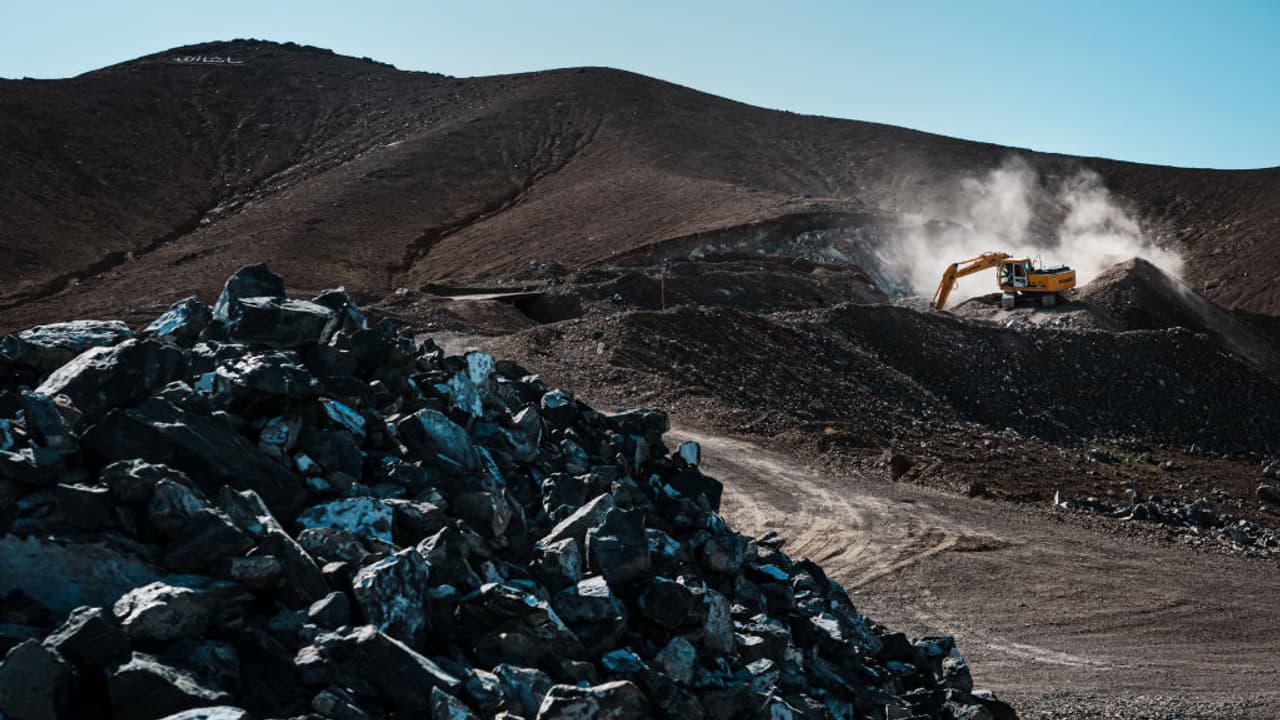
At the same time, Afghanistan has invited Indian investment in its mineral sector. Kabul’s request provides India with a potential long‑term hedge, though one fraught with uncertainty. Afghanistan’s mineral wealth is estimated at more than $1 trillion, but operational realities remain difficult. Security guarantees, payment systems, and regulatory stability are weak, while infrastructure and logistics costs are high.
Related Articles

India does have access through Iran’s Chabahar Port, secured under a 10‑year operating agreement signed in 2024. Yet, it will take years before significant volumes of rare earths can be extracted and transported. For now, Afghanistan functions more as a signaling option than a practical supply node. Its invitation demonstrates that China is not the only partner available, reduces Pakistan’s transit leverage, and broadens India’s regional economic ties.
Hedging Across Industrial And Strategic Clocks
India’s approach reflects a strategy of hedging across two timelines. The industrial clock moves quickly, with factories requiring magnets immediately. The strategic clock moves slowly, as mining, separation, and recycling capacity take years to develop. Accepting China’s conditionality solves the industrial problem but delays strategic autonomy. Rejecting it does the opposite.
Domestically, ministries prioritize throughput and costs, foreign‑policy leaders guard against weaponized interdependence, and industry lobbies push for predictability. Internationally, India participates in the U.S.‑led Minerals Security Partnership while still engaging with China’s commercial weight. Policy emerges where these competing pressures are least costly. Hedging allows India to sequence choices: using Chinese supply to avoid bottlenecks while investing in non‑Chinese corridors, including Afghanistan, to prevent long‑term dependence.
Midstream Weaknesses Remain India’s Binding Constraint
India’s most significant challenge lies in midstream processing. While laboratories have proficiency in alloying and separation chemistry, industrial‑scale throughput, quality assurance, and waste management remain underdeveloped. Without scaling separation and metallization, India risks falling into a capability trap, where downstream ambitions in electric vehicles, grid equipment, and defense electronics are constrained by upstream decisions made abroad.
Although incentives for magnet manufacturing and recycling exist, and public‑sector consortia are acquiring assets overseas, import dependence on refined inputs remains high. A strategic stockpile has been discussed, but without industrial‑scale processing, India’s vulnerability persists.
India’s rare earth dilemma is not about eliminating risk but distributing it. A China‑reliant approach reduces short‑term volatility but centralizes exposure, making India vulnerable during border crises or U.S.‑China shocks. An Afghanistan‑enabled route offers diversification but trades immediacy for long‑term potential. Third‑country options in Australia, Vietnam, and Africa reduce geopolitical risk but face capacity limits and higher costs until new refining lines are built.
Other Indo‑Pacific states hedge in similar ways. Australia continues supplying China while securing allied capital, and Vietnam strengthens U.S. partnerships without cutting Chinese trade. India’s size and proximity to China, however, magnify the signaling effects of every agreement.
By 2030, the decisive contest will occur at the interfaces where ore becomes alloy and contracts become leverage. India’s challenge is to balance immediate industrial needs with long‑term strategic autonomy. Kabul’s invitation and Beijing’s conditionality are not binary choices but variables in a sequencing game.
The critical question is not “China or not,” but rather “in what quantity, under what conditions, and for how long?” Afghanistan’s role is less about immediate supply and more about shaping expectations of India’s future bargaining position. Layered with partnerships like the MSP, this posture converts structural asymmetry into negotiating space without collapsing interdependence.