In a US military raid on January 3, 2026, Venezuelan President Nicolás Maduro was captured in Caracas. The mission, named Operation Absolute Resolve, followed months of extensive CIA surveillance and planning.
A bold and highly risky American operation that culminated in the capture of Venezuelan President Nicolás Maduro was the result of months of meticulous intelligence gathering, planning, and interagency cooperation, according to defence and media reports.
Dubbed Operation Absolute Resolve by the US military, the mission marked one of the most audacious cross‑border actions in recent US history, involving deep surveillance by the Central Intelligence Agency (CIA) and a rapid, carefully timed strike on Venezuelan soil.
The groundwork for the operation began months earlier, with the CIA conducting extensive surveillance on Maduro’s movements and routines, relying on drone fleets and human intelligence sources embedded within Venezuela. The detailed targeting enabled US forces to build an exact replica of Maduro’s compound to rehearse tactical approaches, a rare step that underscored the complexity and danger inherent in the mission.
Related Articles

By late December 2025, the US had also amassed significant military presence in the Caribbean, including positioning warships like the USS Gerald R. Ford and deploying more than 150 aircraft ranging from fighters to drones across multiple bases within the Western Hemisphere. The intent was to establish air dominance and maintain tactical surprise for the planned raid on Maduro’s heavily fortified residence in Caracas, the capital of Venezuela.
President Donald Trump reportedly gave final authorization for the operation on the night of January 2, 2026, after months of deliberation and monitoring weather conditions. Just after 2 a.m. local time on January 3, US aircraft struck Venezuelan air defence installations to clear a corridor for a coordinated helicopter assault. Delta Force commandos and US Special Operations Forces breached Maduro’s compound at the Fuerte Tiuna military base, where the president and his wife, Cilia Flores, were taken into custody shortly thereafter.
According to military officials, the raid lasted around two hours, during which Maduro attempted to retreat to a safe room, but was apprehended as US forces secured the area. No American personnel were reported killed, though several were injured, and the operation also included troops from other branches such as the FBI’s Hostage Rescue Team. The high‑risk nature of the mission stemmed not just from combat dangers, but from the legal and geopolitical ramifications of the unilateral action on foreign soil.
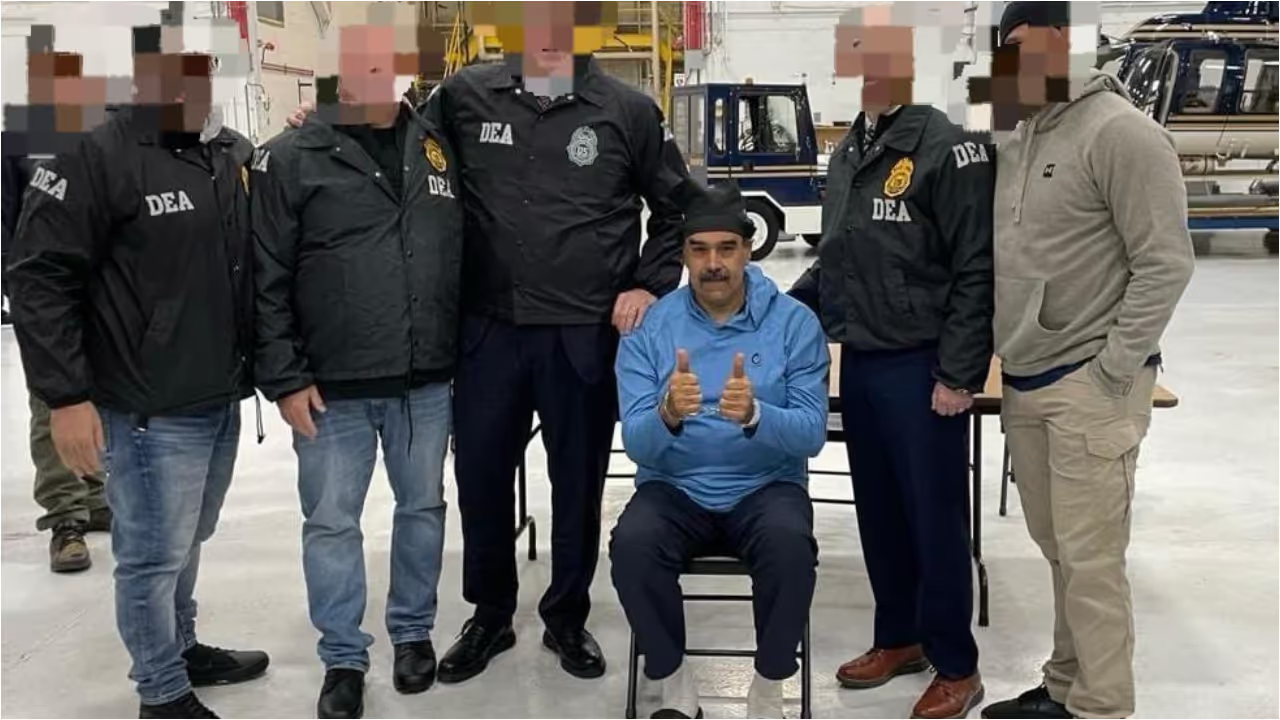
Once captured, Maduro and Flores were transported via US military aircraft to the USS Iwo Jima, then flown to the United States where they will face federal charges, including allegations related to narco‑terrorism and cocaine trafficking, under a superseding indictment filed in New York’s Southern District Court.
The operation has drawn intense international scrutiny. Critics argue that the US action, undertaken without United Nations authorization or Venezuelan consent, may violate international law and set a dangerous precedent for sovereignty violations. Supporters in Washington frame it as a necessary law‑enforcement effort against a regime accused of widespread corruption and drug trafficking, reinforcing US strategic interests in the region.
In Venezuela, the capture has left a power vacuum and sparked political uncertainty. Vice President Delcy Rodríguez was declared interim president by the Venezuelan Supreme Court, while global reactions range from condemnation by nations like Russia to cautious support from some Western countries.
Operation Absolute Resolve stands as a testament to the reach of US military and intelligence capabilities - but it also raises profound questions about the future of international norms, sovereignty, and the role of covert operations in 21st‑century geopolitics.