
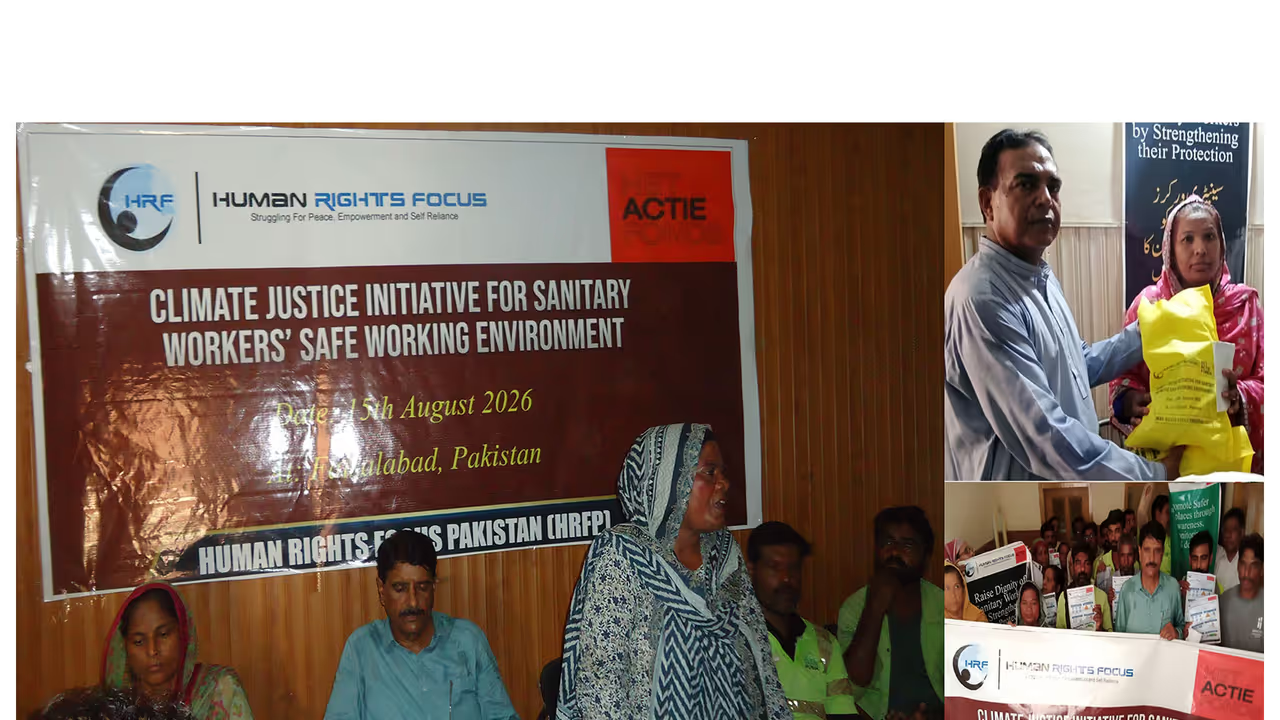
Human Rights Focus Pakistan (HRFP) highlights the grave dangers and rights violations faced by sanitary workers in Faisalabad. Lacking protective gear, they face toxic waste and climate change risks, leading to numerous preventable deaths.
Climate Change Exacerbates Risks
Speaking on the issue during event by HRFP and Het Actiefonds,under "Climate Justice Initiative for Sanitary Workers' Safe Working Environment", Naveed Walter, President of Human Rights Focus Pakistan (HRFP) stated that climate change is intensifying existing risks. Rising temperatures and frequent heatwaves expose outdoor sanitation workers to severe heat stress, dehydration, and other health complications. Inadequate waste management systems and poor drainage infrastructure further increase exposure to flooding, stagnant water, and hazardous substances."Sanitary workers are the backbone of public health and urban cleanliness, yet they continue to work under dangerous conditions with little recognition, protection, or participation in decisions that directly affect their welfare," said Naveed Walter.
Discrimination and Rising Fatalities
HRFP highlighted that structural inequalities, religious discrimination, and gender-based biases continue to limit the representation of sanitation workers in local governance and environmental planning, leaving them exposed to occupational hazards, unsafe working conditions, and persistent social exclusion. At least 50 sanitation workers lose their lives annually, with 88 cases reported in 2025. From January to June 2026, another 50 cases have already been documented, reflecting how the lack of proper safety equipment, inadequate workplace protections, and intersecting religious and gender-based discrimination continue to increase their vulnerability.HRFP's Initiative for Safer Working Environments
To address these challenges, HRFP, in partnership with the Het Actiefonds Climate Justice Initiative, has launched efforts to promote safer working environments, strengthen occupational safety standards, and advance climate justice for sanitation workers through the provision of essential personal protective equipment (PPE) and safety kits.A Call for Government Action and Accountability
HRFP further emphasized that a series of recent incidents involving sanitation workers and members of vulnerable minority communities and women underscore the urgent need for stronger legal protections and accountability. Human Rights Focus Pakistan calls upon the Government of Pakistan, provincial authorities, law enforcement agencies, and relevant public institutions to ensure safe and dignified working conditions for sanitary workers, provide mandatory protective equipment, health insurance, and occupational safety training, strengthen climate resilience measures for vulnerable workers, guarantee fair investigations and accountability in cases involving violence against marginalized communities, promote meaningful participation of sanitation workers in policy-making and urban planning processes and uphold equal protection under the law regardless of religion, gender, occupation, or social status.HRFP reiterates that sanitation workers and marginalized communities deserve protection, dignity, justice, and equal opportunities. Immediate action is necessary to prevent further loss of life and to ensure that vulnerable citizens can live and work in safety.
