
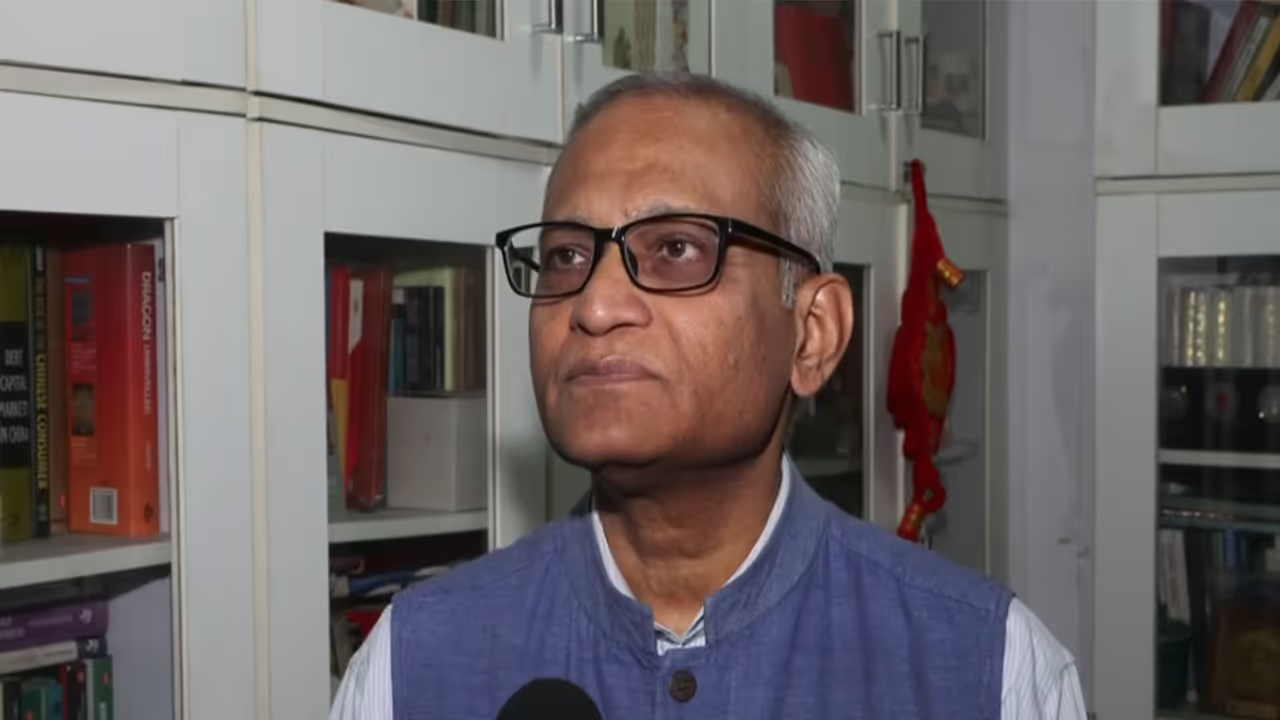
JNU expert Professor Srikanth Kondapalli warns that Chinese vloggers are deliberately misrepresenting foreign locations as Indian slums to damage India's democratic image and push a narrative of systemic superiority for domestic validation.
Chinese Vloggers Target India with Misleading Content
New Delhi [India], November 10 (ANI): Amid reports of Chinese vloggers livestreaming from slums in Dhaka and falsely presenting them as locations in Delhi, Chinese studies expert Professor Srikanth Kondapalli has termed the trend an "ideological struggle" aimed at undermining India's progress under a democratic system. Speaking to ANI, Professor Kondapalli from Jawaharlal Nehru University (JNU) noted that the trend is partly driven by Chinese content creators chasing social media clout, vanity metrics, and online validation.
"The number of anti-India and anti-South Asia videos on Chinese social media platforms such as Weibo and other platforms similar to Facebook has increased substantially. That is true. The information we have received suggests that these videos have been circulating since November 2024. They seek to paint a bleak picture of South Asia, particularly India and Bangladesh, using derogatory portrayals. This is also an ideological struggle. To communicate this narrative, some vloggers create a negative image of these countries. I would like to make a few general observations. First, as per capita income in China has increased, some people are travelling around in search of exotic content. They want to establish a higher profile on Weibo, WeChat and other social networking platforms. Their social standing and prestige increase with the number of subscribers, likes and validation they receive for their videos," Kondapalli said.
Vlogger Tactics and Artificial Portrayals
He noted that vloggers are travelling across countries like Bangladesh, Indonesia, and Vietnam to focus selectively on income disparity and sanitation challenges to manufacture engagement. "This has created a certain excitement around showcasing such places on Chinese social media. They are travelling not just across Dhaka but also to Indonesia, Vietnam and other countries. They highlight income inequality and other problems. However, this is an artificial portrayal of other countries. I have travelled to villages and have seen similar conditions and sanitation problems in different parts of the world, including areas in China," he remarked.
Geopolitical Dimensions and Poverty Reduction
Delving into the geopolitical and narrative dimensions of the campaign, the JNU professor linked the smear videos to China's domestic political messaging around building a "well-off society." He pointed out that international data highlighting India's sharp reduction in extreme poverty has disrupted Beijing’s narrative of systemic superiority. "My second observation, based on some of these videos over the last two years, relates to China's campaign to build a well-off society. When UNDP reports that India has also made progress in overcoming extreme poverty, with only around 2% of the population living in extreme poverty, this becomes a surprising development for some in China. They question how India, with a democratic system and a different model of governance, has managed to make progress in poverty reduction without China's level of GDP or investment," Kondapalli further noted. (ANI)
(Except for the headline, this story has not been edited by Asianetnews Editorial staff and is published from a syndicated feed.)








