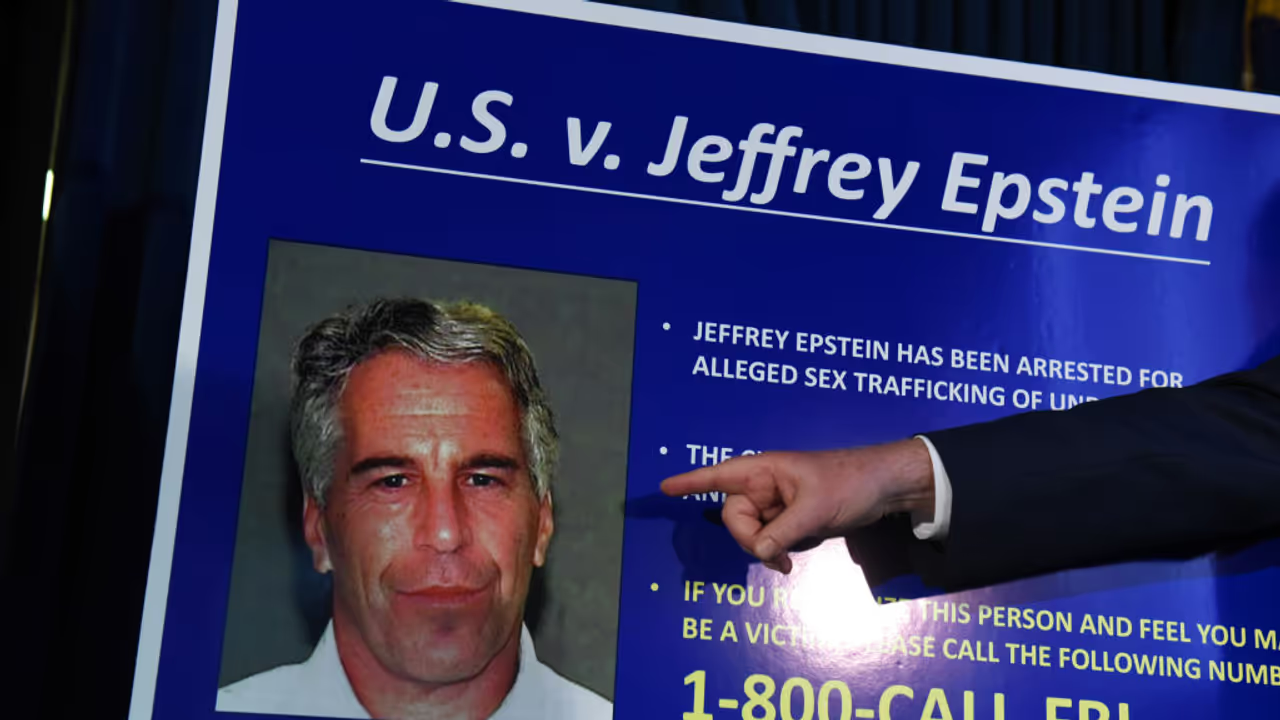
The US DOJ has released extensive Epstein Files revealing the late financier’s influence and disturbing ideas, including an alleged plan to create a “baby ranch” in New Mexico to spread his DNA, though no evidence shows it was ever carried out.
The release of extensive Jeffrey Epstein Files by the US Department of Justice has brought to light a series of unsettling revelations about the late financier’s plans, relationships and long-standing influence within elite circles — including a bizarre and controversial scheme that he discussed for years, reportedly contemplating the propagation of his own DNA to create a so-called “super race” of humans.
Epstein, who died in a New York jail cell in August 2019 while awaiting trial on federal sex-trafficking charges, had a vast network of wealth, power and connections that spanned politics, science and academia. The newly released documents, which include millions of pages, thousands of images and hundreds of videos, have surfaced after years of public pressure and the enactment of the Epstein Files Transparency Act.
At the centre of recent attention is Epstein’s alleged “baby ranch” vision — a concept he reportedly shared with scientists, advisers and wealthy associates over years, particularly in the early 2000s. According to The New York Times and detailed in the NDTV reports drawn from the files, Epstein wanted to use his Zorro Ranch in New Mexico as a base where women would be impregnated with his sperm with the goal of propagating his genetic lineage.
Related Articles

The idea echoed elements of transhumanist and eugenic thinking, philosophies that flirt with genetic “improvement” of humans, though critics quickly noted the disturbing parallels to historical eugenics movements that sought to engineer human populations. According to multiple accounts, Epstein discussed having multiple women pregnant at the ranch simultaneously, in conversations spanning private dinners, scientific gatherings and informal meetings with prominent figures in science and business.
Despite these discussions, there is no independent evidence that the “baby ranch” plan was ever operationalised or resulted in any births. Investigators and journalists have found no confirmation that Epstein fathered children through such a scheme, nor that the alleged plan went beyond talk and speculation among his inner circle.
One haunting element of the files is a diary entry by a woman who claims she was impregnated by Epstein in her teen years, roughly around 2002, and that the baby was taken from her shortly after birth — an allegation she says was overseen by Epstein’s long-time associate Ghislaine Maxwell. While this claim has not been independently verified, it has added to the troubling narratives emerging from the documents.
Beyond the “baby ranch” controversy, released records reveal other facets of Epstein’s life. He embedded himself in scientific and academic communities, funding events, conferences and programmes at institutions like Harvard University’s Program for Evolutionary Dynamics and hosting elite gatherings where renowned scientists such as Stephen Hawking, Steven Pinker and others sometimes appeared. These engagements helped him cultivate influence despite his growing reputation as a convicted sex offender.
Epstein’s strategy appears to have combined money, access and flattery — offering significant donations, chartered travel, exotic locations and networking opportunities to draw powerful people into his orbit. Critics have argued that this allowed him to normalize his presence among elites while deflecting scrutiny and criticism of his criminal behaviour.
The ongoing release of files has also stirred political debate in the United States. Former President Donald Trump and other figures have been discussed frequently within the documents — Trump fought public disclosure for months, but congressional action forced the publication of the files. The Justice Department has defended the disclosures while pushing back against “sensationalist” claims that tie Trump or others directly to criminal conduct.
Complicating matters further are concerns about the handling and redaction of the files. The DOJ has temporarily taken down thousands of documents after victims’ identifying information was inadvertently exposed, leading to calls from survivors, legal advocates and lawmakers for more responsible and transparent releases. Some lawyers have criticised the Justice Department’s handling as “outrageous” and detrimental to victims’ well-being.
Victims’ advocates and journalists have noted that while the files include references to powerful individuals, not all mentions imply wrongdoing. Many references stem from mundane interactions, flights or social settings, and the mere appearance of a name in the files does not equate to criminal involvement. Nonetheless, the documents have revealed new leads, questions and public interest in Epstein’s network that law enforcement and civil society continue to scrutinise.
The controversy highlights broader issues around accountability, transparency and systemic privileges. Epstein’s life and posthumous revelations have sparked global debate about how wealthy and connected perpetrators evade extended scrutiny, how institutions engage with influential figures, and how victims’ narratives are handled in public and legal domains. As more files are reviewed, the world is watching not just for sensational allegations but for lasting changes in how powerful networks are investigated and held accountable.