
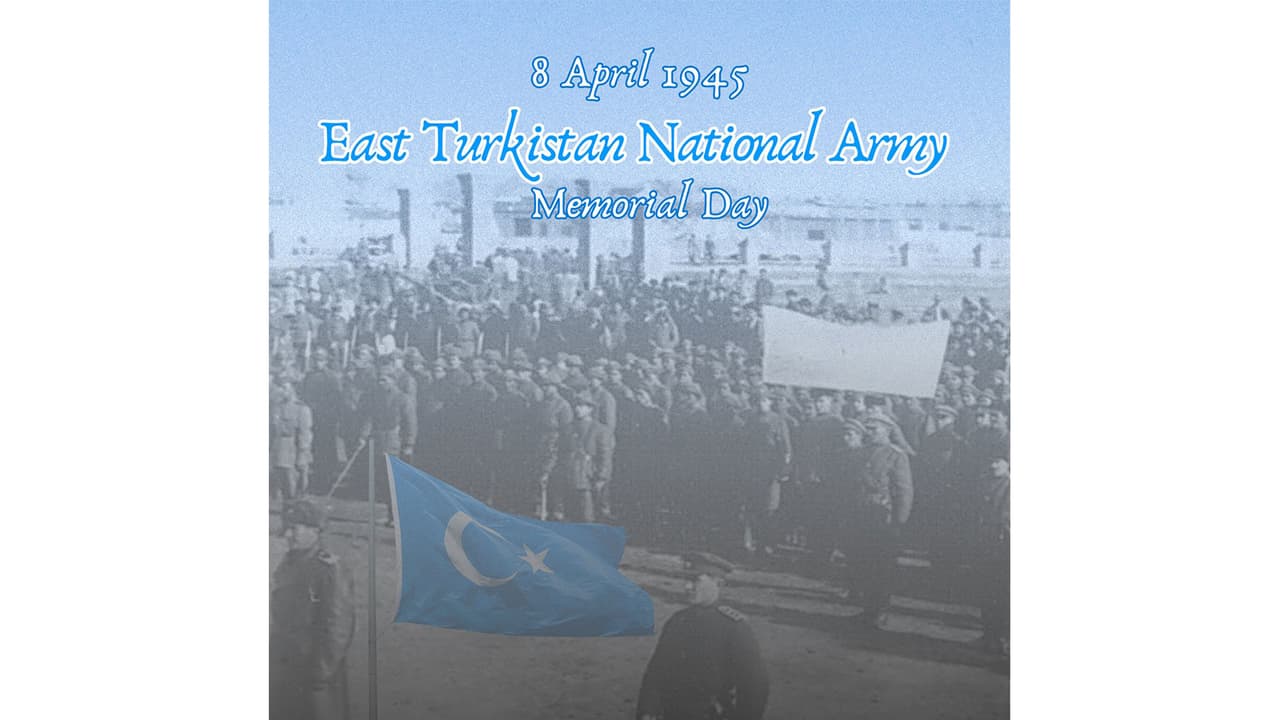
The East Turkistan National Movement marked its National Army's 81st anniversary, recalling its 1945 origins to defend sovereignty. The group accuses China of a 'colonial occupation' and 'genocide' after overthrowing the republic in 1949.
The East Turkistan National Movement recently marked a solemn milestone in its history, commemorating the 81st anniversary of the East Turkistan National Army Memorial Day. This occasion serves as a powerful reminder of the region's historical efforts toward self-governance and the enduring spirit of its national identity.
In a detailed post shared via the social media platform X, the group reflected on the army's origins, noting it was established on this day in 1945 by the East Turkistan Republic. According to the movement, the military force was originally formed to "defend national sovereignty and preserve independence," a mission the group reinforced while reiterating its modern-day demands for regional sovereignty.
Allegations of Occupation and Genocide
The post further claimed that on December 22, 1949, China overthrew the republic, disbanded the army, and began what it described as a prolonged "colonial occupation". The organisation alleged that the absence of a national army left the people "defenceless", accusing China of carrying out policies amounting to "genocide" and repression in the region known internationally as Xinjiang.
Reaffirming Commitment to Independence
Reaffirming its position, the group paid tribute to former soldiers of the East Turkistan National Army and reiterated its commitment to what it called the restoration of East Turkistan's independence. "We honour our forefathers, our martyrs, and all the soldiers who served in the East Turkistan National Army and reaffirm our unwavering commitment to ending China's campaign of colonisation, genocide, and occupation in East Turkistan and restoring East Turkistan's independence," the post stated.
A Contested Region
The East Turkistan National Movement is a broad term used to describe various political and social efforts by sections of the Uyghur and other Turkic communities seeking either independence or greater autonomy for Xinjiang.
Meanwhile, China maintains that Xinjiang is an integral part of its territory and has consistently rejected allegations of human rights abuses, stating that its policies are aimed at combating extremism and ensuring regional stability.
Xinjiang remains a deeply contested region, where many Uyghurs and Turkic groups allege repression, cultural restrictions, and human rights abuses. China denies these claims, saying its policies counter extremism and ensure stability, while global concerns continue over autonomy, identity, and governance in the region. (ANI)
(Except for the headline, this story has not been edited by Asianet Newsable English staff and is published from a syndicated feed.)