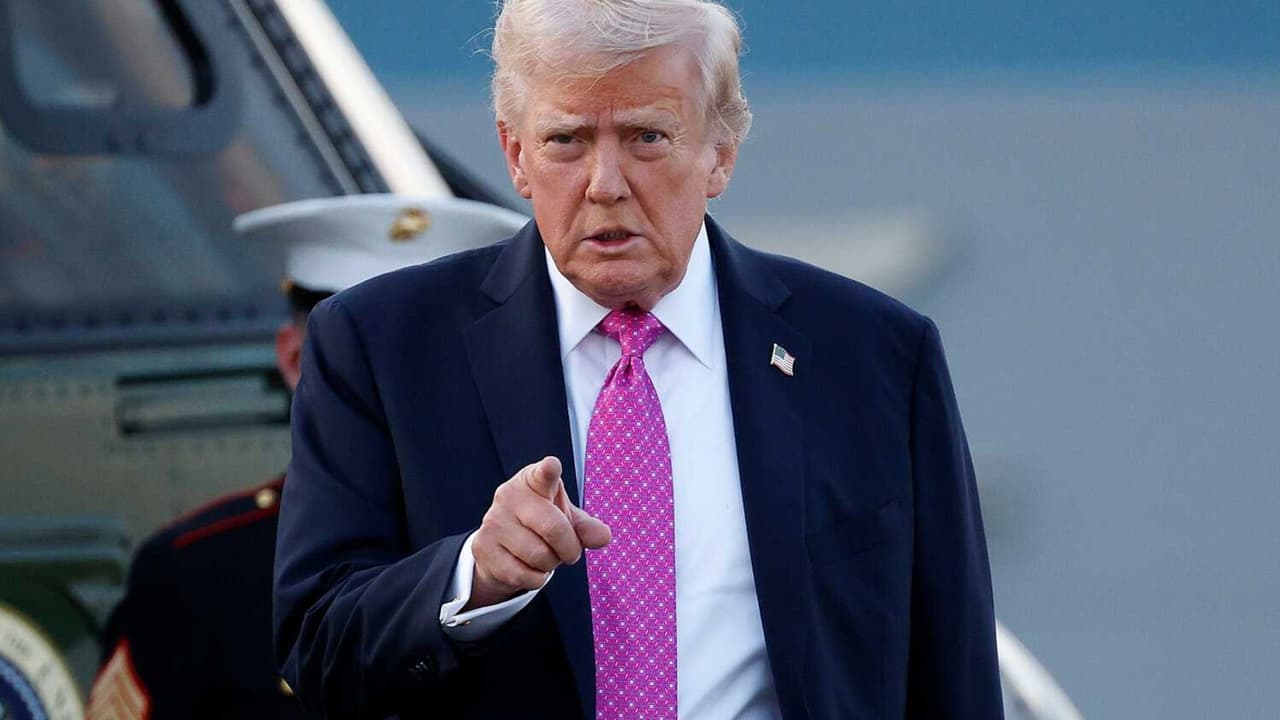
United States has warned it may restart air strikes and maintain a naval blockade if Iran refuses a proposed peace deal. Talks may resume soon with Pakistan acting as mediator. Iran has pushed back strongly, warning of retaliation. Iran insists on its rights and has warned against blockades. Pakistan is trying to revive talks.
The United States has issued a strong warning to Iran, saying it may restart air strikes and continue a naval blockade if Tehran refuses to accept a peace deal. The warning comes during a fragile pause in fighting after weeks of conflict involving the US, Israel and Iran.
US Defence Secretary Pete Hegseth said that if Iran 'chooses poorly', it could face more attacks on key infrastructure, including power and energy systems. His remarks underline the serious pressure being placed on Iran to agree to a deal.
At the same time, US officials have said they remain hopeful about fresh talks. The White House indicated that negotiations could soon resume, possibly in Pakistan.
Related Articles

Pakistan steps in as mediator
Pakistan has taken on a key diplomatic role in trying to bring both sides back to the table. The country hosted earlier talks between the US and Iran, though those discussions ended without a final agreement.
Pakistan’s army chief, Field Marshal Asim Munir, recently met Iranian officials in Tehran. He held talks with senior leaders, including Iran’s parliamentary speaker Mohammad Bagher Ghalibaf, who had led Iran’s side in earlier negotiations.
Pakistan has said its role as a mediator is ongoing. Officials confirmed that discussions are still happening behind the scenes, even though no date has been set for the next round of talks.
Naval blockade raises tensions
One of the most serious developments is the US naval blockade of Iranian ports. According to US military officials, the blockade applies to all ships going in or out of Iran, no matter which country they belong to.
General Dan Caine, a top US military officer, said force could be used against any vessel that does not follow the blockade rules. The US claims it has already stopped several ships from leaving Iranian ports.
This move has sharply increased tensions in the region. Iran has strongly criticised the blockade and warned it could respond with force if its trade routes are blocked.
Iran issues strong counter warnings
Iranian officials have responded with their own warnings. Senior military figures have said they would not allow trade in key waters like the Persian Gulf, the Sea of Oman and the Red Sea if the blockade continues.
A military adviser to Iran’s supreme leadership even warned that American ships could be attacked if the US tries to control the shipping routes.
These statements show how serious the situation has become. Both sides are making strong threats, raising fears of further escalation if talks fail.
Peace deal still uncertain
Despite the tensions, both sides appear open to negotiations. The US has proposed what it calls a “grand bargain” to end the conflict. This deal aims to stop the war and also address long-standing concerns about Iran’s nuclear programme.
However, major differences remain. The US reportedly wants Iran to stop enriching uranium for 20 years. Iran, on the other hand, has suggested a shorter five-year pause.
Iran has also insisted that its nuclear programme is for peaceful purposes. It says its right to enrich uranium cannot be taken away, though it may be open to limits on how much it enriches.
Israel adds pressure on Iran
Israel has also taken a strong position, warning Iran to accept the US proposal or face serious consequences. Israeli leaders said Iran is at a “historic crossroads”, with one path leading to peace and the other to more destruction.
This adds another layer of pressure on Iran, as it faces both military threats and diplomatic demands at the same time.
Global oil supply under threat
The conflict has had a major impact on global oil supply. The Strait of Hormuz, a key shipping route through which about one-fifth of the world’s oil passes, has been heavily affected.
Iranian actions in the region have disrupted shipping, while the US blockade has further reduced movement. This has created uncertainty in energy markets and pushed oil prices higher.
If the situation worsens, it could lead to even bigger disruptions in global trade and energy supply.
Stock markets show mixed signals
Despite the tensions, global stock markets have shown surprising strength. Investors seem hopeful that a peace deal will eventually be reached. Markets in the US, Europe and Asia have seen gains, with some reaching record highs. Analysts say this reflects growing confidence that the conflict may not last much longer.
Global stock markets moved higher on Thursday as investors grew hopeful that a ceasefire in the Middle East could soon ease tensions and stabilise energy supply. The possibility of oil and gas shipments resuming through the Strait of Hormuz lifted confidence, as traders expect inflation pressures to reduce if energy flows return to normal.
Markets in Asia led the rally, with Tokyo’s Nikkei hitting a record high, while Hong Kong and Shanghai also posted gains. In the US and Europe, major indexes such as the Dow Jones, FTSE 100 and DAX edged higher. Analysts said this rebound is one of the fastest in recent times, driven by optimism that peace talks between the US and Iran may lead to a broader agreement.
However, risks remain. Oil prices are still elevated, with Brent crude near $96 per barrel, reflecting ongoing uncertainty. At the same time, inflation in the eurozone has risen to 2.6 percent due to high energy costs. Still, strong economic data from China, including 5 percent growth, and booming demand in the AI sector, highlighted by TSMC’s record profits, have helped support global market sentiment.
However, risks remain. Rising oil prices and inflation are still major concerns, especially for countries that depend heavily on energy imports.
In the middle of global uncertainty, China’s economy has provided a positive signal. The country reported stronger-than-expected growth in the first quarter of the year.
This has helped support global markets and eased some fears about the wider economic impact of the conflict.
The coming days are likely to be critical. If talks resume and progress is made, tensions could ease quickly. But if negotiations fail, the situation could worsen, with the risk of fresh military action.
Both sides have made their positions clear. The US wants a strong deal that limits Iran’s nuclear programme, while Iran wants to protect its rights and reduce pressure on its economy.
For now, the world is watching closely, as the outcome will not only affect the Middle East but also the global economy.
(With AFP inputs)