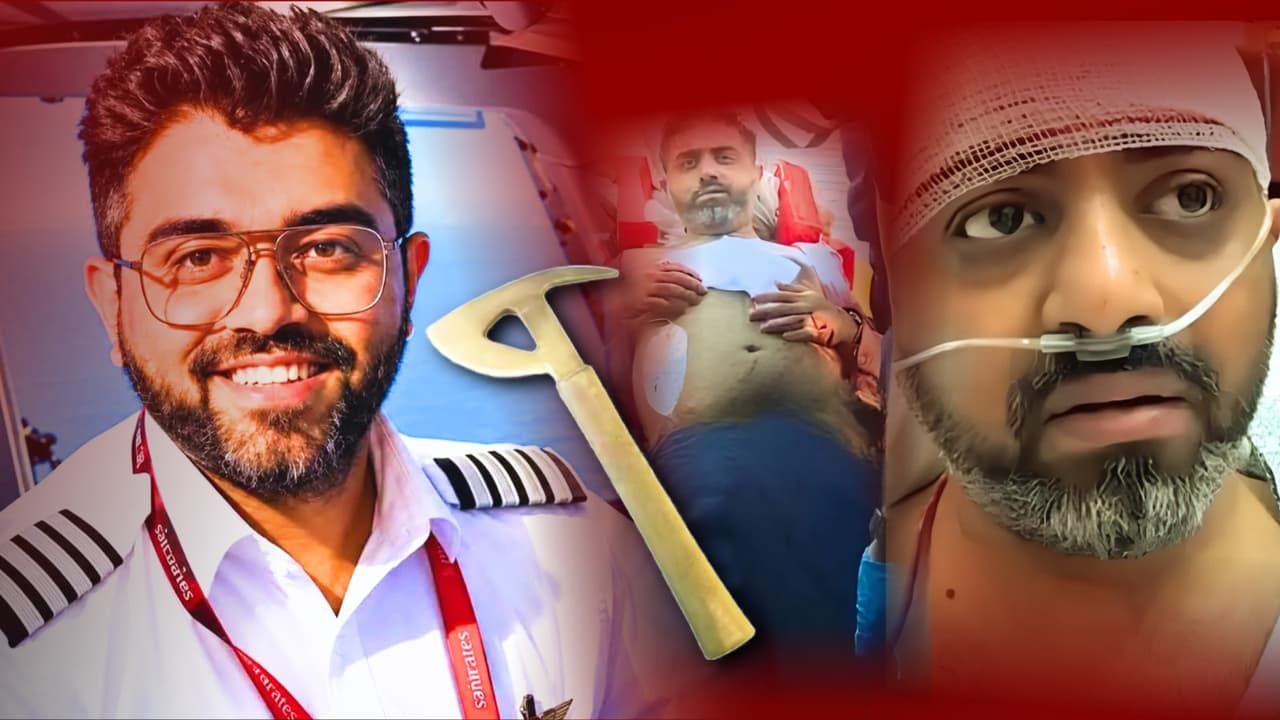
A plumber with no flying experience reportedly helped save flydubai Flight FZ1073 after the co-pilot attacked the captain with a crash axe. While the passengers' bravery averted disaster, aviation experts and officials are now raising five critical questions about the aircraft's steep descent, the co-pilot's background, and security clearances.
A plumber who learnt about aeroplanes from television may have helped save an aircraft full of people. Yaniv Hayoun, 50, was among the passengers who rushed into the cockpit of flydubai Flight FZ1073 and overpowered a co-pilot who had turned on his own captain. Hayoun says he then grabbed the controls and pulled them back, copying what he had seen on Air Crash Investigation, a Canadian television programme in which experts examine how plane crashes happen. Israeli Prime Minister Benjamin Netanyahu, who described him as a plumber, later met him at the airport and asked how he knew what to do before another pilot took over. The reply was disarming: "I watch Air Crash Investigation, Mr Prime Minister."
It is a story of rare courage. Yet many on social media wonder how a man with no known flying experience could steady an aircraft in mid-air. That doubt is one of five questions which, as Al Jazeera has reported, people online, aviation experts and enthusiasts are raising about the incident and about some of the official explanations.
The flight left Dubai International Airport on Wednesday at 7:05am (03:05 GMT). About two and a half hours later, at around 05:35 GMT, co-pilot Hamam al-Hammami attacked Captain Smit Machchhar, according to media reports. The United Arab Emirates prosecutor general said the weapon was the crash axe, an emergency tool kept inside the cockpit. Machchhar, covered in blood, still managed to open the cockpit door, and that single act let passengers come to his rescue. The aircraft, which had begun descending steeply, later made an emergency landing in Saudi Arabia.
Related Articles

The second question concerns that descent. Flightradar24, a website that tracks aircraft in flight, shows the plane dropped more than 5,180 metres (approximately 17,000 feet) in less than two minutes. Passengers panicked, but publicly available information mentions no injuries. Compare this with an Air India flight in August, which dropped only about 90 metres (300 feet) in turbulence and left at least 17 passengers hurt.
A flight instructor recreated the fall in a flight simulator, a machine that copies real flying conditions on the ground. He found the plane would have been moving faster than the speed its body is designed to handle safely. When it was pulled out of the dive, it would also have felt strong negative G-force. This is the force that lifts people and loose objects upward, like the floating sensation when a fast lift suddenly moves down. Bags, phones and other unsecured items, he said, could have been thrown around the cabin.
The third question is about a prayer. According to The Times of Israel, Machchhar spoke to Netanyahu on Saturday and said al-Hammami had asked for time to pray. Four or five minutes later, the captain received "a big blow" to the back of his head. The early-morning Islamic prayer in the UAE that Wednesday was at 04:51am, hours before the attack, so the timing, as Al Jazeera's account points out, did not match the usual prayer schedule. He may, however, have been offering a different, personal prayer.
The fourth question is the most troubling: why was al-Hammami flying at all? He is reportedly an Omani citizen. On Friday, The Wall Street Journal, citing unnamed sources, reported that Omani authorities had earlier stopped him from flying in the country over concerns about his ideological views. On Saturday, CNN, citing a regional diplomatic source, said he had also been removed from flight training over similar concerns and later given another position. Two people familiar with the matter said he was removed from a job at Oman's national airline last year for the same reason. How he came to fly this flydubai route remains unclear.
The fifth question is for Israel. It has no official diplomatic relations with Oman, and Netanyahu had earlier said people from such countries were generally not allowed to operate flights to Israel. Yet Haaretz reported on Saturday that officials had received the names of the crew and passengers in advance, with the Omani co-pilot on the list. Security sources told the newspaper that two agencies check and monitor foreign crews arriving in Israel: the Security Department of the Ministry of Transport and Road Safety, and the intelligence agency Mossad.
Netanyahu said on Friday that Israel was investigating whether someone had directed the attack, warning that anyone involved would pay a "heavy price". Investigators are still trying to learn why it happened. Until they do, serious questions about aircraft security will remain, alongside the memory of a wounded captain who opened a door and of strangers who walked through it.
(Girish Linganna is an award-winning science communicator and a Defence, Aerospace & Geopolitical Analyst. He is the Managing Director of ADD Engineering Components India Pvt. Ltd., a subsidiary of ADD Engineering GmbH, Germany.)