
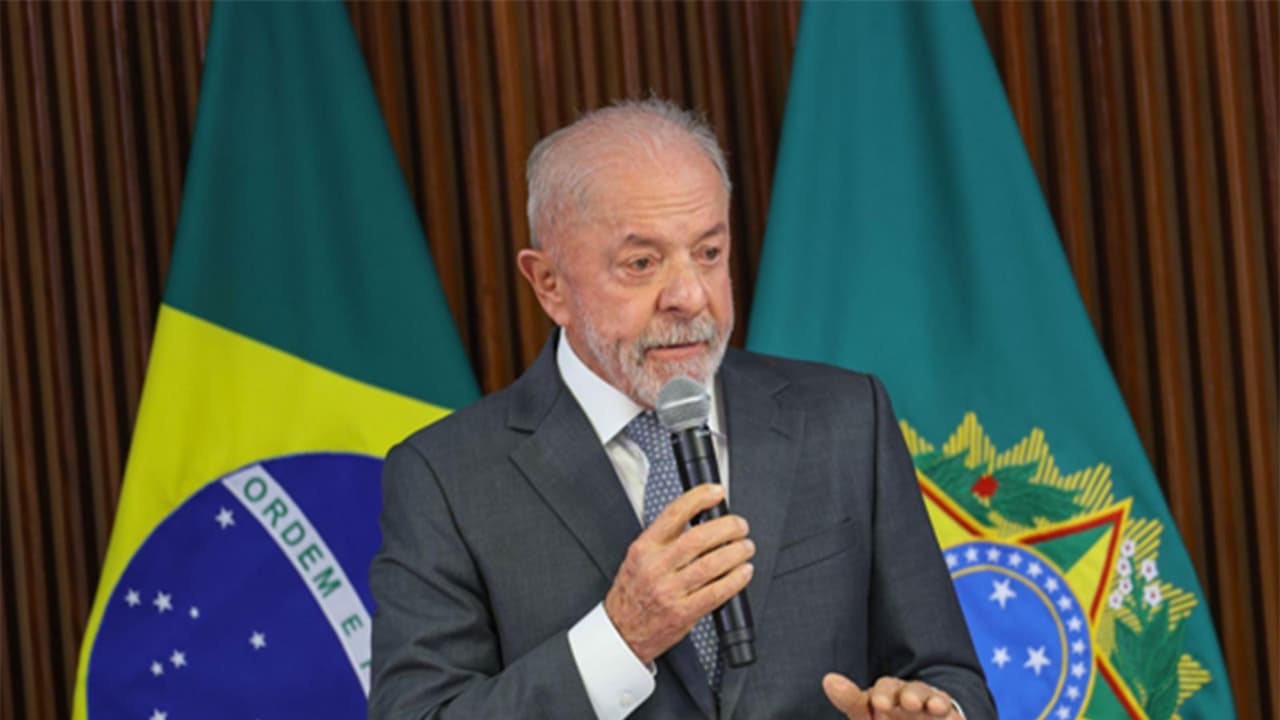
Brazil's government will retaliate after the US imposed 25% tariffs on Brazilian goods. President Lula's administration repudiated the move, citing a violation of multilateral trade rules and will activate its Reciprocity Law.
Brazilian President Luiz Inacio Lula da Silva's administration announced today that it will initiate formal retaliatory actions after the United States imposed 25 per cent tariffs on Brazilian goods, citing a violation of multilateral trade rules.
Brazil's Official Response
In a statement released by the Social Communication Secretariat of the Presidency of the Republic on X, the Brazilian government formally "repudiates the decision announced today by the US government regarding the imposition of 25% tariffs on Brazilian products, based on Section 301 of the Trade Act of 1974".
Addressing the economic impact, the Brazilian government noted that the United States has historically maintained a significant trade surplus. "The Brazilian government repudiates the decision announced today by the U.S. government regarding the imposition of 25% tariffs on Brazilian products, based on Section 301 of the Trade Act of 1974. There is no justification for unilateral measures against our country. According to statistics from the U.S. government itself, the United States has accumulated a surplus of $424.5 billion in goods and services with Brazil over the past 15 years," the release read.
Brazil Defends Trade and Environmental Policies
The administration rejected the legitimacy of the US investigation, arguing that the measures lack support in multilateral trade rules. "In 2025, 76% of imports originating from the United States entered the country without paying import duties, and the average effective rate applied to U.S. products was only 3.1%. Brazil does not recognize the legitimacy of investigations without support in the multilateral rules of trade. Despite this, we have never left the negotiating table to defend national interests," it stated.
"Over the past year, the Brazilian government has acted tirelessly with the Office of the United States Trade Representative (USTR) to end the investigations based on Section 301, presenting evidence that refutes each of the allegations regarding alleged unfair trade practices adopted by Brazil," it added.
According to the release, the Brazilian government "demonstrated that the allegations against PIX and the regulation of digital platforms are unfounded, and the accusations regarding deforestation are absurd."
Regarding its environmental policy, the government asserted that "starting in 2023, we have combated environmental illicit activities incisively and drastically reduced deforestation across all Brazilian biomes". "We have demonstrated that the allegations against PIX and the regulation of digital platforms are unfounded, and the accusations regarding deforestation are absurd. PIX is a heritage of our people and an international reference for public digital infrastructure. In Brazil, we will not abdicate from protecting our families and our children against the greed of a handful of techno-oligarchs. Freedom of expression is not a blank check for criminality. The entire world knows that, starting in 2023, we have combated environmental illicit activities incisively and drastically reduced deforestation across all Brazilian biomes," the release read.
Retaliatory Measures and WTO Action
The administration signalled that it would take immediate action to counter the move. "The government of Brazil will continue to adopt measures to reduce the damage caused to the economy and the income of Brazilians," the secretariat stated, noting plans to "immediately initiate the procedures to activate the instruments provided for in the Reciprocity Law, approved unanimously by the National Congress, and will resume the issue within the framework of the WTO dispute settlement mechanism".
Lula Administration Blames Political Opposition
The release also took a firm stance against domestic political opposition, claiming the US decision was "part of the plot built with the active collaboration of the Bolsonaro family," whom it characterised as "false patriots who orchestrated and publicly defended actions against our country".
The government concluded by reaffirming its commitment to national sovereignty: "One cannot love Brazil only when we win elections. Protecting our sovereignty is an obligation that stands above all parties and all trends. The Brazilian government will not falter in its duty to preserve it".
US Justification for Tariffs
His remarks come after the United States Trade Representative (USTR) announced a 25 per cent tariff on certain goods imported from Brazil under Section 301 of the Trade Act of 1974, following what it described as a year-long investigation into Brazil's trade practices.
The US concluded that several of Brazil's trade policies are "unreasonable and discriminatory," significantly hindering the competitive position of American businesses and workers. The USTR probe determined that certain Brazilian measures related to digital trade and electronic payment services, unfair, preferential tariffs, anti-corruption interference, intellectual property protection, ethanol market access, and illegal deforestation are unreasonable and burden or restrict the commerce of American farmers, workers, innovators, and exporters.
The Office of the United States Trade Representative (USTR) convened two public hearings, received over 360 public comments, and negotiated intensively with the Brazilian government to seek resolution of US concerns, as per a statement by the USTR. "The USTR initiated this investigation at the direction of President Trump in order to explore unfair trading practices by Brazil with respect to digital trade, electronic payment services, unfair preferential tariffs toward third countries, anti-corruption enforcement, intellectual property protection, ethanol market access, and illegal deforestation," Greer told reporters.
The tariffs are expected to affect thousands of Brazilian export products, although several key commodities have reportedly been exempted. Products such as beef, coffee, rare earths and aircraft parts are among the exemptions. (ANI)
(Except for the headline, this story has not been edited by Asianet Newsable English staff and is published from a syndicated feed.)