
Sania Mirza said India's tennis system is 'still not great,' causing talent to be lost during the junior-to-senior transition. Speaking at a health event, she mentioned her mentorship initiative 'The Next Set' to support upcoming players.
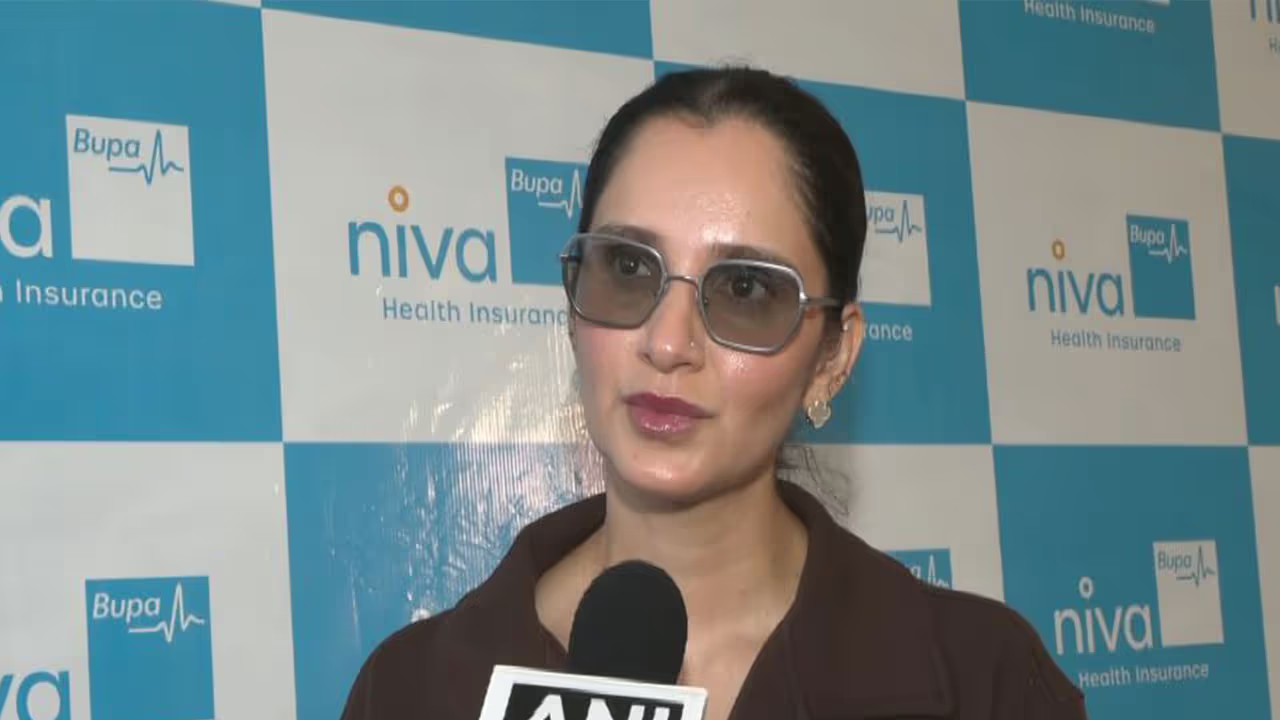
Former Indian tennis player and Grand Slam champion Sania Mirza said on Sunday that the system for the sport in the country is "still not great" and despite having plenty of talent, the nation loses it while transitioning across various levels of tennis. Sania spoke to ANI on the sidelines of Niva Bupa's 'Walk for Healthy Cities' event in the national capital.
On being asked by ANI on when India will produce the 'Next Sania Mirza', the tennis legend said, "I wish I had a crystal ball to answer this question. And for the amount of times I have been asked this question, I would be a very rich person by now. But unfortunately, I do not have the answer to that. I have been asked this question for over 20 years now, maybe. We do have a lot of talent. I am not going to take that away. I feel like we do. I think somewhere in the transition of maybe from the juniors to the seniors, and then that senior bracket of going from like that 300 to 200 to 100 to 50 is where we get lost for various reasons."
Sania Mirza's Mentorship Initiative 'The Next Set'
"We have got a couple of good young kids, those 14, 15, 17-year-olds, Gen Z, such as Maaya (Maaya Rajeshwaran Revathi). These are the future of our country and our tennis. I am hoping one of them could (be the next Sania Mirza). I myself run an initiative called The Next Set, which helps top eight Indian women's tennis players in the country by providing them coaches, physios etc. At the end of the day, we still need to accept that the system behind tennis is still not great. So, you know, it is hard to manage everything on your own, so we are trying to take some pressure off," she added. Notably, earlier this year, Indian women's players failed to make it to the playoffs of the Billie Jean King Cup 2026. They finished third in the Asia-Oceania Group I standings with three wins and two losses.
She describes her role at 'The Next Set' as more of a mentorship role rather than coaching. "I would not call it coaching per se. I am always there to help. All the girls have my number. They reach out to me from time to time. I work with the girls who are a part of the program, and it is more of a mentorship role. We have got coaches, we have got a team of physios, trainers etc in place. My role is about helping girls deal with mental side of things and sharing my experiences," she added.
Sania also admitted that her son, Izhaan, also plays tennis. "He does play tennis, yes. He plays. Uh, he plays both football and tennis," she said.
'Walk for Healthy Cities' Initiative
On Niva Bupa's initiative, she said, "I think that, you know, for me, initiatives like this really hit home. And for me, if I do not really believe in the product per se, it is very hard. I want to congratulate them for doing what they are doing. Small moves and small initiatives like this make a big change." Mirza was at the event for the flag-off ceremony.
'Walk for Healthy Cities' marks the relaunch of the earlier ‘Walk for Health’ initiative, which encourages encourages people to embrace walking as a simple and accessible way to stay active and healthy. The initiative has now been reimagined as part of the broader Healthy Cities movement, connecting individual health and physical activity with a collective commitment towards greener and more sustainable urban communities.
Creating Meaningful Change
Commenting on the initiative, Nimish Agrawal, Director, Digital Business Unit & Chief Marketing Officer, Niva Bupa Health Insurance, said, “We believe that being healthy is not just about managing illness, but about making healthier choices every day. Walk for Health was built on a simple idea that walking and staying active can be an important part of a healthier life. With Walk for Healthy Cities, we are taking that idea forward by connecting individual action with a larger community and environmental impact. Every step taken and every activity logged through the month contributes to something bigger—creating greener spaces and healthier cities. We hope this initiative inspires people to make movement a part of their everyday lives while showing how small individual actions can collectively create meaningful change.” (ANI)
(Except for the headline, this story has not been edited by Asianetnews Editorial staff and is published from a syndicated feed.)