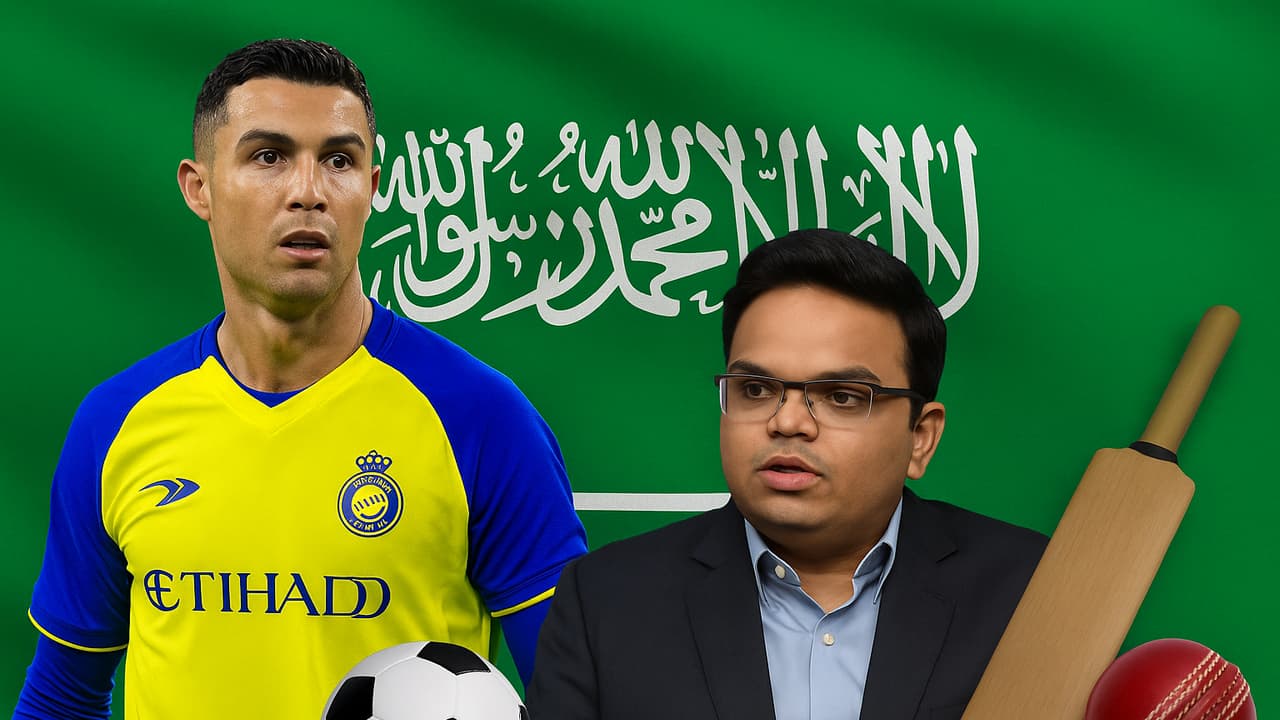
Saudi Arabia’s ambitious $400 million T20 league faces stiff resistance from India and England, raising questions about whether cricket can mirror the Kingdom’s football success.
In a country that has transformed its global image through sport — luring the world’s biggest football names to its desert shores — Saudi Arabia now has its eyes set on a new prize: cricket.
Backed by a staggering USD 400 million war chest through SRJ Sports Investments, plans are underway to launch a T20 league unlike any other. It’s bold, it’s global, and it promises a spectacle akin to tennis’s Grand Slams, with eight teams playing four tournaments in different locations every year.
But not everyone is cheering from the stands. According to British newspaper The Guardian, two of cricket’s most powerful boards — the BCCI and the England and Wales Cricket Board (ECB) — have closed ranks against the Saudi plan, aiming to protect their domestic tournaments, the IPL and The Hundred, respectively.
Related Articles

“We Won’t Back It”: India, England Dig In
In quiet but decisive discussions during the World Test Championship final at Lord's earlier this month, top officials from the ECB and BCCI reportedly reached an agreement: no support, no players, and no recognition.
"During discussions at the World Test Championship final at Lord's this month, the ECB and BCCI agreed to unite in opposing the new league. The boards agreed they would not issue ‘no objection certificates’ to their players to sign up for the new competition, as well as lobbying the International Cricket Council (ICC) to withhold their endorsement," the newspaper wrote.
It’s a clear message to players: if you want to stay in the good books of your national boards — and retain access to the sport’s top tournaments — the Saudi T20 league is off-limits.
The Football Parallel: Can Cricket Follow Suit?
To understand the scale of Saudi ambition, one only needs to look at football. Over the past few years, Saudi Arabia has gone from being a peripheral player in the global footballing conversation to a central node of its future. From Cristiano Ronaldo to Karim Benzema, Saudi clubs have splashed billions to bring marquee names to their domestic league.
It’s not just player signings — there’s infrastructure, fan outreach, media investments, and strategic alliances with major European clubs. Football isn’t just a sport anymore in Saudi Arabia; it’s part of a larger plan to rebrand the nation’s global image and diversify its economy under Vision 2030.
So the question arises — can cricket, long considered a cultural cornerstone in South Asia, make similar inroads in the Kingdom?
Australia Eyes Opportunity
Not everyone in the cricketing world is shutting the door. According to The Guardian, Cricket Australia (CA) is keen on partnering with the Saudi investors.
For Australia, the interest seems more financial than ideological. The Big Bash League (BBL), run directly by the governing body and state associations, hasn’t matched the commercial success of the IPL. A Saudi-funded league, backed by private investors, could offer a lucrative avenue for monetization and global exposure.
The Power of the Purse: IPL and The Hundred’s Financial Muscle
Opposition to the Saudi league is also deeply rooted in economics. The IPL today is a USD 12 billion behemoth — a sporting juggernaut that generates unmatched value and cultural influence.
The ECB, while not quite in IPL’s league, is also cashing in. It is reportedly set to earn GBP 520 million (USD 700 million) from the sale of 49% of The Hundred’s eight franchises.
Even Cricket South Africa, a relatively smaller player, raised GBP 100 million (USD 136 million) when it sold its SA20 franchises — mostly to IPL owners — three years ago.
It’s clear: cricket boards with financial skin in the game are reluctant to risk diluting their products by legitimizing a new, potentially rival, tournament.
The ICC’s Position: Jay Shah’s Influence
While the International Cricket Council (ICC) is supposed to be the sport’s global custodian, its stance in this matter may not be as independent as some hope.
According to the report, the ICC — currently headed by former BCCI secretary Jay Shah — is unlikely to act against the interests of the Indian board.
That puts the Saudi league in a tough spot. Without ICC approval, it cannot access the traditional player pool, official scheduling, or legitimacy. Without player No Objection Certificates, the league might be forced to rely on retired players, emerging talents, or rogue nations — a risky bet at best.
Can Saudi Arabia Disrupt Cricket Like It Did Football?
Saudi Arabia has already proven it can transform the global football landscape in a matter of years. It used ambition, money, strategy — and most importantly — a compelling pitch to players and fans.
Cricket may be a tougher nut to crack, with tighter board control and more rigid international structures. But the Saudis have time, money, and intent — and as football has shown — those are powerful levers.
If the Saudi T20 league does manage to take off, it could redefine cricket’s global power structure. But for now, it stands as a fascinating battle of ideals, economics, and influence — between tradition and ambition.
One thing’s for sure: this is a story that cricket — and the world — will be watching closely.