Evaluate your current financial status and obligations. Check how much of your income goes towards routine expenses, emergency fund, investments, and dues.
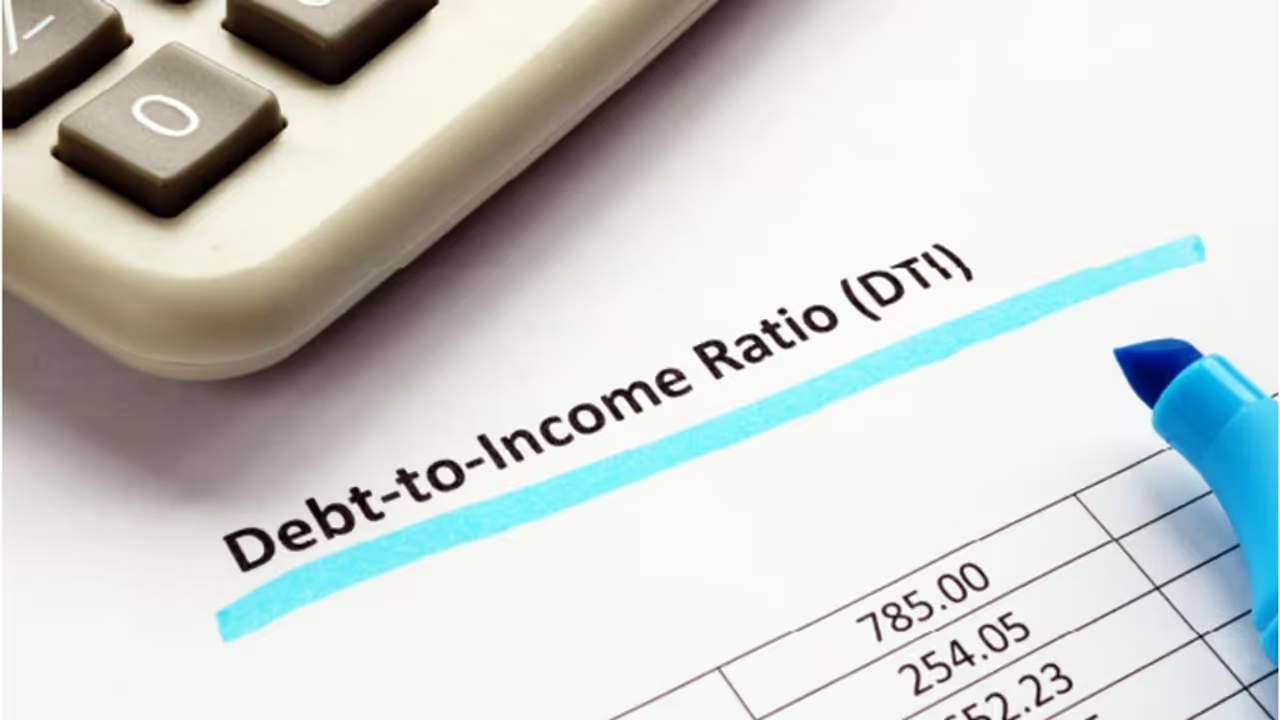
DTI is an important factor that lenders investigate while evaluating your eligibility for loans. It indicates your total debt in relation to your income. So, your management of personal loans influences your future borrowing prospects. Understand the relation of your repayment behaviour with DTI and learn about the steps to restore it in this detailed blog.
Why is your debt-to-income ratio important?
The debt-to-income ratio shows lenders whether you are a reliable borrower. As it reflects how much of your monthly income is already committed to other loans, it helps them learn more about your:
Related Articles

- Repayment capacity
A low DTI ratio indicates that you are a reliable borrower and can manage EMIs without financial strain. Generally, a DTI ratio below 30% is considered healthy, while anything above 40% may indicate higher financial pressure.
- Borrowing flexibility
A balanced DTI ratio shows that you have room for an additional credit while accommodating your existing financial responsibilities.
- Financial stability
A healthy DTI ratio suggests that your financial planning is solid and you are in a position to take on credit and handle repayments with the same seriousness as your finances.
How a personal loan impacts your DTI ratio
When you take a personal loan, it naturally adds to the debt portion of your debt-to-income ratio. The extent of its impact on DTI depends on the following aspects:
- Addition of a new EMI
With a personal loan, you introduce a new EMI into your monthly commitments. As a result, the DTI ratio is slightly higher.
- Impact of loan size and tenure
The amount you borrow and the way you space out the repayments determine how the DTI ratio is affected. A low amount with a shorter tenure results in a low DTI over time.
- Multiple loans increase the ratio
Juggling several loans simultaneously means a higher share of your income goes toward repayments. This automatically pushes the DTI ratio forward.
- Interest rate influences affordability
A low interest rate makes repayments more manageable, which contributes to a healthy DTI ratio in the long run. Thus, if you already have a personal loan and wish the interest rate were lower, you can opt for a personal loan balance transfer to switch to a better offer.
How can you maintain a healthy DTI when taking a personal loan?
Borrowing is healthy so long as you manage it well enough to ease the financial load. Over time, effective management of a personal loan leads to a lower debt-to-income ratio.
- Have a clear repayment plan
Prepare a repayment plan before you apply for a personal loan. Check whether it fits your monthly budget. You can use a personal loan EMI calculator to help you get an estimate and visualise the repayment schedule for better planning.
- Monitor all commitments
Evaluate your current financial status and obligations. Check how much of your income goes towards routine expenses, emergency fund, investments, and dues. This gives you a clear view of your affordability for a new loan.
- Balance with income growth
Looking for ways to enhance your repayment capacity is a part of debt management as well. So, if you come across a better job or business prospect, make the upgrade. You can save from the increased income and foreclose the loan.
The easy loan foreclosure benefit is also offered by IDFC FIRST Bank’s FIRSTmoney personal loans that let you foreclose the loan easily via the app and with zero foreclosure charges.
- Keep looking for offers
If your EMIs are weighing on your finances, it’s a sign to make some adjustments. A personal loan balance transfer is one such upgrade. It helps you find better loan offers and move your outstanding loan.
- Choose a suitable loan tenure
Select a tenure that makes EMIs manageable while keeping the interest outgo practical. Strike the right balance while stretching the tenure.
IDFC FIRST Bank supports you in this with a flexible tenure range of 9 to 60 months on its FIRSTmoney smart personal loan.
Final words
With a debt-to-income ratio, lenders learn how thoughtfully you manage your credit in relation to your income. While a personal loan adds a new EMI and increases the DTI ratio slightly, your repayment behaviour influences the lasting impact. As you progress with timely EMI payments, the DTI ratio changes positively. Thus, it’s critical to focus on disciplined borrowing and a practical repayment plan to improve your future loan prospects.