
Institutional research specifically points to the "always-on nature of crypto trading" as a core differentiator for physical holdings over traditional funds.
Institutional portfolio construction rarely relies on a single access vehicle when liquidity, yield, and absolute control are at stake. Regulated wrappers successfully bridged the initial gap between traditional finance and digital assets by offering a familiar format. Confining a 24/7 asset class within the boundaries of standard 9-to-5 equity market structures introduces distinct operational limits.
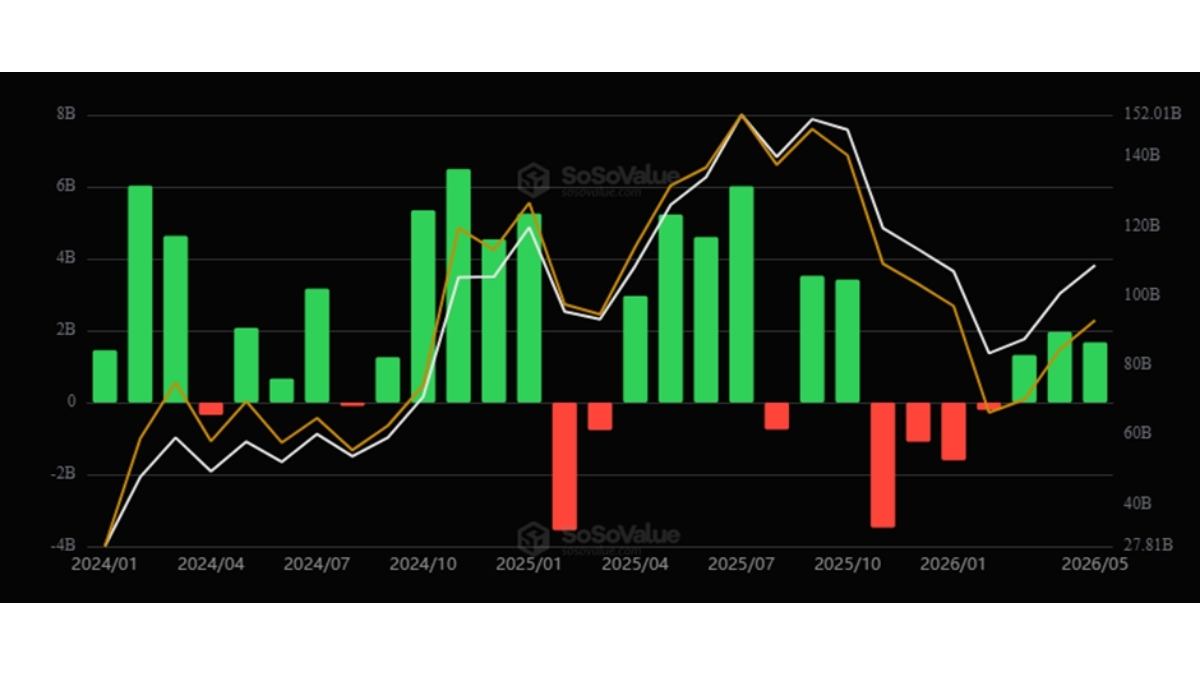
SoSoValue data shows US spot BTC ETFs accumulated $59.76 billion in cumulative net inflows to date. This substantial capital migration proves the institutional appetite is real, moving far past early retail speculation. As the market matures past initial regulatory hurdles, sophisticated participants are optimizing exactly how they structure and manage their digital exposure.
Related Articles

For active managers, hedge funds, and corporate treasuries, the fund wrapper is merely a preliminary access product rather than a comprehensive solution. Native asset ownership provides greater strategic flexibility and constant liquidity required to navigate global digital markets effectively.
The ETF Wrapper as an Acceleration Point
Regulators approving spot products gave conservative institutions a regulated structure they needed to allocate capital with confidence. These vehicles function as familiar entry points for funds unable to hold private keys due to internal governance mandates.
"Post the introduction of the Bitcoin ETF, this is when the legitimacy of the asset class is really reaffirmed. And it so happened that there was also much more regulatory clarity. Now those are the two most important elements to ensure real significant institutional participation," Catherine Chen, Head of VIP and Institutional at Binance, shared during a recent Real Vision Masterclass. "You can almost look at the issuance of Bitcoin ETF as probably an acceleration point. Once that happened, a lot more institutional investors started — number one, they have an easier way to participate in the asset class."
The wrapper acted as an icebreaker for the traditional capital rather than the final destination. Professional allocators proved their resilience during recent market volatility, treating digital assets exactly like mature portfolio components. A CoinShares report indicated that a recent 25% quarterly drawdown did not trigger institutional capitulation or widespread panic.
Long-duration investors like endowments and pensions quietly added exposure while the market dipped. This behavior demonstrates that the asset class possesses newfound structural stability. Portfolio managers are now looking past the convenience of listed shares to fully understand the structural advantages of holding the underlying asset directly.
The Strategic Case for Native Asset Control
Holding a security restricts trading to rigid equity exchange hours. Nasdaq and the New York Stock Exchange limit their core sessions from 9:30 AM to 4:00 PM ET on weekdays. This rigid schedule creates massive blind spots during weekend—or overnight—volatility. Direct ownership allows institutions to access crypto markets on a 24/7 basis rather than being limited to exchange trading hours.
Institutional research specifically points to the "always-on nature of crypto trading" as a core differentiator for physical holdings over traditional funds. Treasuries and hedge funds increasingly require the ability to execute complex OTC block trades directly, deploy capital globally without traditional banking intermediaries, or use digital assets natively as trading collateral.
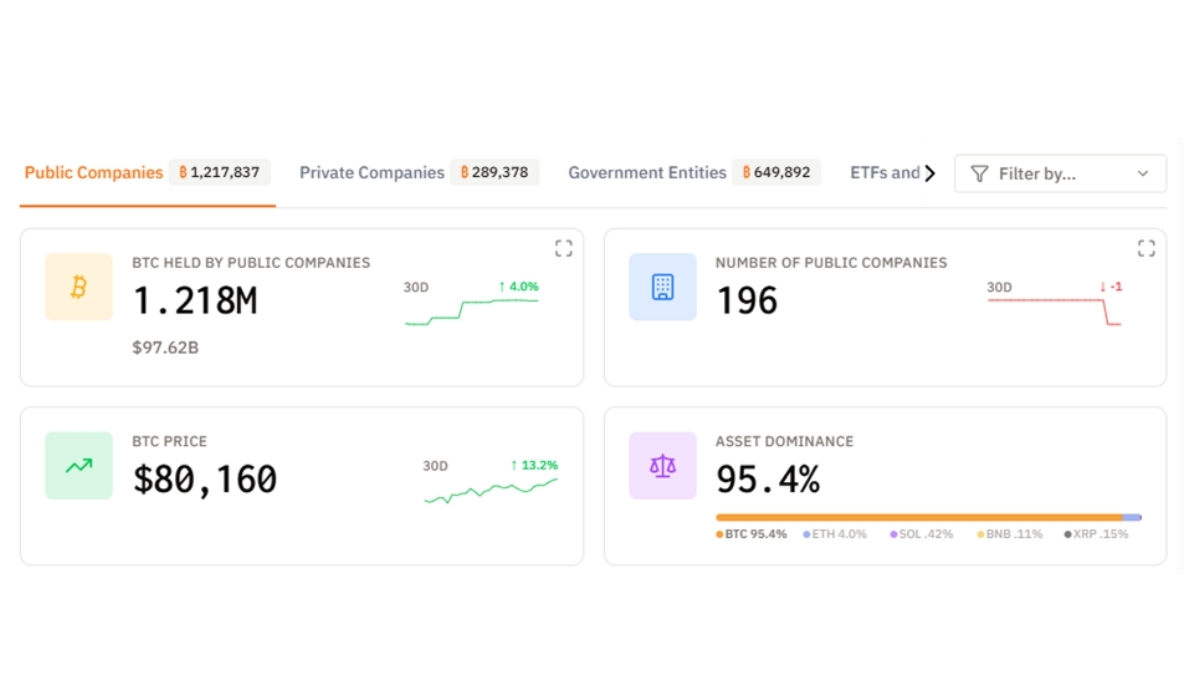
Public companies are already taking this route. BitcoinTreasuries data reveals that 196 public companies currently hold 1.22 million BTC, representing $97.6 billion in direct corporate integration. Trading a proxy limits an organization to basic price tracking during strict market windows. Controlling the native asset can expand how institutions use liquidity, collateral, and trading functionality across both decentralized and centralized financial systems.
Execution and the Institutional Custody Imperative
Direct ownership introduces friction points around operational risk, secure storage, and strict regulatory compliance. Sophisticated allocators demand institutional-grade execution desks and highly regulated custody environments to process massive block trades without severe market slippage. Security priorities have shifted drastically as portfolio sizing increases and investment horizons extend.
According to EY-Parthenon’s 2026 Institutional Investor Digital Assets Survey, 66% of investors now cite regulatory compliance as a key factor in choosing a custodian. This number is up from just 25% in 2025. Another 66% prioritize the following: security and robust key-signing protocols. Providers are closing this technical gap through high-touch execution and compliant storage frameworks.
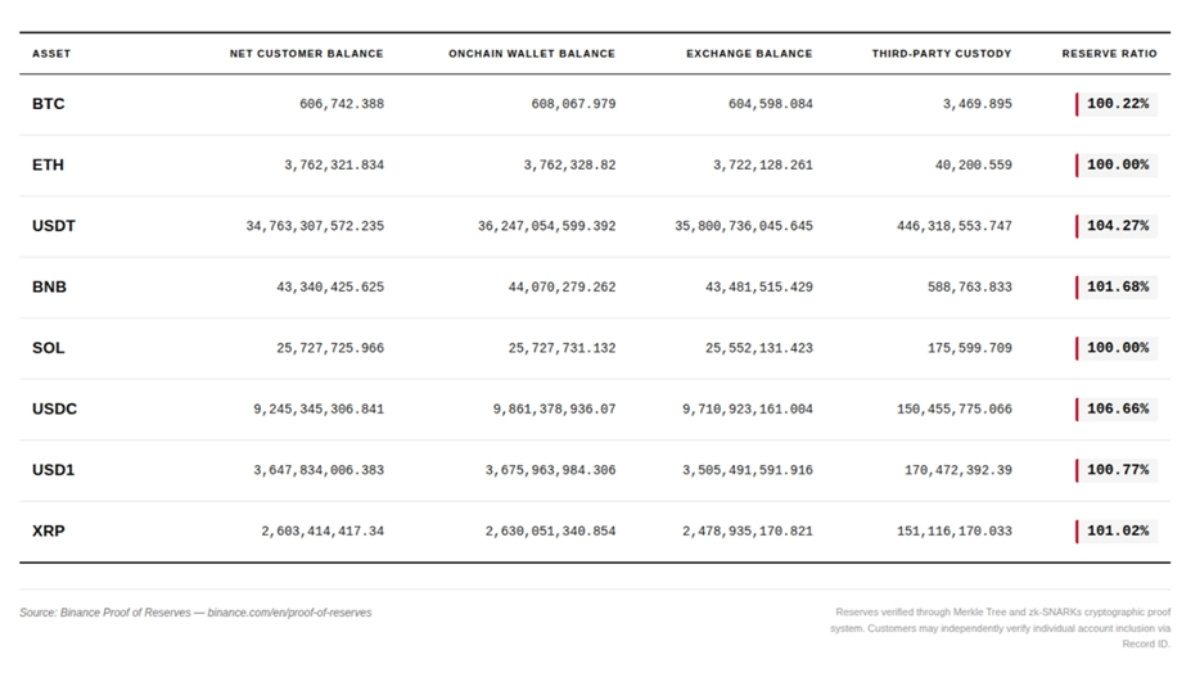
Increasingly, institutions also expect independently verifiable reserve transparency as part of the custody equation. As part of that transparency efforts, Binance has pointed to its Proof of Reserves system, recently disclosing more than $240 billion in net customer assets backed at over 100% reserve ratios across major holdings including BTC, ETH, USDT, and USDC. The company’s reserve disclosures, paired with Merkle Tree verification, are designed to allow users to independently verify that customer assets remain fully backed on-chain. Providers are closing this technical gap through high-touch execution, compliant storage frameworks, and transparent collateral verification standards.
Binance VIP supports this transition natively via specialized TWAP algorithms and bespoke OTC execution services. The platform also addresses counterparty risk directly through the company’s partnership with Franklin Templeton alongside their institutional custody partner Ceffu.
Institutions pledge tokenized money market fund shares or cash equivalents with a third-party bank while Binance mirrors the collateral value for trading, keeping underlying assets completely off the exchange.
Maturing Beyond Price Exposure
Treating digital assets purely as listed securities leaves their most powerful attributes entirely untapped. Wrappers deliver basic price tracking for traditional portfolios that prefer standard brokerage accounts. Direct crypto ownership plays a growing role by providing functional asset control, programmable utility, and instantaneous global settlement capabilities.
The future of institutional allocation relies heavily on a clear dual-track approach. Conservative funds constrained by investment committee mandates will stick to exchange-traded proxies. Yield-seeking funds, crypto-native firms, and forward-thinking corporate treasuries will increasingly adopt direct custody models to maximize their capital efficiency.
The operational ability to trade without interruption across global time zones and deploy capital natively far outweighs the initial setup hurdles of managing digital infrastructure. This shift indicates a move toward deep balance-sheet integration. Strategic allocators recognize that true market agility requires holding the asset itself, securely managing private keys rather than just trading conventional shares.