
Patients switching from placebo to Deramiocel recorded 76% slower upper-limb decline and 66% slower decline in elbow-related function.
- Patients receiving Deramiocel from the start recorded similar upper-limb declines across both treatment years.
- Both groups lost less function over two years than an external disease-progression model predicted.
- The FDA is reviewing the extension data as part of Capricor’s revised upper-limb function application, with a Nov. 22 decision deadline.
Shares of Capricor Therapeutics (CAPR) surged 20% in after-hours trading on Tuesday as new Hope-3 extension data showed substantially slower upper-limb deterioration in patients who switched to Deramiocel, boosting the company’s treatment case ahead of a November FDA decision.
CAPR stock fell 2% to close Tuesday’s regular session at $8.57, bringing its monthly decline to 14%.
What Did The Hope-3 Extension Data Show?
Upper-limb decline slowed sharply after patients switched from placebo to Deramiocel, according to Capricor’s late-breaking World Muscle Society poster. Deramiocel is an investigational cell therapy made from donor-derived heart cells, which can reduce inflammation and tissue scarring.
Researchers compared patients’ first year on placebo with their second year on Deramiocel. The estimated decline on the Performance of Upper Limb 2.0 scale fell from 2.05 points to 0.49 points, marking a 76% slowdown. Elbow-related function, which includes movements used to bring a hand to the mouth, followed the same pattern: decline fell from 1.33 points to 0.45 points, a 66% reduction.
CAPR 2-Year Findings Ahead Of November FDA Review
Patients treated with Deramiocel from the start recorded similar upper-limb declines in both years: 0.95 points in year one and 0.89 points in year two. Over two years, both groups lost less function than an external disease-progression model predicted. The early-treatment group declined 3.42 points versus 5.88 predicted, while patients who switched from placebo declined 3.76 points versus 5.35 predicted.
Investigators said the results “suggest a treatment-associated slowing of upper limb decline in later-stage DMD.” The poster also said Deramiocel was generally safe and well tolerated over 24 months.
Capricor is presenting the findings at the World Muscle Society congress in Hiroshima, Japan, from Tuesday to Saturday, with a separate Hope-3 presentation on muscle and cardiac efficacy scheduled for Saturday.
Capricor submitted the 24-month Hope-3 extension data and additional analyses after the July advisory committee meeting, seeking a refined indication focused on upper-limb function. In August, the FDA accepted the package as a major amendment and moved its decision deadline from Aug. 22 to Nov. 22 to allow more review time.
Analyst Saw Potential CAPR Rally Ahead Of Data
B. Riley had already flagged the extension data as a potential stock catalyst. Earlier this month, the brokerage upgraded Capricor to ‘Buy’ from ‘Neutral’ and raised its price target to $21 from $5, citing a favorable setup ahead of the November FDA decision.
The analyst projected 50% upside in a positive World Muscle Society conference scenario and expected shares to hold near current levels in a negative scenario. The target factored in a 40% probability of approval for Deramiocel.
How Do Retail Traders Feel About CAPR?
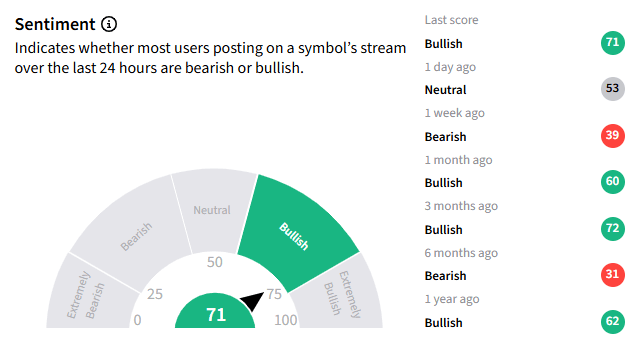
On Stocktwits, retail sentiment for CAPR jumped to ‘bullish’ from ‘neutral’ levels a day ago amid ‘high’ message volume.
One user said, “$CAPR Incoming data at the upcoming conference will blow your mind. Nobody, I mean no professional person will present bio data that lacks efficacy! ONLY DATA MOVES BIO”
View this Stocktwits post
Another user said, “$CAPR Short term price action doesn’t matter when data will take us to the teens by itself (new SAP even higher) and approval over 60. Adding on these days.”
View this Stocktwits post
CAPR stock has plunged 70% year-to-date.
For updates and corrections, email newsroom[at]stocktwits[dot]com.<
