
Over the weekend, Yardeni Research said in a post that despite rising oil prices, bond yields, and expectations for a Fed rate hike, the S&P 500 has not reacted sharply to the macroeconomic headwinds.
- Brent crude futures expiring in November were up nearly 2.4% to trade at $106.97 a barrel, while the U.S. 10-year Treasury yield was trading at 4.963% at the time of writing, hitting 2007 levels.
- However, most Wall Street analysts are still bullish on the S&P 500’s uptick this year.
- Despite the growing optimism, Citi reportedly warned Friday that its year-end target for the S&P 500 may be stretched as rising oil prices and higher bond yields cloud the outlook for U.S. equities.
The recent heightened conflict in the Middle East sent oil prices soaring to nearly $109 a barrel last week, even as U.S. long-dated bonds hit multi-decade highs. Meanwhile, odds of a Federal Reserve rate hike in September have also skyrocketed.
However, most Wall Street analysts are still bullish on the S&P 500’s uptick this year.
What’s Wall Street Eyeing For S&P 500?
Over the weekend, Yardeni Research said in a post that despite rising oil prices, bond yields, and expectations for a Fed rate hike, the S&P 500 has not reacted sharply to the macroeconomic headwinds.
The research firm said that the S&P 500 is down just 1.8% from its record high of 7798.99 on August 13, while over the same period, the equal-weight version of the index is down 3.5%.
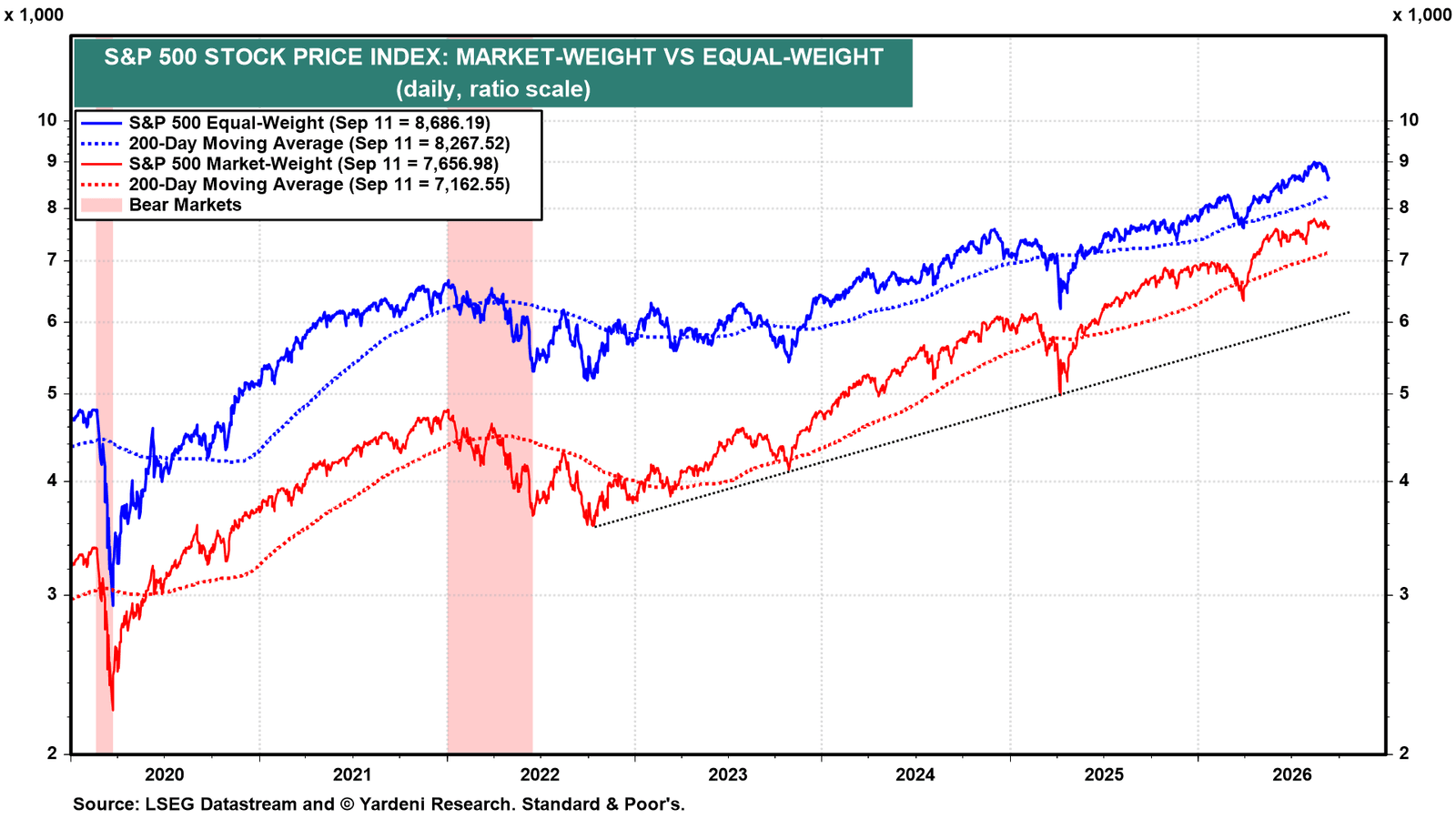
The firm reiterated its target of 8,400 for the S&P 500 by year-end. However, Yardeni Research said that the dynamics have changed. “In recent weeks, the forward price to earnings ratio of the major market indexes have declined as forward EPS estimates have outpaced stock price gains,” it said, adding that since the start of the year, the S&P 500’s forward earnings have risen 28.1%, while its forward P/E has fallen 12.9%, indicating that Investors aren’t willing to pay as much for companies as they were in January.
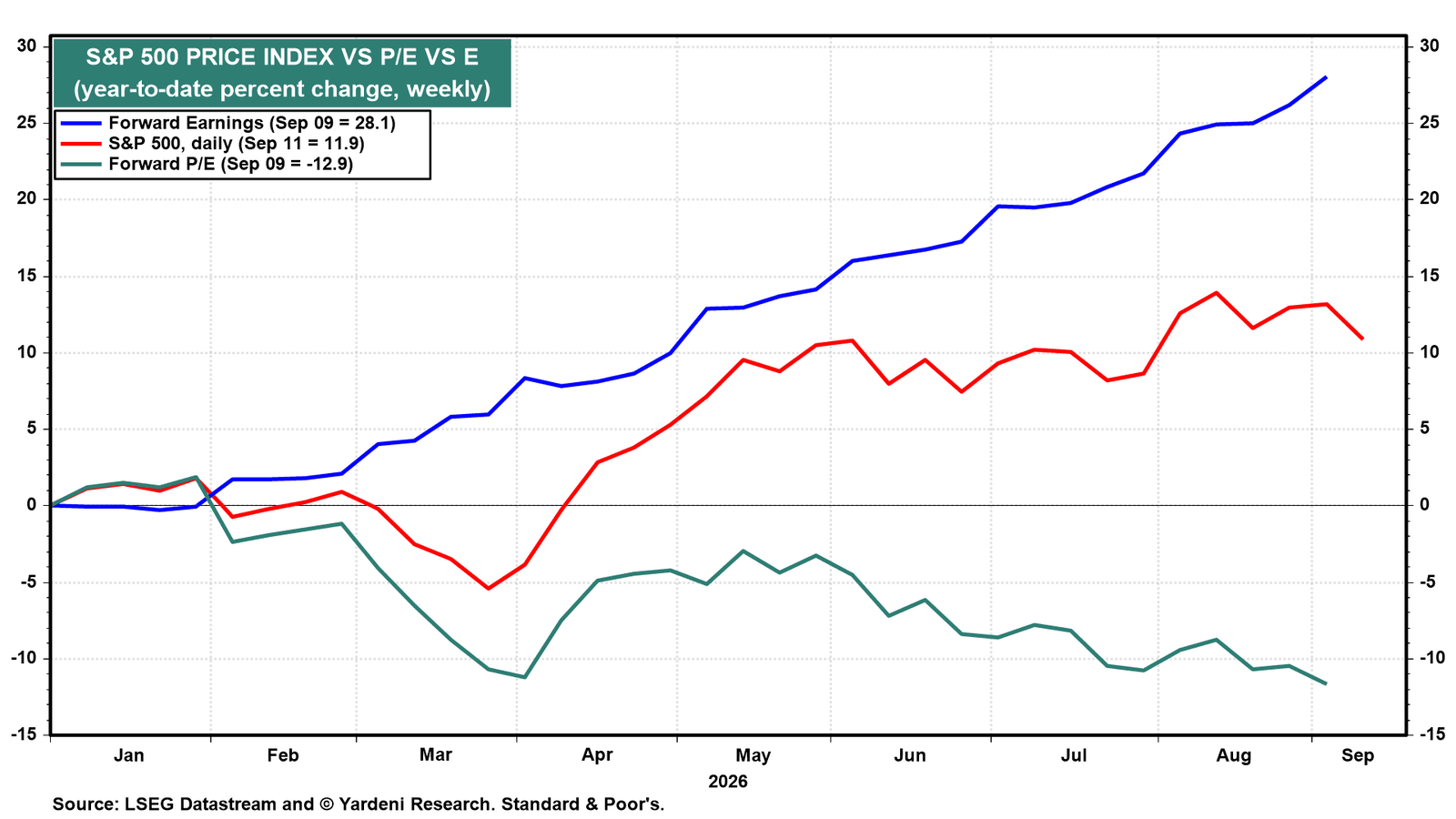
While it has maintained its S&P 500 target, Yardeni Research said that it “might be hit with stronger forward earnings and a weaker forward P/E than we had expected. So we are raising our 2027 earnings estimate to $425 per share from $415 and lowering our forward P/E expectation to 19.7 from 20.2.”
Meanwhile, many other firms have also reiterated or hiked their price target on the benchmark index over the past week.
Last week, HSBC raised its year-end S&P 500 target to 8,100 from 7,650, citing stronger corporate earnings, sustained AI investment and a resilient U.S. economy. S&P 500 earnings growth reached nearly 40% in the first half of 2026, while HSBC expects at least 25% growth in the second half.
The bank said that although technology remains a major driver, resilient consumer spending and strong performance across healthcare, industrials and consumer companies are supporting broader profit growth. However, HSBC cautioned that seasonal autumn weakness, economic data, regulatory changes and geopolitical tensions could cause near-term volatility, but maintained that strong corporate fundamentals should support further gains.
Barclays also raised its 2026 S&P 500 target to 7,950 from 7,800, citing stronger-than-expected second-quarter earnings, while lifting its earnings per share forecast to $365 from $337. More than 86% of companies beat estimates, with headline EPS up over 50% year over year, it said.
Barclays expects continued AI-driven investment, forecasting hyperscaler capital expenditure above $1.1 trillion in 2027, up 67%. It maintained its 2027 index target at 8,800, despite elevated yields increasing the penalty for earnings misses.
Below are the 2026 S&P 500 price targets from several major Wall Street analysts.
| Brokerage Firm | 2026 S&P 500 Target | Upside / Downside From Last Close |
| HSBC | 8,100 | 5.79% |
| UBS Global Research | 8,100 | 5.79% |
| Citigroup | 8,100 | 5.79% |
| UBS Global Wealth Management | 8,100 | 5.79% |
| J.P. Morgan | 8,000 | 4.48% |
| Deutsche Bank | 8,000 | 4.48% |
| Goldman Sachs | 8,000 | 4.48% |
| Morgan Stanley | 8,000 | 4.48% |
| Wells Fargo | 7,950 | 3.83% |
| Barclays | 7,950 | 3.83% |
| RBC Capital Markets | 7,900 | 3.17% |
| Evercore ISI | 7,750 | 1.21% |
| Jefferies | 7,500 | -2.05% |
| BNP Paribas | 7,500 | -2.05% |
| BofA Global Research | 7,100 | -7.28% |
The AI Bump
A large portion of the S&P 500’s gains have come from the AI boom. Companies like Micron Technologies (MU), Intel Corp. (INTC), and Advanced Micro Devices Inc. (AMD) have posted triple-digit growth in 2026. Meanwhile, the Global X Artificial Intelligence & Technology ETF (AIQ) has also outperformed the S&P 500 this year.
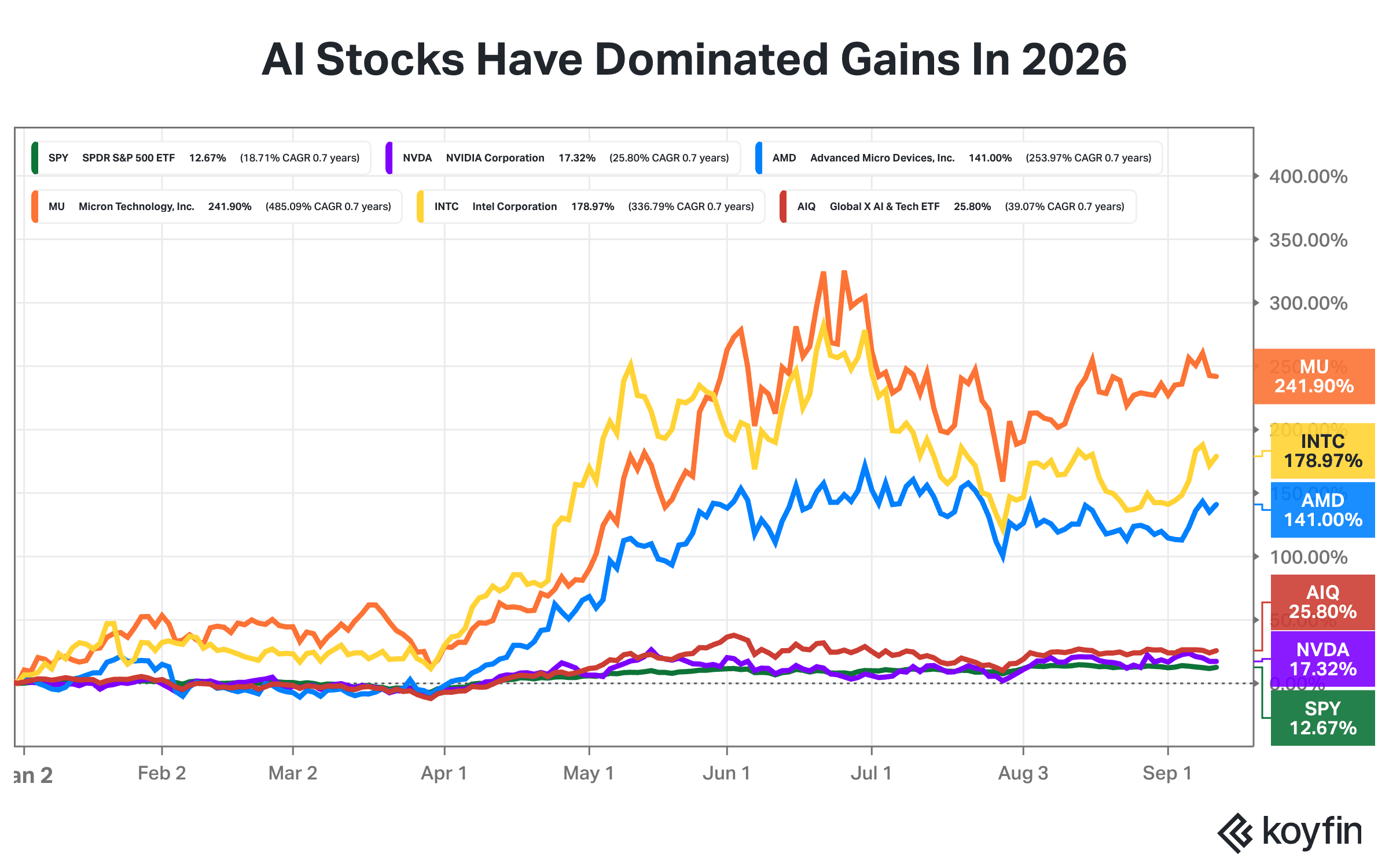
“The fact that the S&P 500 is 2.5% away from a record high despite the bond market looking like this is remarkable. Without AI, the S&P 500 would be at least 50% lower right now. Without the surge in oil prices, the S&P 500 would be above 9,000. AI is single-handedly carrying the global economy,” The Kobeissi Letter said in a post on X.
However, recent developments, including an industrywide split over the pace of AI development, are starting to weigh on investor sentiment. Anthropic CEO Dario Amodei proposed a three-step plan over the weekend to slow AI progress and allow more time to address AI safety concerns, with OpenAI’s Sam Altman and SpaceX’s Elon Musk expressing support for greater oversight.
In contrast, Microsoft and Meta CEOs opposed slowing development. Altman also said OpenAI would not go public this year. Meanwhile, U.S. President Donald Trump dismissed concerns, arguing that AI risks could be managed through guardrails.
Citi Warns That Target May Be Ambitious
Despite the growing optimism, Citi on Friday reportedly warned that its year-end target for the S&P 500 may be stretched as rising oil prices and higher bond yields cloud the outlook for U.S. equities.
According to a report from Investing.com, Strategist Scott Chronert said the bank's current 8,100 target for the S&P 500 by the end of 2026 looks “on the aggressive side” as macroeconomic factors have changed over the past few weeks.
Oil prices have crossed $100 a barrel for the first time since May. At the time of writing, Brent crude futures expiring in November were up nearly 2.4% to trade at $106.97 a barrel, while WTI crude futures expiring in October were trading at $102.48 per barrel, up 2.43%.
Long-term bond yields have also been climbing over the past week amid rising inflation concerns, even after the U.S. Department of the Treasury said last week it will triple its upcoming debt buyback plan to $6 billion. The U.S. 10-year Treasury yield was trading at 4.963% at the time of writing, hitting 2007 levels during the day, while the U.S. 30-year Treasury yield was trading at 5.362%, touching levels last seen in 2002.
While Chronert still believes that third-quarter earnings should be strong, for the index to reach the target, it would have to rely more heavily on a year-end rally amid current uncertainties.
The analyst also flagged concerns over the Federal Reserve’s possibility of a rate hike although noting that the economic backdrop is mixed so "a next Fed rate hike is not a foregone conclusion." However, he reiterated that persistent inflation concerns may mean a hike could ease uncertainty, and that if the Fed were to hike rates, there would likely be two rather than one hike this year.
Retail Sentiment On SPY, USO
On Stocktwits, retail sentiment around SPDR S&P 500 ETF Trust (SPY) was ‘extremely bearish’ at the time of writing.
One user said, “$SPY not a chance in hell this is green at the open. Everything is BLEEDING. The crash is finally here since OpenAI pulled the plug and all AI companies coming together to “slow down.” That’s your signal bulls. Get out.”
Another bearish user said, “$SPY Things gonna get reallll ugly.”
Meanwhile, retail sentiment on the United States Oil Fund (USO) was ‘bullish’ at the time of writing.
One user said, “$USO A new 52 week High coming this week.”
SPY is up more than 12% so far in 2026, while USO has gained nearly 124% in the same time.
For updates and corrections, email newsroom[at]stocktwits[dot]com.<
