
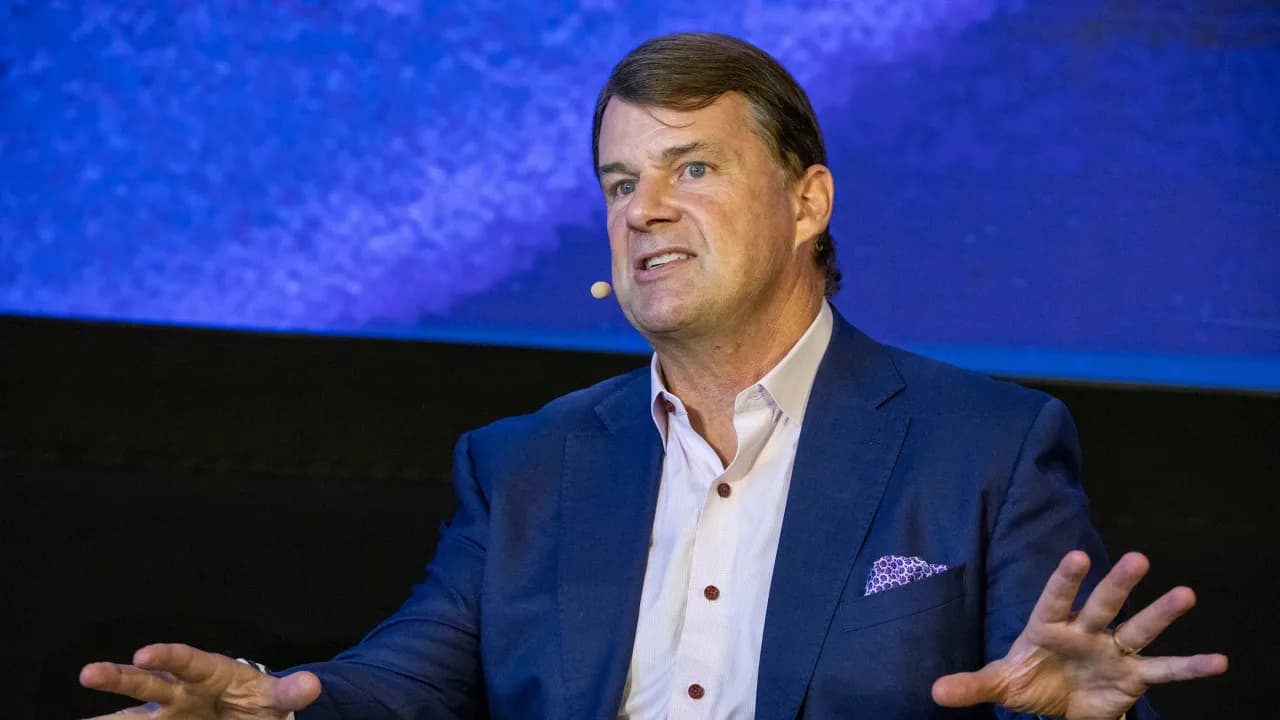
Farley said Ford is pursuing three initiatives, all being developed internally.
- Ford detailed plans to scale AI, driver-assistance, and vehicle computing across affordable models.
- Gary Black said driverless ride-hailing is already operating at scale, with Level 4 launches likely in 2026.
- The autonomous driving competition is widening beyond Tesla, with automakers and tech platforms competing.
A statement from Ford CEO Jim Farley outlining Ford’s push to make advanced vehicle technology widely affordable reinforces Future Fund’s Managing Partner Gary Black’s view that autonomy is no longer a Tesla-only advantage but a baseline capability every automaker will need.
In a post on X following CES 2026, Farley said Ford is deliberately rejecting an industry trend that reserves the most advanced technology for high-priced vehicles. He framed Ford’s strategy as a return to its Model T-era philosophy.
Black said on X that unsupervised autonomy is becoming “table stakes” across the auto industry, weakening the long-held belief that Tesla alone would solve self-driving problems at scale.
Ford Lays Out Its In-House Autonomy Strategy
Farley said Ford is pursuing three initiatives, all being developed internally. First, Ford is rolling out a new AI assistant integrated into the Ford and Lincoln apps. Farley said this will allow customers to access vehicle-specific intelligence even when they are not in their cars, with an initial rollout expected in early 2026 and a native in-vehicle experience planned for 2027.
Second, Ford said it is building next-generation advanced driver-assistance systems and Level 3 autonomy in-house. Farley said the company plans to launch a fully internal Level 2 platform on its affordable Universal Electric Vehicle platform in 2027, with a goal of being public-road ready for Level 3 eyes-off driving in 2028.
Third, Ford revealed a new centralized in-vehicle high-performance compute module designed to unify infotainment, driver assistance, audio, and networking into a single system. Farley said the module is being developed internally and will serve as the foundation of Ford’s future vehicle architecture.
Farley added that owning both software and hardware has allowed Ford to lower costs and scale advanced features across vehicles customers actually buy, rather than limiting them to premium models.
Black Says Driverless Rides Are Already Scaling Fast
Black said that several competitors are already driving around 750,000 paid, unsupervised autonomous ride-hailing trips per week, and that about half a dozen automakers will likely introduce Level 4 autonomous driving options in their electric cars in 2026, using Nvidia chips and software.
He also said Uber would then offer a self-driving option on its app at a lower price after regulators approve autonomous driving standards. He noted that this could lead to unsupervised autonomy spreading rapidly through ride-hailing platforms over the next several years.
Autonomy Race Widens Beyond Tesla
Ford’s move comes as the autonomous driving competition heats up. Lucid recently unveiled a production-intent robotaxi with Uber and Nuro at CES and said on-road testing is underway. Nvidia is expanding its autonomous stack through its Drive platform and Alpamayo AI models.
Waymo already runs driverless ride-hailing in multiple U.S. cities, Zoox has regulatory exemptions to test custom robotaxis, and Tesla has launched a robotaxi service in Austin while expanding driverless testing.
How Did Stocktwits Users React?
On Stocktwits, retail sentiment for Ford was ‘bearish’ amid ‘high’ message volume.

Ford’s stock has risen 49% over the past 12 months.
For updates and corrections, email newsroom[at]stocktwits[dot]com.<
