
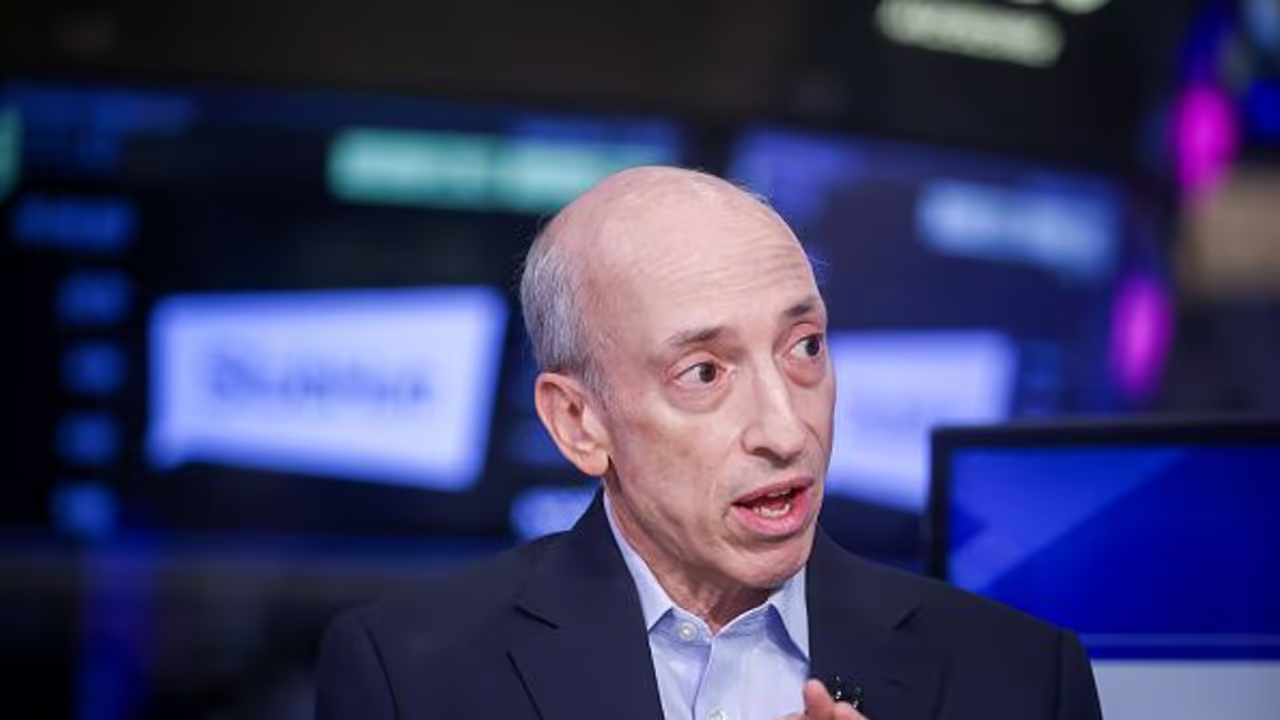
Gensler expects current AI investment cycle to eventually cool, with pressure potentially spreading across infrastructure spending, financing and semiconductor markets.
- Gensler expects markets to reprice to memory chip makers if they fail to beat earnings estimates or flatline.
- He flagged private credit, guarantees and vendor financing as areas to watch if the infrastructure cycle turns.
- AI-related capital expenditure is expected to exceed $795 billion in 2026.
Former Securities and Exchange Commission Chair Gary Gensler said the artificial intelligence (AI) trade is unlikely to persist indefinitely, arguing that today’s massive infrastructure buildout will eventually plateau and reverse.
“There’s a big AI trade going on in it. It is unlikely to last,” Gensler said Thursday in an interview with CNBC. According to him, the key uncertainty is not whether capital spending will slow, but “when and how steep” the reversal will be.
Gensler Flags Debt And Private Credit
The former SEC chair pointed to the amount of debt surrounding the AI ecosystem as an important variable, specifically citing "private credit, guarantees and vendor financing" tied to infrastructure spending.
The scale of that spending remains enormous. Reuters recently reported that AI-related capital expenditure is expected to exceed $795 billion in 2026 and $1 trillion in 2027, while investors have become increasingly sensitive to any sign that the pace of infrastructure investment could slow.
Major AI hyperscalers like Alphabet Inc.’s Google (GOOG, GOOGL), Amazon (AMZN), Microsoft (MSFT), Meta (META) and Oracle (ORCL) are estimated to spend about $795 billion on capital expenditures this year, rising to nearly $1.08 trillion in 2027, according to BofA Global Research.
Gensler Sees Chip Pricing Power Fading
Gensler also focused on the semiconductor supply cycle. He said memory companies are highly cyclical and that chip suppliers will eventually “lose what’s called pricing power” as shortages ease. “They’re not going to be able to charge as much for their memory chips,” he said.
Even without a collapse in spending, Gensler said a plateau could be enough to change market valuations. “If you don’t keep making your beats to the quarterly earnings estimates, and you start flatlining … the capital markets will reprice it,” Gensler said.
AI stocks have been sensitive lately. The PHLX Semiconductor Index dropped more than 5% over the last five days after calls from AI industry leaders, including Anthropic co-founder Dario Amodei and OpenAI founder Sam Altman, to slow the pace of model development raised concerns about future infrastructure demand.
U.S. equities were trading higher in Thursday’s premarket. The SPDR S&P 500 ETF (SPY) was up more than 1%, the SPDR Dow Jones Industrial Average ETF (DIA) gained over 1%, and the Nasdaq-100 tracking Invesco QQQ Trust (QQQ) moved 1.6% higher.
For updates and corrections, email newsroom[at]stocktwits[dot]com.<
